What Is Gimkit Home?
Gimkit Home is the online starting point for Gimkit, a game-based learning platform where educators and families can create review activities, assign self-paced practice, and join live games. Students answer questions, earn virtual cash, and use it for in-game upgrades – turning routine review into something more active.
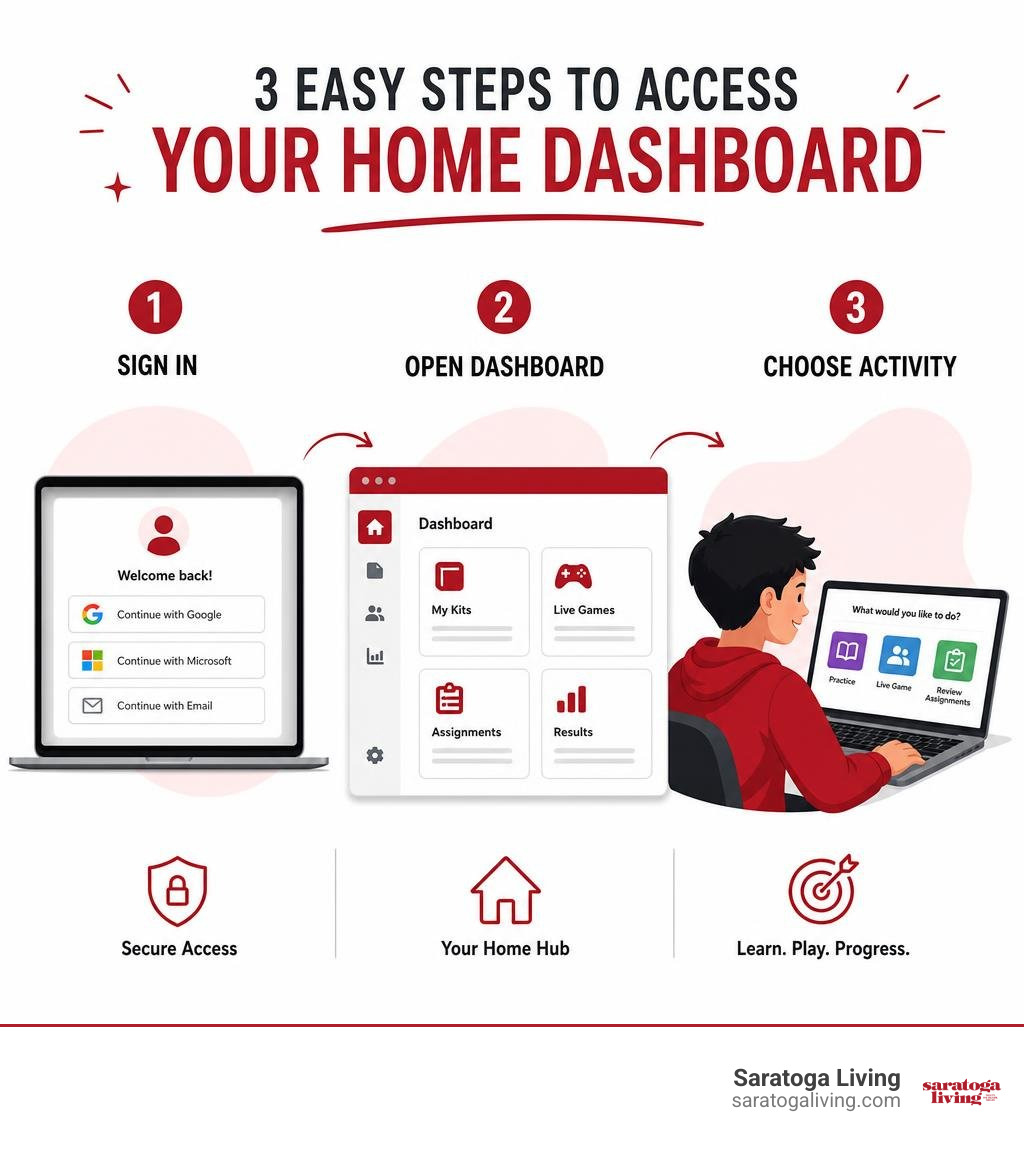
To access the dashboard, the process is simple:
- Go to Gimkit and select Log In or Sign Up.
- Sign in with Google, Microsoft, or an email account.
- Open the dashboard to create or find Kits, launch a live game, review assignments, or check results.
Gimkit began as a student-created project in 2017 and is now widely used for K-12 review, especially from about third grade through high school. It is not a full curriculum, but it can make vocabulary, math facts, science terms, and test prep far easier to revisit at home or between busy school-day schedules.
Guest Posts is here to help you get oriented before we walk through the dashboard in more detail.
What Is Gimkit Home and How Does It Work?
Gimkit Home serves as the primary control center and central hub for both educators and students. When teachers or parents log in, the home dashboard functions as a full management portal. It allows users to build custom question sets (called “Kits”), search the community library, organize classes, launch live sessions, and track detailed student results. For students, logging into Gimkit Home provides direct access to assigned self-paced homework, saved practice sets, and their personal account cosmetics.
The underlying mechanics of Gimkit – live learning game show center around an internal economy. As players progress through a session, correct answers yield virtual cash, while incorrect answers deduct currency. Students can strategically invest their hard-earned cash in the in-game shop to purchase power-ups, multiplier boosts, and insurance against wrong answers. This financial risk-and-reward layer shifts the focus away from pure typing speed toward deliberate strategy and subject mastery.
Beyond live classroom matches, the platform excels at asynchronous learning through auto-graded assignments. Educators can set accuracy targets or currency goals, letting students complete study sets on their own schedule while automated reporting tracks their progress behind the scenes.
Gimkit Home vs Classroom Version
While synchronous live games energize standard physical classrooms with whole-group competition, Gimkit Home focuses heavily on student independence and asynchronous practice.
| Feature / Aspect | Live Classroom Version | Gimkit Home / Asynchronous Version |
|---|---|---|
| Primary Play Style | Synchronous, real-time group play | Asynchronous, self-paced individual practice |
| Host Requirement | Teacher must host and manage session live | Students play independently via assignment links or solo mode |
| Pacing | Universal game timer or live leaderboard goals | Complete at student’s own speed before deadline |
| Location | School classroom or live video call | Anywhere with an internet connection |
| Pacing Control | Teacher controls pause and game end | Student manages play duration and break intervals |
In live mode, a host launches a session, presents a 5- or 6-digit game code on a shared monitor, and controls when the match starts or pauses. In contrast, the home environment allows students to work through questions at their own pace without the pressure of live public leaderboards. This makes the home mode particularly valuable for homework reinforcement, station work, and self-directed study.
How to Access Your Dashboard in 3 Easy Steps
Getting into your Gimkit Home hub requires no complex software installation because the entire platform operates directly inside standard modern web browsers.
- Navigate to the Login Page: Open your preferred browser on any modern laptop, desktop, tablet, or smartphone and visit the official website. Click the Log In button located at the top right corner of the landing screen.
- Authenticate Your Credentials: Select your preferred single sign-on method. You can log in using Google, Microsoft Workspace, or a traditional email and password combination. If you use Google Classroom in your learning environment, logging in with that associated Google account streamlines class roster imports later.
- Navigate the Main Dashboard: Once logged in, you arrive at your personal Gimkit Home control panel. From here, the sidebar gives you direct access to your saved Kits, your Classes, active Assignments, and overall student Reports.
Core Features: Kits, Modes, and KitCollab
At the core of the platform are “Kits”—customizable question sets that power every game mode on the website. Users can build original Kits from scratch with multiple-choice or short-answer text prompts, import existing flashcard decks directly from Quizlet, or upload pre-formatted CSV spreadsheets. You can also duplicate and adapt public Kits created by other educators in the broad community library.
To keep practice fresh, the platform provides over 10 unique game modes with new, seasonal, and pop-culture-inspired modes continuously in development. These range from survival modes like The Floor is Lava to social-deduction options like Trust No One (inspired by popular imposter games) and 2D exploration modes like Fishtopia. In 2D modes, students control customizable avatar characters called “Gims,” earning cosmetics, trails, and stickers as rewards.
Another standout tool is KitCollab, a feature that transforms quiz generation into a collaborative learning activity. Instead of the parent or teacher writing every prompt, KitCollab lets students write and submit their own questions in real time. The educator reviews incoming submissions on the dashboard, accepting valid items and rejecting duplicates to build a class-wide study guide on the fly. Detailed workflows for managing these interactive tools can be found in this resource on how Gimkit Home Explained: Join, Play, Track Progress.
How Students Join Games and Assignments
Joining an activity through Gimkit Home is designed to be frictionless, eliminating the need for complex software setups or multi-step account authentications for young learners.
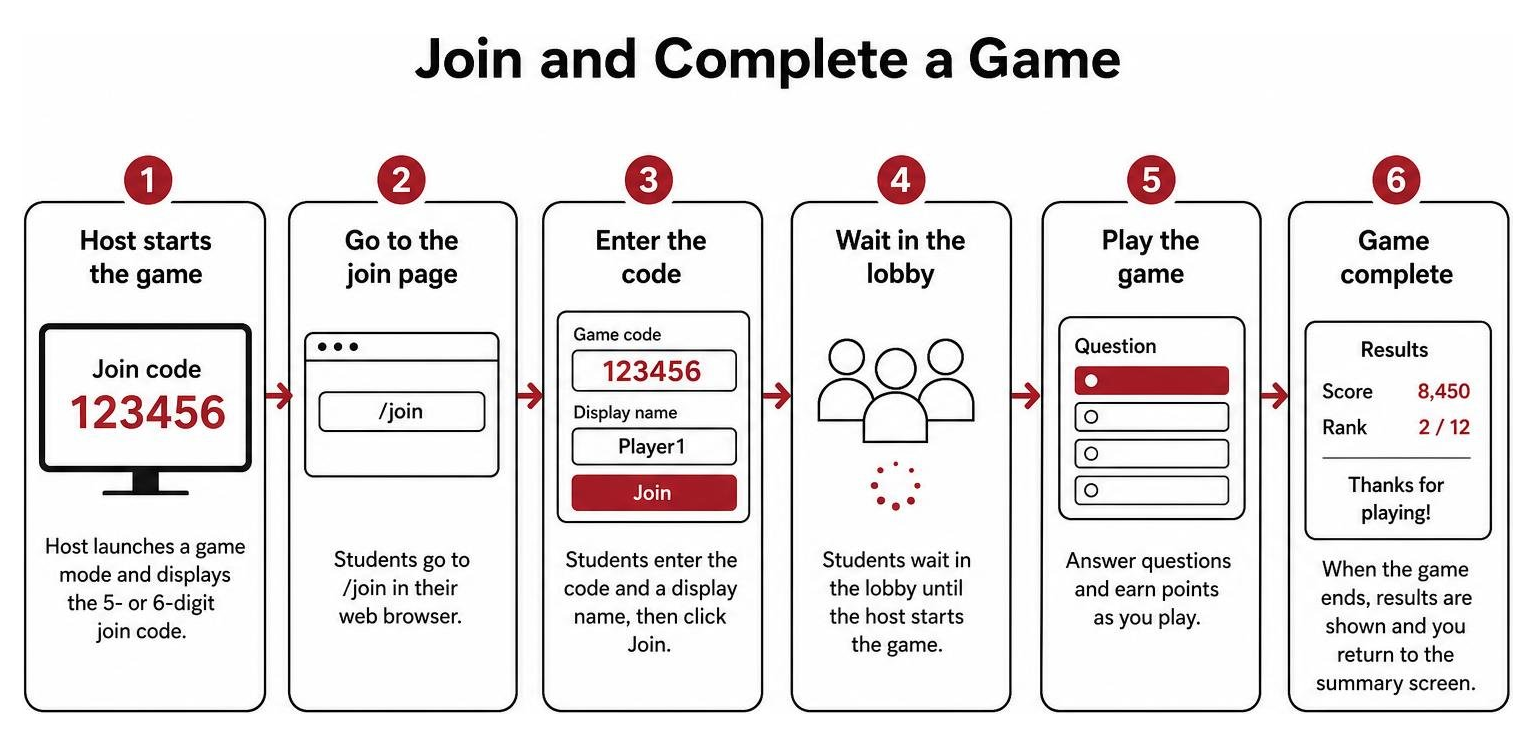
When participating in a live session, students follow a simple sequence:
- The host launches a game mode from their dashboard, generating a unique 5- or 6-digit join code.
- Students navigate to
gimkit.com/joinon their computer, tablet, or mobile phone. - Players input the game code accurately and type in an appropriate display name.
- Students wait in the digital lobby screen until the host officially starts the game session.
For asynchronous homework or home practice, joining is even simpler. Teachers or parents generate a direct assignment link and post it into an LMS or email message. Students click the link, log in if required, and enter the practice environment instantly without needing a temporary session code.
Setting Up Gimkit Home for Homeschooling and Remote Learning
For parents adapting the platform for homeschool routines or remote learning, choosing the correct account type is essential. During initial registration at gimkit.com/signup, parents should always select the Educator account tier rather than a Student account. Selecting Educator unlocks the ability to build custom Kits, establish virtual “Classes,” launch games, and access comprehensive student analytics.
To set up a home learning routine:
- Create a Class: Navigate to the “Classes” tab on your dashboard and set up a group for your children or co-op group.
- Curate Learning Material: Build targeted Kits containing 20 to 40 short questions per concept to encourage effective repetition without simple answer memorization.
- Establish Daily Routines: Incorporate 10-to-15-minute practice blocks into your daily schedule. Use short sessions as a morning brain warm-up, a quick mid-day review, or a light end-of-week assessment.
Using independent practice assignments allows children to fulfill study goals at their own pace without feeling rushed by speed mechanics. Parents looking for step-by-step setup strategies can reference the Gimkit Join for Parents: Homeschool Setup Guide 2025.
Pricing, Progress Tracking, and Technical Requirements
Understanding account tiers, hardware prerequisites, and analytics helps families and schools get the most out of the system. The platform operates on a freemium structure designed to accommodate individual tutoring as well as full school districts.
| Plan Tier | Pricing Structure | Player & Feature Limits | Ideal Use Case |
|---|---|---|---|
| Gimkit Basic (Free) | $0 / Free Forever | 5-player limit per live game; limited Kit creation capabilities | Small homeschool families, 1-on-1 tutoring, or platform testing |
| Gimkit Pro (Monthly) | $9.99 / month | Unlimited players; unlimited Kits; unrestricted game modes; assignment hosting | Individual teachers and active homeschool families |
| Gimkit Pro (Annual) | $4.99 / month ($59.98 billed annually) | Includes all Pro features plus a 14-day free trial for new educator accounts | Full-year classroom instruction and structured home curricula |
| Department / School | ~$650 to $1,000+ / year | Site-wide access, centralized billing, administrative controls | Whole schools, large departments, or homeschool co-ops |
In addition to flexible pricing options, Gimkit Home delivers robust real-time performance analytics. While live game leaderboards focus on virtual earnings and power-up usage, the teacher reporting dashboard isolates pure academic performance.
Educators can review exact accuracy percentages, identify specific questions that tripped up multiple students, and evaluate individual growth over time. These insights make it easy to spot learning gaps and plan targeted mini-lessons.
Neurodivergent Support and Accessibility Settings
The underlying mechanics of Gimkit Home offer natural benefits for neurodivergent students, including those with ADHD, dyslexia, dyscalculia, or gifted learning profiles.
- ADHD & Focus: The combination of short question-and-answer loops with strategic currency decisions keeps minds active. Pairing 10-minute game sessions with brief movement breaks helps prevent cognitive fatigue.
- Dyslexia & Visual Processing: Question prompts support image uploads and audio recordings. Educators can attach voiced audio clips directly to questions, allowing auditory learners to listen to prompts rather than relying solely on text.
- Sensory Management: For learners sensitive to high auditory or visual stimulation, hosts can adjust or mute background music and choose low-stress modes like Classic or solo assignments instead of high-tempo elimination games.
- Gifted & 2e Learners: Advanced students can be empowered by assigning them leadership tasks, such as creating custom Kits using KitCollab or building study guides for their peers.
From a technical standpoint, the platform requires no specialized hardware. It runs on any modern web browser (Google Chrome, Mozilla Firefox, Apple Safari, or Microsoft Edge) connected to reliable internet. It works smoothly across Windows PCs, Macs, Chromebooks, iPads, iOS devices, and Android tablets.
Troubleshooting Common Dashboard and Join Issues
When technical hiccups occur, simple troubleshooting steps usually resolve them quickly:
- “Invalid Join Code” Error: Verify that the 5- or 6-digit code was entered correctly without extra spaces. Confirm that the host teacher has not already closed or ended the live game session.
- Page Loading or Stuck Lobby Screens: Network firewalls or cached data can sometimes block web sockets. Refresh the browser page, clear your browser cache and cookies, or open the link in an Incognito/Private window.
- Login & Credential Issues: Ensure you are signing in with the exact account type (Google, Microsoft, or email) used during original registration. If using Google Classroom integration, confirm that the student is logged into their official school-issued Google account.
- Preventing Rushing and Guessing: If students race through questions without reading, update your Kit settings to use short-answer text inputs instead of multiple-choice options, or enable accuracy goals and streak requirements.
Frequently Asked Questions
Can students use Gimkit Home independently without a teacher?
Yes, students can use Gimkit Home for self-directed study without needing an educator to host a live session. Learners can access assigned homework links, practice with saved Kits in “Solo” mode, or explore public study decks shared in the platform’s Discover gallery. Independent study lets students practice at their own speed, earning virtual currency and testing their knowledge on their own schedule.
How much does Gimkit Pro cost for parents and educators?
Gimkit Pro is priced at $9.99 per month when billed monthly, or $4.99 per month ($59.98 billed annually) under an annual plan. New educator and parent accounts receive a 14-day free trial of Gimkit Pro. The Pro subscription removes the 5-student limit found in the free version, unlocks unrestricted Kit creation, and provides full access to asynchronous assignment features.
How does Gimkit Home ensure student data privacy?
The platform maintains strict compliance with federal student privacy regulations, including the Children’s Online Privacy Protection Act (COPPA) and FERPA standards. Student accounts do not require unnecessary personal details, and young learners can join live games using display nicknames without submitting personal data. The platform does not sell student information or display third-party advertisements.
Conclusion
At Saratoga Living, we love highlighting innovative digital tools, modern learning trends, and smart technology that enrich family life across Saratoga Springs and New York’s Capital Region. Whether you are a classroom teacher organizing quick formative assessments or a parent seeking engaging home study routines, accessing your Gimkit Home dashboard opens up a dynamic, strategic environment that turns study sessions into genuinely fun experiences.
By following the simple three-step access guide, choosing game modes that fit your learning goals, and leveraging real-time performance reports, you can make review time far more productive for every learner in your home or classroom. Explore lifestyle and technology insights with Saratoga Living to stay connected with the latest education, technology, and community trends shaping our region.