Shawarma: A Quick Guide Before You Choose Where to Eat
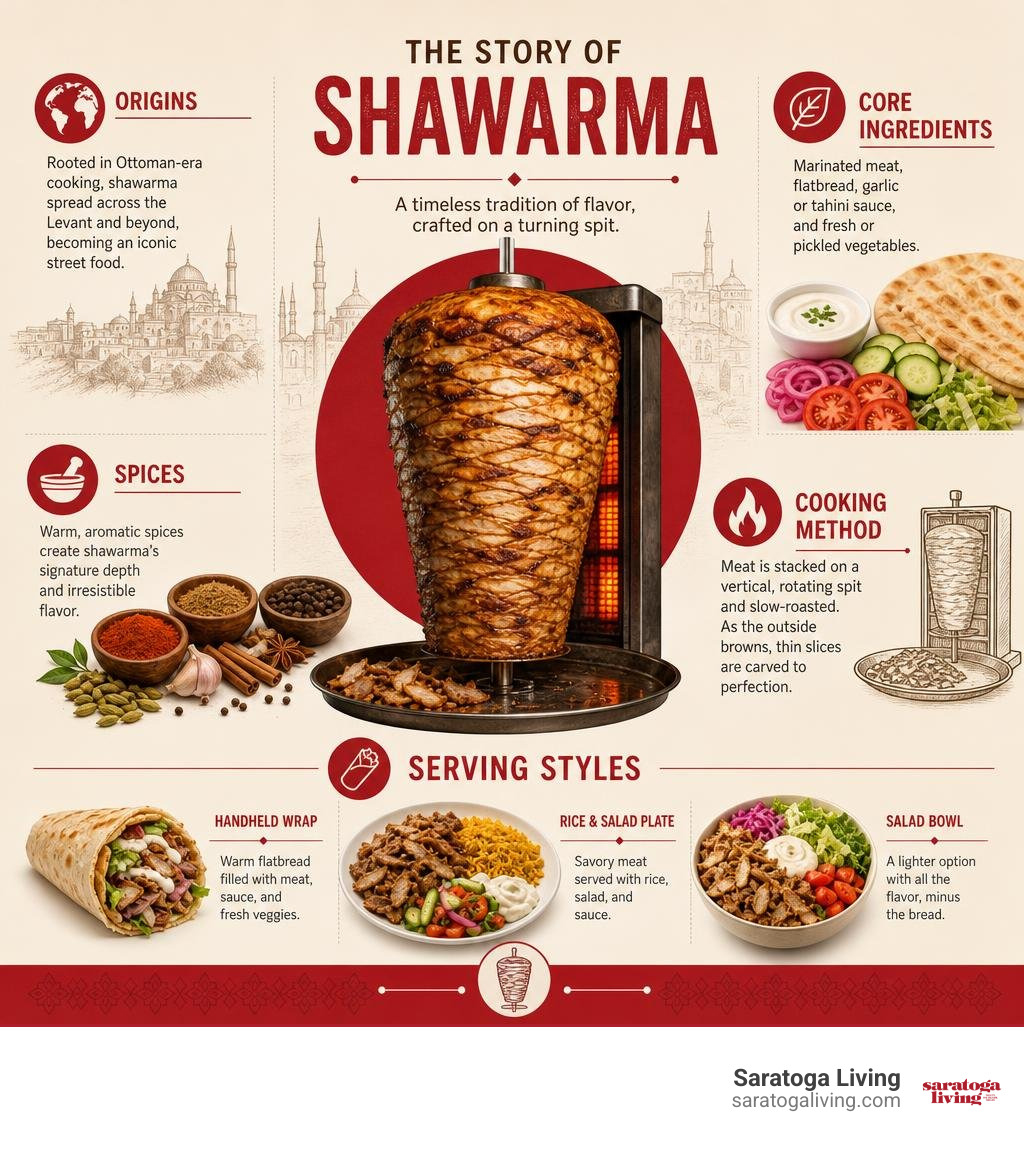
Shawarma is seasoned chicken, beef, lamb, or another meat slow-roasted on a vertical turning spit, shaved into thin slices, and usually served in a warm pita or flatbread with sauces and vegetables.
| Quick answer | What to know |
|---|---|
| Main ingredients | Spiced meat, flatbread, garlic or tahini sauce, and fresh or pickled vegetables |
| Signature flavor | Warm spices such as cumin, cardamom, cinnamon, paprika, garlic, and lemon |
| Traditional cooking method | Meat is stacked on a rotating vertical spit and carved as the outside browns |
| Common ways to order | As a handheld wrap, a rice-and-salad plate, or a lighter salad bowl |
Its name comes from a Turkish word meaning “turning,” a reference to that spinning spit. The technique grew from Ottoman-era cooking and became a defining street food across the Middle East, before traveling worldwide through migration, local creativity, and pure demand for deeply seasoned, fast, satisfying food.
Today, shawarma can mean many things: a Lebanese-style chicken wrap with fluffy garlic toum, a beef version with nutty tahini, or even a Nigerian variation with cabbage, carrots, and sausage. It is global enough that Ottawa declared itself Canada’s shawarma capital in 2024 – and in June 2026, the city set a Guinness World Record with a 375-meter line made from 2,451 shawarma sandwiches.
For Saratoga Springs diners, that makes shawarma worth seeking out: it is convenient enough for a busy weekday, but layered enough in flavor to feel like a real food discovery.
Guest Posts brings you this quick primer before we get to the best shawarma places near you right now.
What Is Authentic Shawarma? Origins, History, and Ingredients
To truly understand why shawarma inspires such intense loyalty among street food aficionados, we have to look back to the 19th-century Ottoman Empire. In the city of Bursa, a visionary butcher named Iskender transformed regional grilling traditions by mounting stacked, marinated meat on a vertical skewer rather than roasting it horizontally over charcoal. This simple mechanical shift meant the cooking meat basted itself continuously in melting fats and aromatic juices.
The name itself stems directly from the Turkish word çevirme, which translates to “turning.” As this culinary technique swept across the Levant—incorporating modern-day Lebanon, Syria, Jordan, Palestine, and Israel—local cooks rendered the term into Arabic as shawarma. You can dive deeper into its cultural development through the Britannica Overview of Shawarma.
At its core, authentic shawarma relies on high-quality meat marinades and structural layering. Traditionally, whole muscle cuts of lamb, mutton, beef, or chicken—and sometimes turkey or veal—are sliced thin and steeped overnight in an acidic, oil-based bath of warm spices, lemon juice, garlic, and yogurt.
When constructing the meat tower (which can reach up to 60 centimeters or 20 inches in height), cooks alternate layers of lean spiced meat with strips of renderable fat, crowning the entire spit with an onion, lemon, or whole tomato to continually baste the stack from the top down.
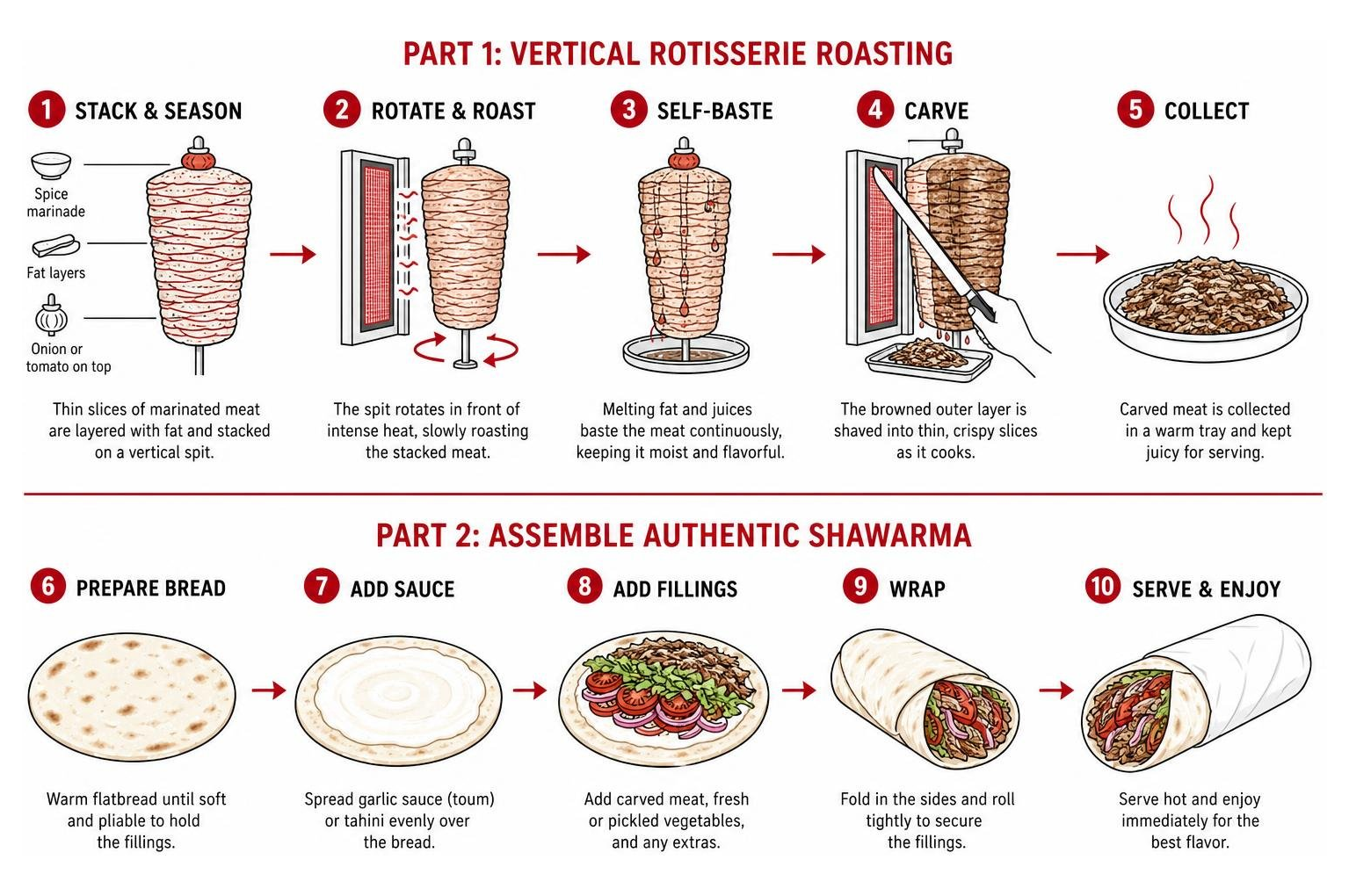
The choice of flatbread provides the structural foundation for the wrap. While thick, pocketed pita remains widespread, regional purists often prefer paper-thin saj bread cooked on a convex griddle, pliable lavash, or wood-fired taboon bread to hold the crispy shaved meat and vibrant condiments together.
Traditional Preparation Methods and Essential Spices
Preparing true street-style shawarma is an art form of heat control and patience. The central vertical spit rotates continuously in front of an intense heat source—historically open cages of wood or charcoal, but today electric or gas heating elements. As the outer perimeter of the meat block browns and caramelizes, the pitmaster uses a razor-sharp carving knife or specialized electric blade to shave off micro-thin, crispy ribbons of meat into a circular catch basin below.
Because the interior remains bathed in heat without drying out, every serving contains an irresistible mixture of deeply browned, spiced exterior crust and succulent, tender interior meat.
The spice palette gives shawarma its distinct signature profile, setting it apart from all other Mediterranean and Middle Eastern rotisserie meats. Essential spices in a traditional marinade mix include:
- Cumin and Coriander: Provide an earthy, citrusy, and warm base depth.
- Cardamom: The non-negotiable signature note that lends an exotic, slightly floral, and spiced aroma.
- Cinnamon and Allspice: Add subtle sweet-savory warmth without overpowering the meat.
- Paprika and Turmeric: Lend smoky notes along with rich golden-red hue and color intensity.
- Garlic and Lemon Juice: Provide the crucial pungent acidity that breaks down muscle fibers during marination.
Popular Regional Varieties of Shawarma Around the World
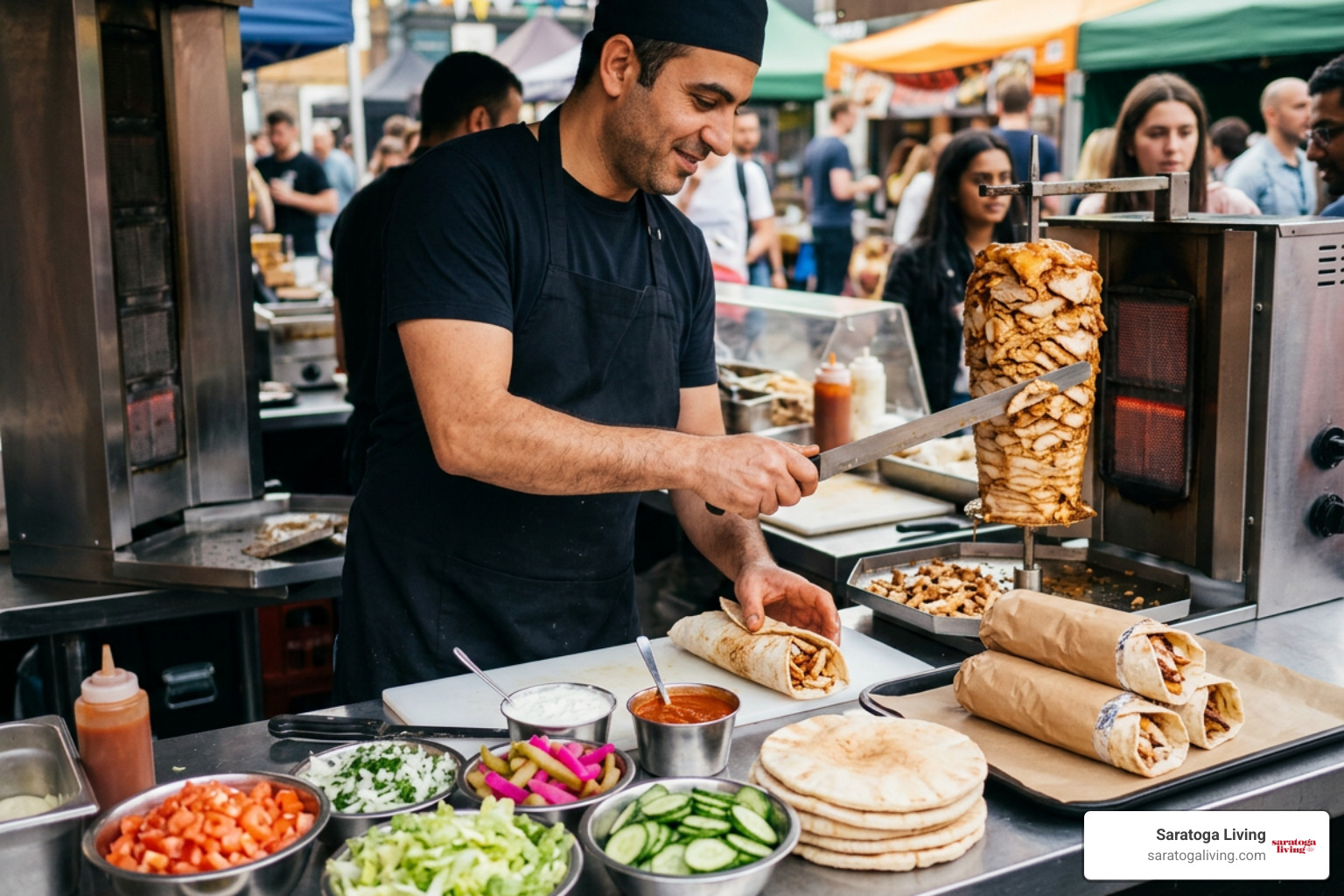
As shawarma migrated across borders, vibrant regional variations emerged, tailored to local palates and available ingredients. Exploring these regional styles reveals how a single Ottoman cooking method conquered global street food culture, as documented in the historic Shawarma Origins & History records.
- Syrian and Lebanese Style: Focused heavily on pure, bold flavor combinations. Chicken shawarma is paired exclusively with potent garlic toum, wild cucumber pickles (makhlloul), and crispy french fries wrapped directly inside soft flatbread, then pressed on a hot griddle until crisp. Beef and lamb versions pair pickled turnip, fresh parsley, onions seasoned with sumac, and rich tahini sauce.
- Egyptian Style: Incorporates warm, fragrant spices like nutmeg and cloves into beef marinades, often served with chopped tomatoes, fresh herbs, and a tart sesame tarator sauce.
- Israeli Style: Highly popular across local stands, where turkey thigh interleaved with lamb fat is the primary protein choice. It is served abundantly inside wide pita or pliable laffa bread topped with creamy hummus, tahini, amba (a tangy, spiced mango pickle sauce), and schug (a fiery cilantro-chili paste).
- Nigerian Style: A West African sensation that evolved its own distinct fast-food identity. Nigerian shawarma features heavily spiced beef or chicken wrapped with crunchy shredded cabbage, carrots, a sweet blend of mayonnaise, ketchup, and salad cream, and unexpectedly, a grilled hot dog or sausage tucked directly into the wrap.
- Mexican Tacos al Pastor: Early 20th-century Lebanese immigrants bringing vertical spit techniques to Puebla, Mexico, adapted their recipes to local ingredients, replacing lamb with marinated pork, adding achiote and chilies, and topping the stack with pineapple.
- Ottawa, Canada: Recognized as the unofficial shawarma capital of North America due to its high density of Lebanese spots per capita. Ottawa hosts world-record culinary events and popularized garlic sauce-drenched wraps filled with pickled turnips and roasted potatoes across Canada.
Crafting the Perfect Chicken Shawarma Sauce and Marinade
While commercial kitchens rely on multi-foot vertical spits, home cooks and local chefs alike can replicate authentic flavors using smart marinade ratios and high-heat cooking techniques. The secret lies in a balance of fats, acids, and raw spice power.
To build an authentic marinade for two pounds of boneless, skinless chicken thighs, combine 1/2 cup of plain full-fat Greek yogurt, 1/4 cup olive oil, 4 cloves of crushed garlic, the juice and zest of one lemon, 1 tablespoon of pomegranate syrup (for a subtle tart sweet note), 1 tablespoon paprika, 1 teaspoon cumin, 1 teaspoon turmeric, 1/2 teaspoon cardamom, 1/2 teaspoon cinnamon, 1 teaspoon salt, and 1/2 teaspoon cracked black pepper. Marinate the chicken for at least 3 hours—or ideally overnight—to allow the yogurt enzymes and acids to tenderize the meat fully.
For home preparation without a spit, home cooks can turn to high-heat skillet searing or baking at 425°F (220°C) on a sheet pan for 25 minutes before finishing under a broiler to create charred, crispy edges. You can explore step-by-step techniques through Chef Joshua Weissman’s Authentic Recipe.
Equally important are the traditional sauces:
- Garlic Toum (for Chicken): A fluffy, snow-white emulsion of fresh garlic cloves, salt, lemon juice, and neutral vegetable oil. Made by slowly drizzling oil into garlic paste in a food processor, it delivers a punchy, velvety kick.
- Tahini Tarator (for Beef/Lamb): A creamy dip created by whisking pure sesame paste (tahini) with ice water, fresh lemon juice, crushed garlic, and a pinch of salt until smooth and pourable.
Distinguishing Mediterranean Classics: Gyro vs Döner Kebab
When browsing Mediterranean and Middle Eastern menus around Saratoga Springs and the wider Capital Region, diners frequently ask: what is the exact difference between shawarma, Greek gyros, and Turkish döner kebab?
While all three share historical DNA tracing back to 19th-century Ottoman vertical rotisseries, decades of regional evolution created striking differences in spice composition, meat preparation, and traditional condiments.
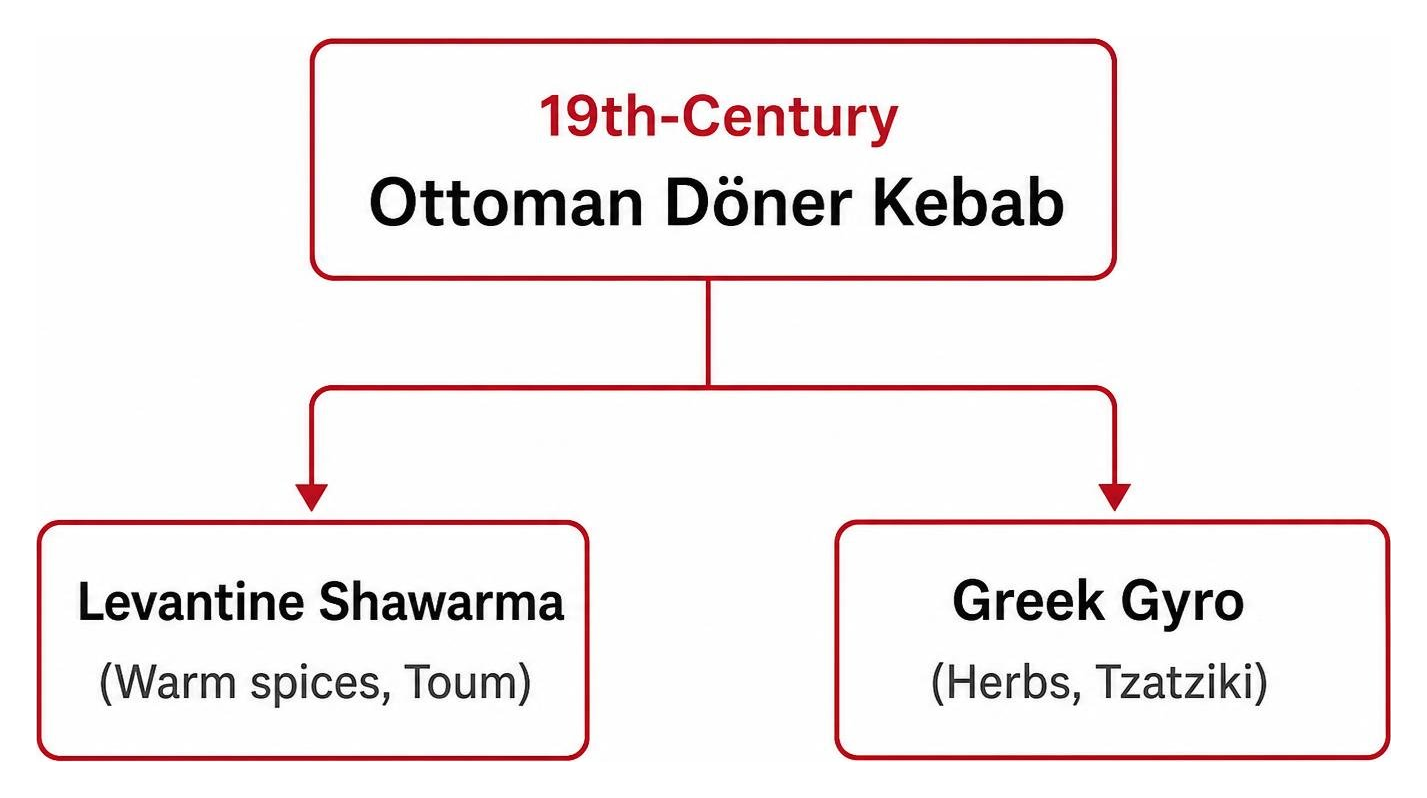
- Döner Kebab: The direct Turkish ancestor. Typically composed of thinly sliced lamb, beef, or a mix of ground meat lightly seasoned with salt, pepper, onion juice, and milk. It is shaved onto crisp flatbread or pide bread, often served plain with grilled peppers or dressed in browned butter and warm tomato sauce (as seen in Iskender kebab).
- Gyro: The Greek adaptation. Most commonly made in North America from fine-ground seasoned beef and lamb pressed into a solid loaf (or whole pork cuts in Greece). It is seasoned predominantly with Mediterranean herbs like oregano, thyme, marjoram, rosemary, and garlic. It is famously dressed with cool, cucumber-and-dill tzatziki sauce, fresh tomatoes, raw red onions, and wrapped in thick, soft Greek pita bread.
- Shawarma: The Levantine masterwork. Built from whole muscle cuts of chicken, beef, or lamb (never ground meat loaves), heavily spiced with cardamom, cumin, turmeric, and cinnamon. It avoids cool herb sauces like tzatziki entirely, pairing instead with intense garlic toum, earthy tahini, pickled turnips, and sumac-dusted onions.
| Feature | Shawarma | Gyro | Döner Kebab |
|---|---|---|---|
| Origin Region | Middle East / Levant | Greece | Turkey |
| Primary Seasonings | Cardamom, cumin, cinnamon, turmeric, garlic, paprika | Oregano, thyme, rosemary, garlic, marjoram | Onion juice, salt, black pepper, mild paprika |
| Meat Form | Stacked whole muscle slices (chicken, lamb, beef) | Ground meat loaf (US) or sliced pork/lamb (Greece) | Layered lamb, beef, or ground meat mix |
| Signature Sauce | Garlic toum (chicken) or Tahini/Tarator (beef) | Tzatziki (yogurt, cucumber, dill) | Garlic yogurt sauce, butter, or mild tomato puree |
| Pickle & Veggie Accents | Pickled turnip, wild cucumber pickles, sumac onion | Fresh sliced tomato, raw red onion | Sliced tomato, shredded lettuce, grilled peppers |
Health and Nutrition: Calories, Fat, and Protein Breakdown
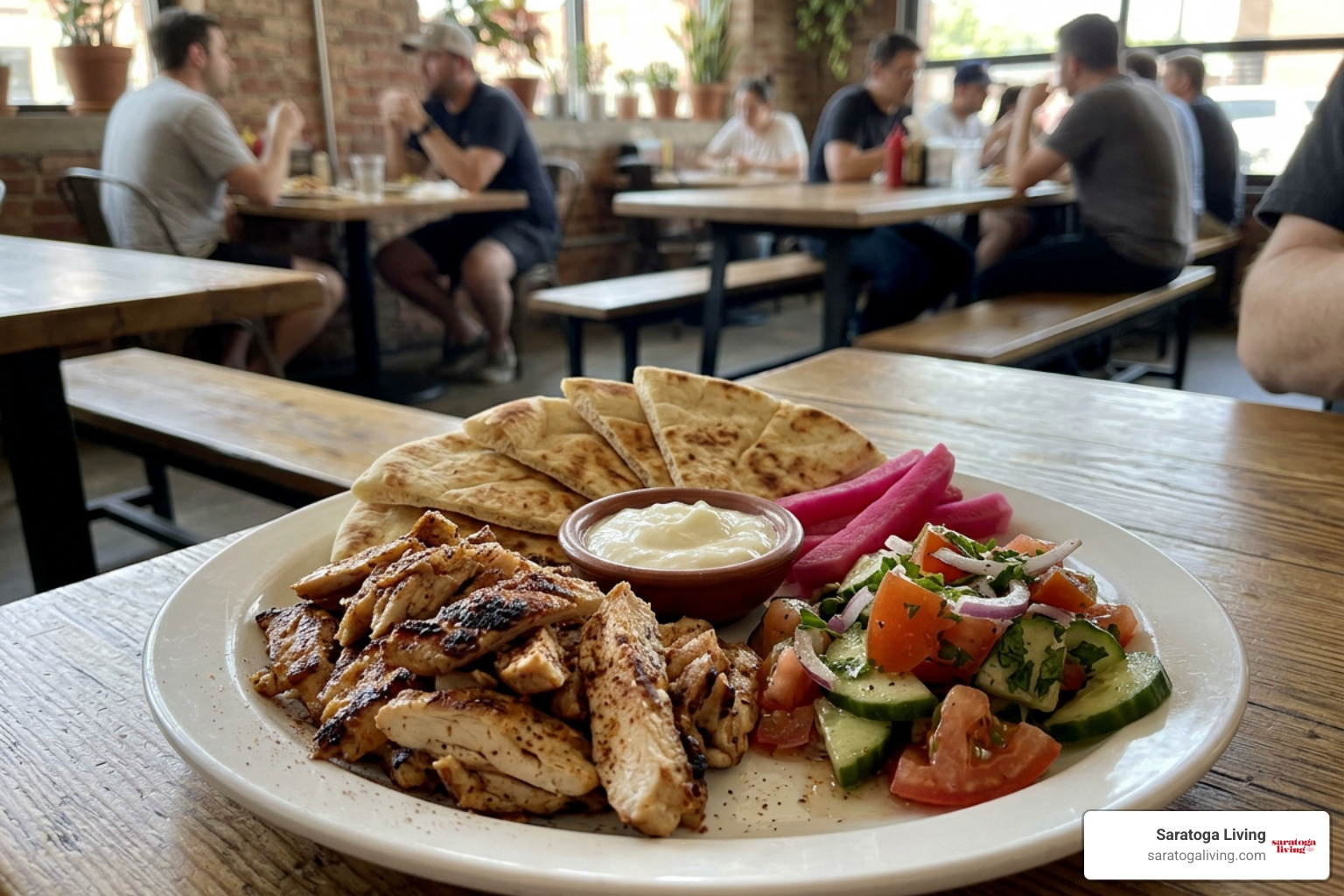
Whether you are grabbing a quick lunch between race days or dining out in downtown Saratoga, shawarma can serve as an exceptionally nutritious, high-protein meal choice when ordered mindfully.
Because shawarma relies on lean muscle meats cooked on a self-basting vertical rotisserie, much of the rendered fat drips away during the roasting process. A standard chicken shawarma wrap (weighing approximately 270–280 grams) provides:
- Calories: ~450 – 460 kcal
- Protein: 40 – 50 grams
- Carbohydrates: 35 – 40 grams
- Total Fat: 20 – 25 grams (Saturated fat: ~7 – 8g)
- Dietary Fiber: ~4.5 grams
On average, a full plated meal incorporating bread, rice, sauces, and sides yields roughly 728 calories, 20g of total fat, 6.4g of saturated fat, and 208mg of cholesterol, offering robust nutritional value for active diners.
For gym-goers, low-carb enthusiasts, or keto diners, shawarma offers high flexibility. By ditching the flatbread wrap or rice base and requesting a shawarma bowl over a bed of fresh Mediterranean salad (romaine lettuce, diced cucumbers, tomatoes, parsley, and lemon-olive oil dressing), you immediately eliminate up to 35 grams of refined carbohydrates while retaining 45+ grams of lean muscle-building protein.
Conversely, opting for extra garlic toum or tahini increases healthy fats without spiking blood sugar. You can examine detailed dietary profiles through the Complete 2026 Shawarma Guide.
Frequently Asked Questions
What is the main difference between chicken and beef shawarma sauces?
In traditional Middle Eastern street food culture, chicken and beef shawarma are treated as distinct culinary entities, each paired with specific sauces to balance their fat and flavor profiles:
- Chicken Shawarma: Almost universally paired with toum—a whipped emulsion of raw garlic, oil, salt, and lemon juice. The intense garlic punch cuts through the lean, spice-rubbed poultry.
- Beef and Lamb Shawarma: Paired exclusively with tahini (or tarator), a rich sauce made from ground roasted sesame seeds blended with lemon juice, garlic, and water. The nutty depth of sesame complements the bolder, richer flavors of dark red meats.
Can you make authentic shawarma at home without a vertical spit?
Yes! While home kitchens rarely feature commercial vertical rotisseries, you can achieve remarkable flavor depth and crispy textures using your standard oven or stove:
- Use Boneless Skinless Chicken Thighs: Thighs contain sufficient natural fat to stay moist and caramelize properly under high heat (unlike chicken breasts, which dry out quickly).
- Marinate Deeply: Use a blend of yogurt, olive oil, lemon juice, garlic, cardamom, cumin, turmeric, and paprika. Marinate for at least 3 to 24 hours.
- High-Heat Cast-Iron Searing or Broiling: Roast marinated meat slices flat on a sheet pan at 425°F (220°C) for 20 minutes, then turn on the broiler for 3–5 minutes to char the surface. Alternatively, sear in single-layer batches in a screaming-hot cast-iron skillet for 4–5 minutes per side.
- Slice Against the Grain: Let the meat rest for 5 minutes, then slice thinly to mirror street-vendor carving.
Is shawarma considered a healthy option for weight loss?
Shawarma can be an excellent addition to a weight loss or fitness diet. High-protein meals increase satiety, helping you stay full longer. To keep calories in check while maximizing nutrition:
- Order a shawarma salad bowl with extra pickled veggies, cucumber, tomato, and fresh herbs instead of a double-wrapped flatbread with rice or fries.
- Ask for garlic toum or tahini on the side so you can control your sauce portions.
- Choose chicken or veal over lamb to select leaner protein options.
Conclusion
From its 19th-century Ottoman origins in Bursa to modern street corners around the world, shawarma has proven itself one of the world’s most enduring, adaptable, and craveable culinary creations. Its winning combination of warm, comforting spices, tender slow-roasted meats, and bold garlic and sesame sauces elevates fast-casual dining into a memorable event.
Here in Saratoga Springs and across the wider Capital Region, our local food scene continues to expand with authentic Mediterranean, Levantine, and Middle Eastern eateries serving world-class wraps, plattered feasts, and fresh salad bowls. Whether you need a lightning-fast weekday lunch, catering for a track-season gathering, or a late-night feast after exploring downtown, there has never been a better time to dive into local menus.
Looking for top culinary recommendations, food guides, and restaurant spots across Saratoga? Explore Saratoga Living’s 2025 Food & Drink Guide to discover the best local dining, drinks, and hidden culinary gems right in our backyard.