What Is Masago in Sushi?
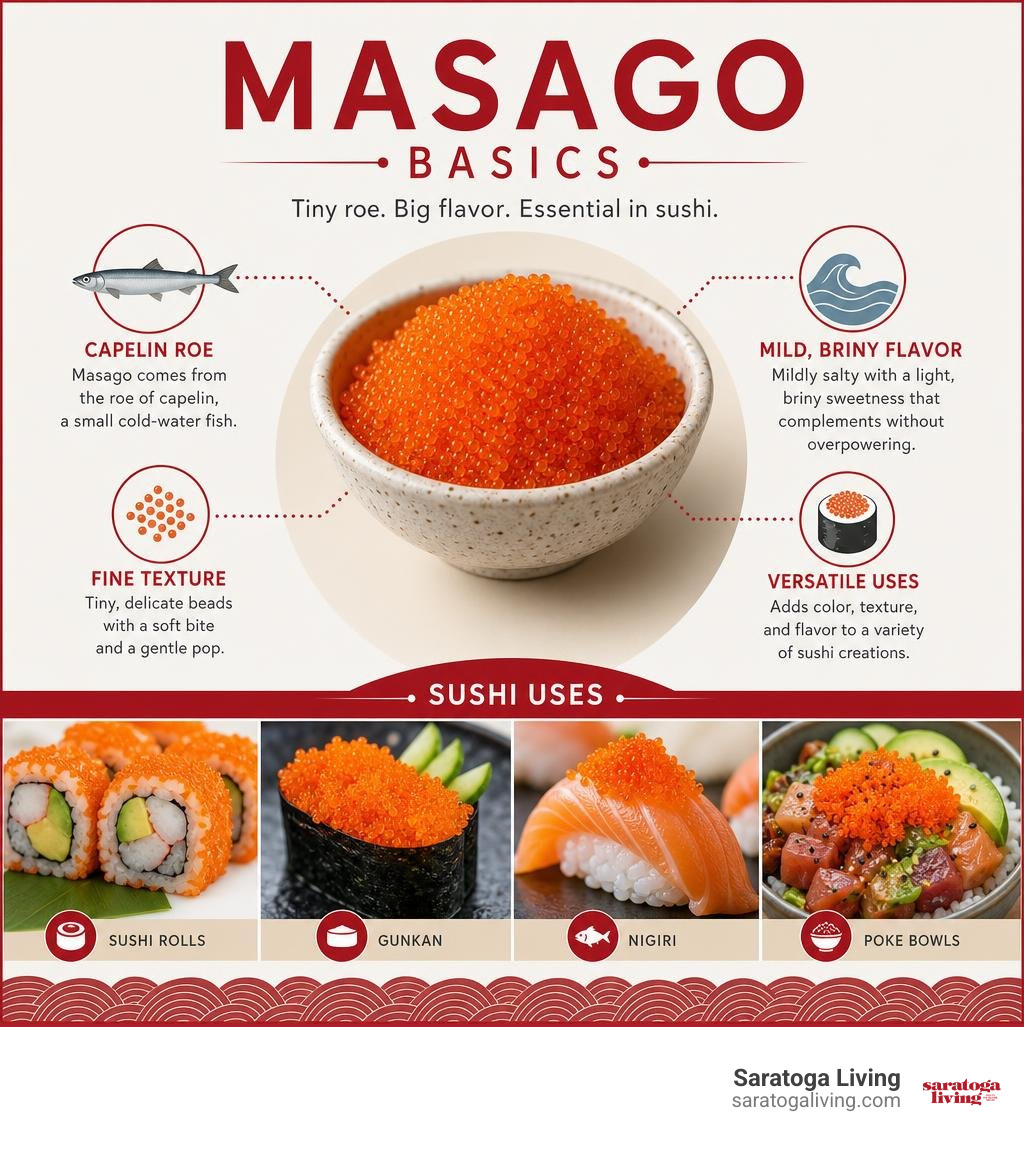
Masago is the tiny edible roe, or fish eggs, of the capelin fish. It is commonly used in Japanese cuisine as a colorful sushi topping, usually appearing as small orange beads on rolls, nigiri, and rice bowls.
- Fish source: Capelin, a small cold-water fish in the smelt family
- Taste: Mild, salty, lightly sweet, and briny
- Texture: Fine and soft with a delicate pop
- Color: Naturally pale yellow; often dyed orange, red, green, or black
- Common use: A budget-friendly garnish for sushi rolls, sauces, and poke bowls
You may have seen masago coating a California roll or adding a bright finish to spicy tuna. Its flavor is subtle enough to support rich ingredients like avocado, crab, mayo, and salmon without taking over the dish.
I am Guest Posts, and next we’ll look at where this small but familiar sushi ingredient comes from.
What Is Masago? Origins, Sourcing, and Preparation

To truly understand masago, we have to take a deep dive into the icy waters of the far North. While it has become an indispensable staple in Japanese restaurants across New York’s Capital Region and around the globe, this vibrant ingredient begins its journey as the roe of a humble marine species known as the capelin (Mallotus villosus).
Capelin are small, sleek forage fish belonging to the smelt family. Resembling sardines with their silvery-green backs and slender bodies, these cold-water dwellers typically measure between 11 and 20 centimeters in length and weigh a mere 25 to 50 grams. Despite their small stature, they play an outsized role in northern ocean ecology and contemporary gastronomy.
Capelin Fish Harvest and Habitat
Capelin thrive in the subarctic waters of the North Atlantic, North Pacific, and Arctic Oceans, with major populations located off the coasts of Iceland, Norway, Greenland, and Canada. As critical forage fish, capelin form a crucial link near the base of the marine food web. They consume tiny plankton and, in turn, serve as a primary nourishment source for major ocean predators, including codfish, seals, baleen whales, and diving seabirds.
The harvesting of female capelin specifically targets their brief spawning window between late spring and early summer, typically running from April to July. Female capelin reach reproductive maturity between two and four years of age, carrying an astonishing 6,000 to 30,000 eggs at a time. Fishermen capture these egg-bearing females right before they spawn, when roe development reaches more than 80% capacity.
Commercial capelin fishing is a massive international industry. Approximately 80% of the worldwide capelin harvest is processed into fishmeal and fish oil products, leaving the remaining 20% dedicated to producing masago for human consumption. Because heavy fishing directly impacts forage stocks and larger marine predators, sustainable management and quota regulations in countries like Norway and Canada remain vital to preserving marine ecosystems.
Natural Appearance vs. Dyed Shades in Masago
If you were to inspect fresh capelin roe right out of the ocean, you might be surprised by its appearance. In its natural state, masago is not the fiery orange jewel we routinely see crowning sushi rolls. Naturally harvested capelin eggs are a pale, translucent yellow or off-white hue.
To enhance visual appeal on the plate, commercial processors apply natural and food-grade colorings during the salt-curing and marinating process. For a detailed breakdown of how traditional and commercial processing shape Japanese fish roe, check out What is Masago Sushi? — Sushipedia.
Common color variations created for culinary applications include:
- Bright Orange: The quintessential sushi garnish color, traditionally dyed using food colorings like FD&C Yellow #6 or natural beta-carotene.
- Vibrant Red: Achieved through Red #40 or carmine, frequently used to provide contrast against dark nori seaweeds.
- Deep Black: Colored using natural squid ink or artificial dyes, offering a dramatic alternative reminiscent of luxury caviar.
- Wasabi Green: Dyed with mustard, wasabi extract, or food coloring to add both a verdant pop and a fiery bite.

Flavor Profile, Culinary Uses, and Comparisons
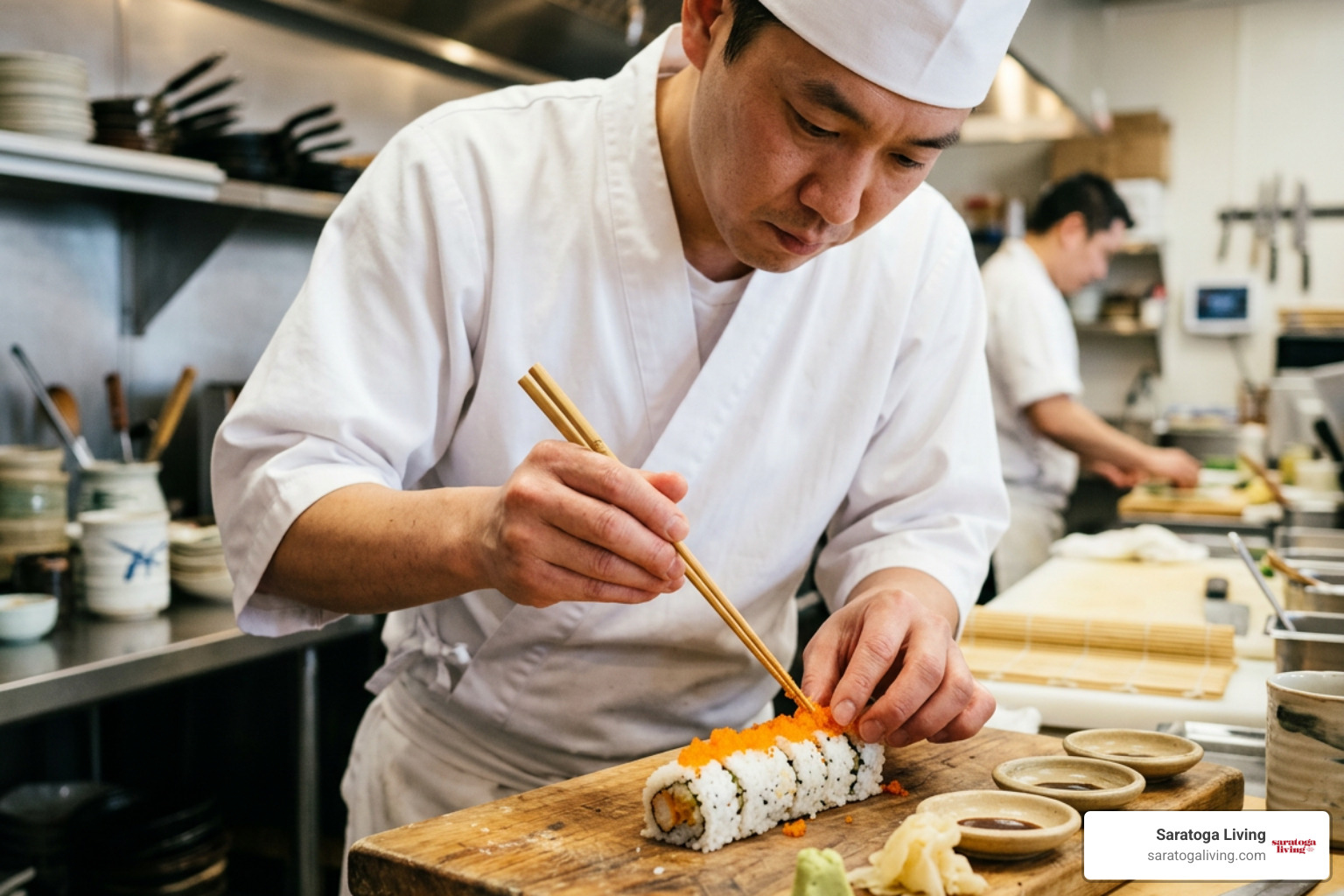
Part of the universal appeal of masago lies in its approachable sensory characteristics. Unlike more pungent seafood offerings, capelin roe delivers a clean, gentle sea breeze flavor combined with an addictively delicate bite.
How Masago Flavor and Texture Elevate Dishes
When you take a bite of sushi topped with capelin roe, you experience a mild brininess with a hint of natural sweetness. It carries an appetizing umami undertone without any harsh or overly fishy notes.
Texture is where capelin roe truly shines. The word masago translates literally from Japanese as “fine sand,” describing the incredibly tiny, granular nature of the eggs. Rather than exploding in your mouth with a heavy liquid burst, capelin eggs offer a soft compression and a crisp, seed-like crunch. This delicate texture creates an exciting contrast when paired with softer elements like warm sushi rice, tender yellowtail, or velvety avocado. To read more about how sushi chefs use these subtle characteristics, explore What is Masago? Everything You Need To Know – The Manual.
Common Culinary Applications in Sushi and Sauces
Because capelin roe is versatile and cost-effective, kitchen teams across Saratoga Springs and beyond utilize it in numerous creative ways:
- Inside-Out Sushi Rolls (Uramaki): Chefs roll the exterior rice layer of California rolls, Alaska rolls, and spicy crab rolls in capelin roe to create a colorful, textured coating.
- Gunkan Maki (Battleship Sushi): Nori seaweed sheets are wrapped around a base of sushi rice to create a small cup, which is then filled to the brim with glowing capelin roe and occasionally topped with a quail egg yolk.
- Signature Mayo Drizzles: Mixing capelin roe into Japanese Kewpie mayonnaise, Sriracha, and a touch of lime juice creates a textured, creamy sauce that elevates baked green mussels and poke bowls.
- Pasta and Noodle Dishes: In modern Japanese fusion, capelin roe is whisked into warm dashi, butter, and milk to coat thick udon or spaghetti noodles, garnishing seafood pasta with a salty bite.
Differentiating Capelin Roe, Tobiko, Caviar, and Ikura
It is extremely easy to confuse the various types of fish roe available on sushi menus. While they might look somewhat similar at a casual glance, their origins, textures, sizes, and price tags differ significantly.
| Type of Roe | Source Species | Egg Size | Texture Profile | Flavor Characteristics | Average Price Point |
|---|---|---|---|---|---|
| Masago | Capelin (Smelt) | Tiny (1–1.5 mm) | Soft compression, fine, sandy crunch | Mild, salty, sweet, lightly briny | Very Affordable |
| Tobiko | Flying Fish | Medium (2–3 mm) | Firm, crisp, distinct popping texture | Smoky, ocean-salty, slightly sweet | Moderate |
| Ikura | Salmon | Large (5–8 mm) | Soft wall, rich liquid explosion | Bold, juicy, savory umami | High |
| Caviar | Sturgeon | Medium-Large (2–4 mm) | Smooth, melting, buttery mouthfeel | Rich, nutty, deep mineral saltiness | Luxury / Very High |
Tobiko comes from flying fish and is naturally a brighter orange, featuring larger and noticeably crunchier eggs than capelin roe. True caviar comes exclusively from sturgeon species—which can take up to 20 years to mature—making it a high-end luxury delicacy compared to everyday sushi roes. Salmon roe (ikura) stands in a category of its own with massive, glowing orange spheres that pop juicy ocean flavor across the palate.
Nutritional Benefits, Health Risks, and Storage Guidelines
In addition to making sushi rolls look like edible art, masago packs a surprisingly robust nutritional profile into a tiny serving size.
Health Profile, Sodium, and Allergen Warnings
Despite its small volume, capelin roe is dense with essential micronutrients. A single 1-ounce (28-gram) serving—roughly equivalent to two tablespoons—delivers high-quality nourishment with minimal calories:
- Calories: 40 kcal
- Protein: 6 grams (equivalent to a whole chicken egg)
- Fat: 2 grams
- Carbohydrates: Less than 1 gram
- Vitamin B12: 47% of the Daily Value (DV)
- Selenium: 16% of the DV
- Riboflavin (Vitamin B2): 12% of the DV
Because capelin sit low on the marine food chain, their roe contains negligible trace levels of heavy metals like mercury compared to large predatory fish like tuna or swordfish. Furthermore, it supplies vital omega-3 fatty acids that support cardiovascular and brain health. For an in-depth nutritional analysis, consult What Is Masago? Benefits and Downsides of Capelin Fish Roe.
However, there are important dietary considerations to keep in mind:
- High Sodium Content: A single tablespoon of capelin roe contains approximately 240 mg of sodium due to salt-curing preservation. Those managing high blood pressure or sodium-restricted diets should consume it in moderation.
- Seafood and Protein Allergies: In Japan, fish roe ranks as the sixth most common food allergen. Capelin roe contains vitellogenin, an egg yolk protein that can trigger allergic reactions (such as hives, rashes, or respiratory discomfort) even in people who do not normally suffer from finfish or shellfish allergies.
- Commercial Additives: Mass-produced commercial brands may contain added monosodium glutamate (MSG), high fructose corn syrup, or soy-based seasonings. Always verify ingredients if you have food sensitivities.
Where to Buy, Handling, and Shelf Life
If you want to experiment with capelin roe in your home kitchen, keeping proper storage practices in mind ensures both safety and quality.
- Purchasing: Look for sealed plastic tubs or jars in the freezer section of local Asian specialty markets or reputable seafood retailers. Select products with vibrant, uniform color and avoid packages displaying ice crystals or dull, grayish tones.
- Freezer Storage: Keep unopened capelin roe frozen at 0°F (-18°C) or lower. Properly frozen roe maintains peak quality for up to 6 months.
- Thawing and Portioning: Thaw frozen roe overnight in the refrigerator. To avoid re-freezing defrosted roe—which destroys egg wall integrity—divide large tubs into smaller individual portions before initial freezing.
- Refrigeration Limits: Once thawed and opened, keep capelin roe sealed in an airtight glass or plastic container in the coldest part of your refrigerator. Consume it within 3 to 4 days for optimal taste and texture.
Frequently Asked Questions
Is capelin roe raw when served on sushi?
Technically, capelin roe is raw because it is not cooked with heat. However, commercially distributed roe is not entirely untreated. Right after harvesting, the eggs undergo a salt-curing process that acts as a natural preservative and enhances flavor. Additionally, strict commercial freezing standards—maintaining temperatures at -4°F (-20°C) or below for designated timeframes—destroy parasites and ensure product safety before the roe reaches your table.
Why is capelin roe often used instead of tobiko?
Sushi restaurants frequently favor capelin roe because it offers exceptional value. Flying fish roe (tobiko) is harder to harvest and generally costs roughly twice as much wholesale. Capelin roe provides a very similar aesthetic, pleasant texture, and appealing ocean flavor at a fraction of the cost, making it the practical choice for garnishing everyday sushi rolls, poke bowls, and specialty sauces.
What gives capelin roe its signature crunch?
The delicate crunch comes from the structural composition of the egg’s outer shell membrane (chorion). When you bite down on these tightly packed, granular spheres, the outer membrane yields under subtle pressure, creating a crisp pop that feels lighter and finer on the tongue than larger fish eggs like salmon or flying fish roe.
Conclusion
From cold northern currents to the creative sushi bars of Saratoga Springs and the wider Capital Region, masago has earned its place as one of the culinary world’s most versatile garnishes. Whether providing a colorful finish to an inside-out roll, adding texture to a creamy spicy mayo, or delivering a nutrient-dense boost of vitamin B12 and omega-3s, capelin roe brings subtle ocean charm to everyday dining.
As you explore the thriving local dining scene, keep an eye out for how regional sushi chefs highlight this delightful ingredient. To stay connected with regional dining trends, seasonal restaurant spotlights, and epicurean recommendations across Upstate New York, explore Saratoga Living’s 2025 Food & Drink Guide.