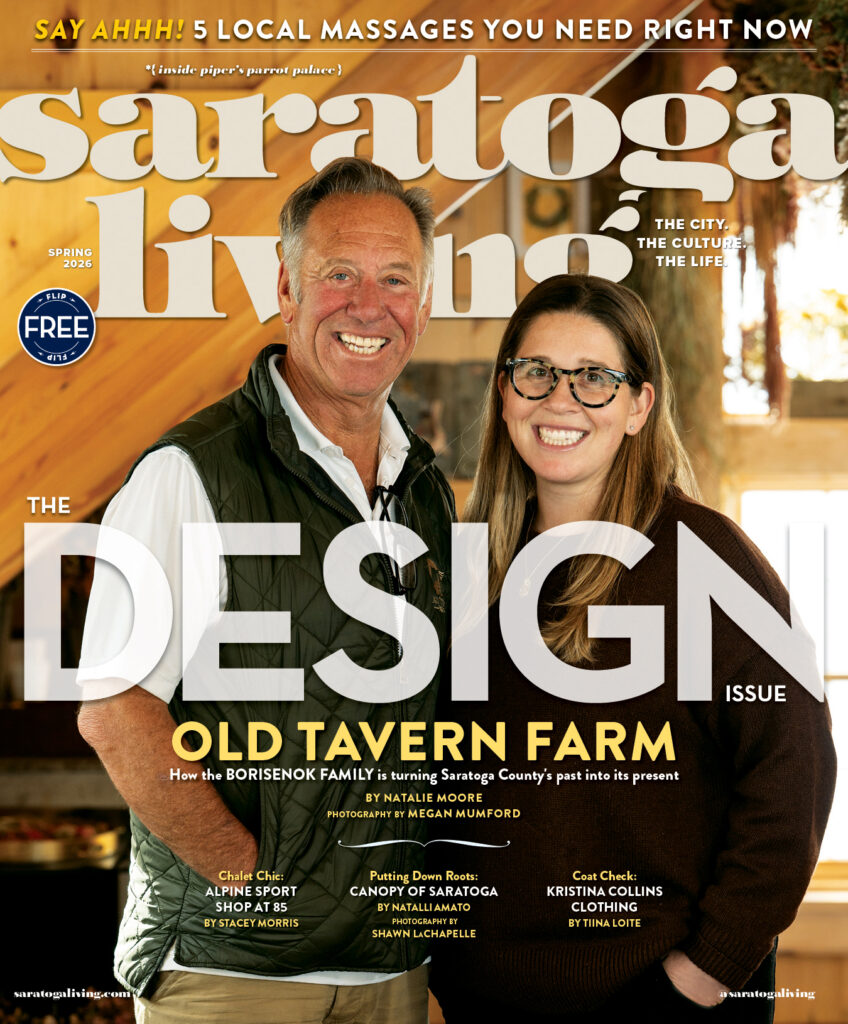
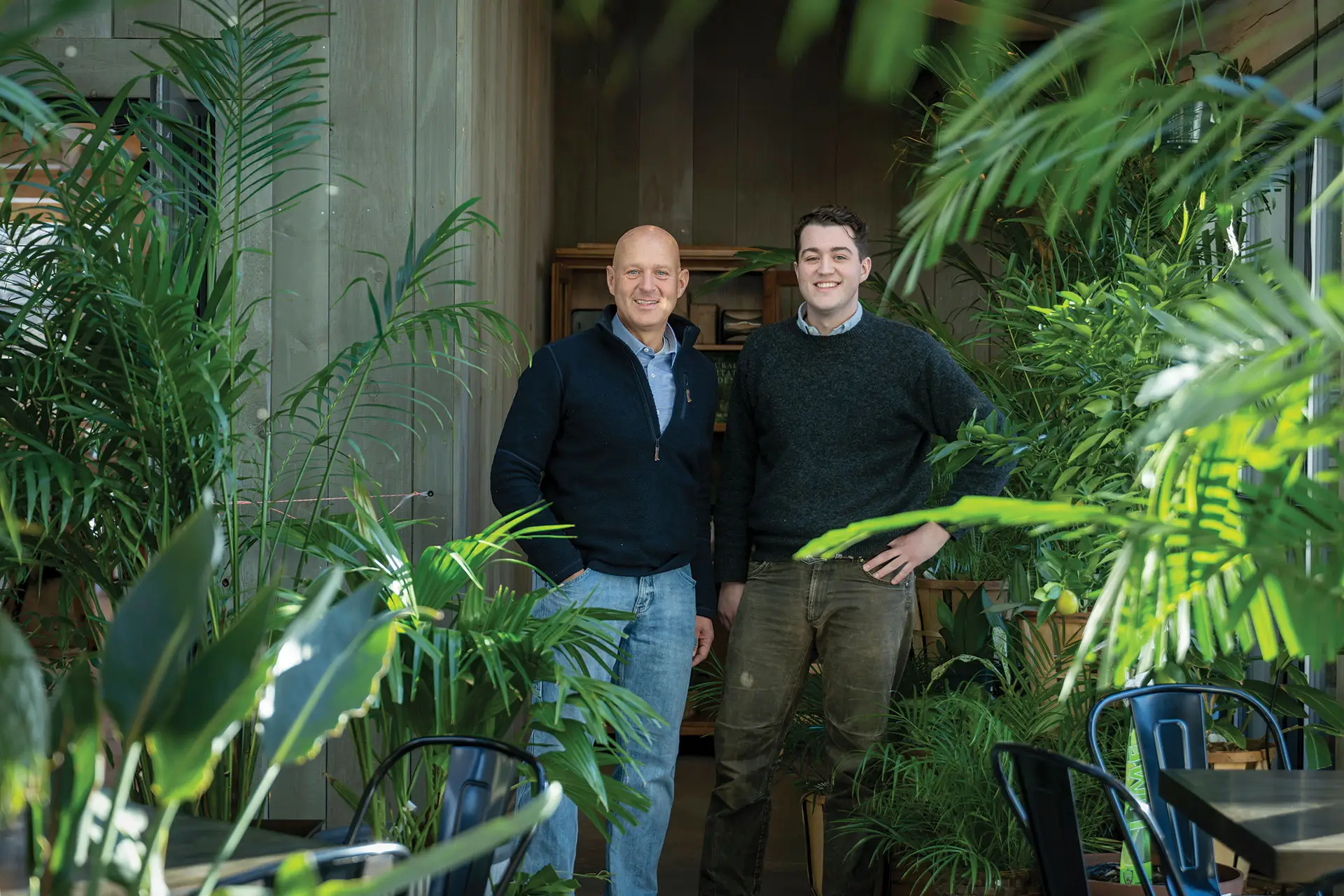
(Above): Walt Borisenok, Nicole Borisenok, Mike Krasodomski, and Bill Moreau, photographed by Megan Mumford
Ten years ago, Walt and Michelle Borisenok named their boutique Thoroughbred breeding operation after the old tavern that stood on the site of the farm they purchased in Stillwater. While they weren’t able to save the dilapidated structure and ultimately had it torn down, that tavern served as an omen of what was to come. Fast forward to today, and Old Tavern Farm is in the business of saving historic Saratoga County structures just like the tavern—and is building an agricultural empire in the process.
Located in the rolling hills overlooking the eastern shore of Saratoga Lake, Old Tavern Farm’s horse barn is a state-of-the-art facility dedicated to the breeding of equine athletes that may one day race on the track at Saratoga Race Course. The Borisenoks started the business in 2016, several years after Walt’s company, pharmaceutical and nutritional product manufacturer Fortitech, sold for $634 million. Today, Old Tavern is known around Saratoga as a host site of NYRA’s popular Breakfast and Breeding Tours, and, for a fairly new boutique operation, has already found major success in the larger world of horse racing: Just last year, an Old Tavern weanling sold at Keeneland’s November sale for $335,000.
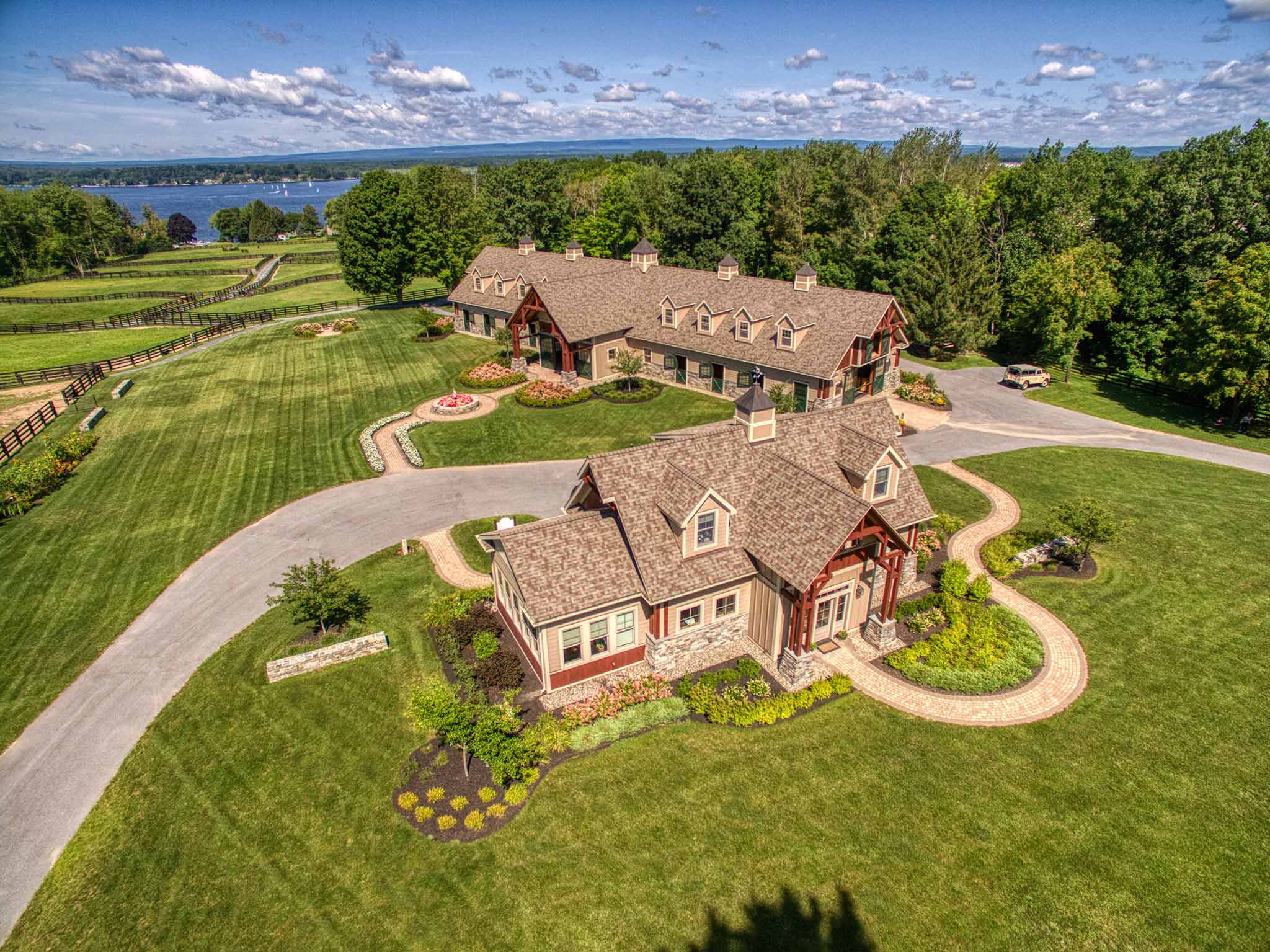
But the breeding farm was only the start of what the brand would become. Now spread across two properties in Stillwater, Old Tavern is known as much for its agricultural products—flowers, wine, and spirits—as it is for its breeding operation. In the warm-weather months, Saratogians shop fresh-cut flowers at area farmers’ markets and Old Tavern’s roadside flower stand, and visit what the Borisenoks call the “agricultural village” to take wreath-making and floral-arranging workshops. Local wine-lovers subscribe to Old Tavern Winery’s wine club, which gets them quarterly bottle installments, access to new and unreleased products, discounts on workshops, and an invite to a member-exclusive end-of-summer wine club party. And whiskey enthusiasts religiously show up for Monday Cigar Nights at The Granary, the center of Old Tavern Distillery’s operations.
“Once we got into the other products, this agricultural village concept came about,” says Walt. “That’s when we brought Bill in.”
On a recent Thursday afternoon, I caught up with Walt; his daughter, Nicole, who runs the winery; his son-in-law, Mike Krasodomski, who runs the distillery; and Bill Moreau of Moreau Associates, Walt’s longtime contractor and the mastermind behind what has become Old Tavern Farm’s second chapter, on the second floor of the Old Tavern flower barn. (Michelle and Walt’s son, also named Mike, is involved with the family business as well.) Between forced family photos, interruptions from an overly friendly Golden Retriever, several glasses of whiskey, and bouts of what the Borisenoks affectionately refer to as “robust dialogue,” they told me the story of how a businessman came to be running a family farm that’s in the business not only of selling locally made products, but of preserving Saratoga County history.
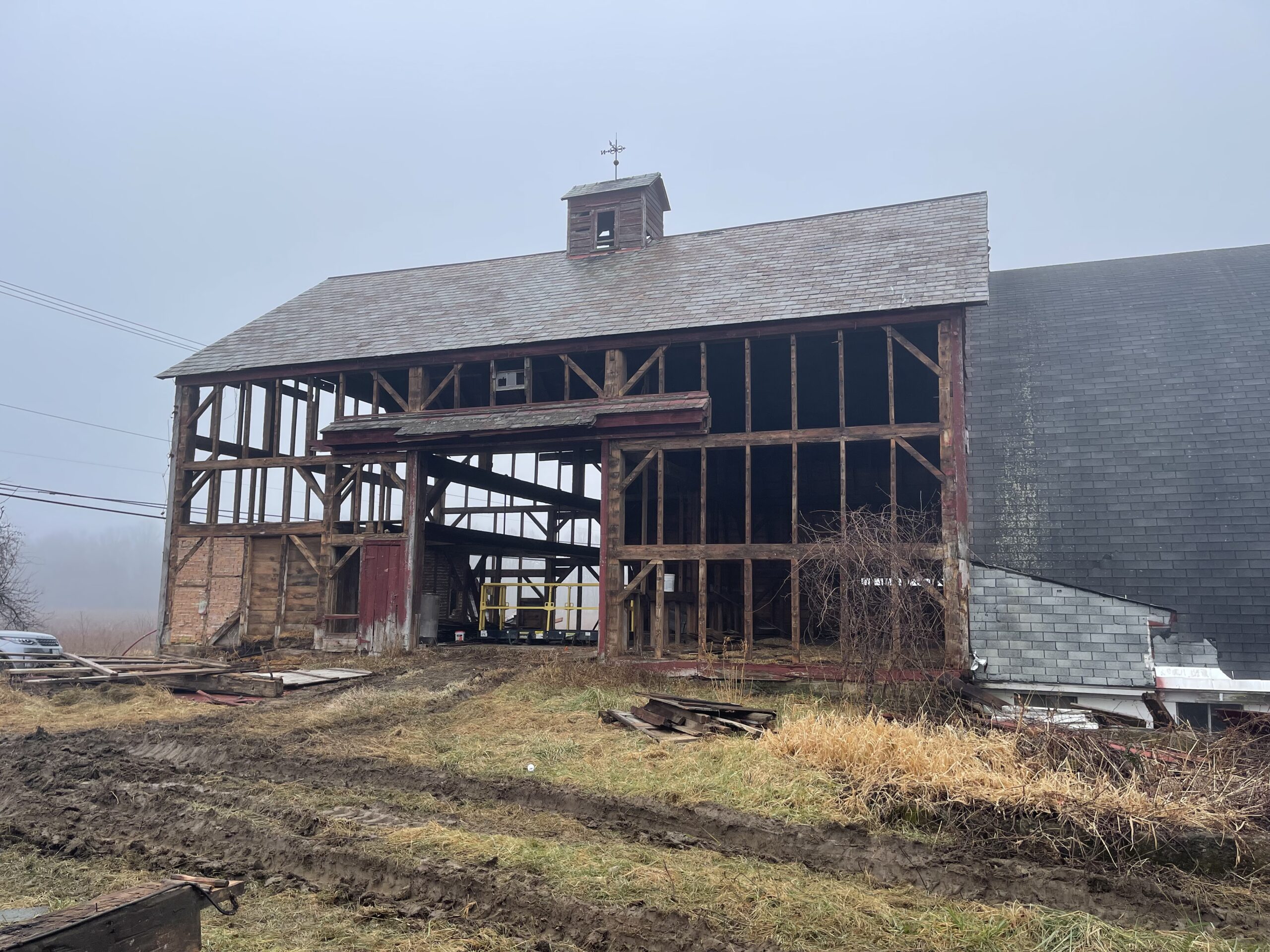
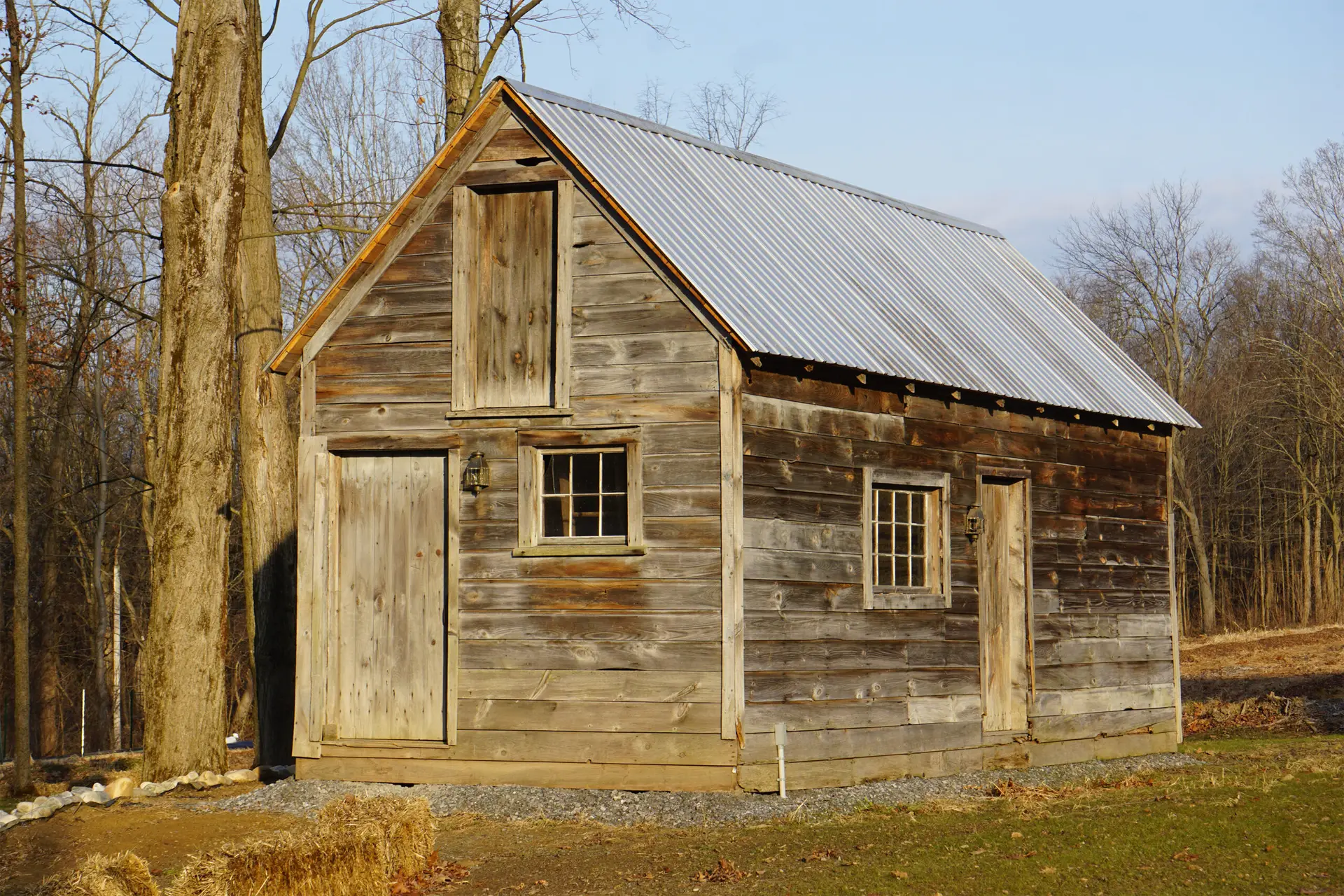
When the Borisenoks first purchased the Caldwell family farm, a 60-acre plot of land around the corner from Old Tavern’s breeding farm most recently occupied by the Ensley family, it was home to two structures—a historic, white farmhouse that was chock-full of old books, bills of sale, diplomas, and other documents left behind by generations of pack rats, and a dilapidated barn dating back to the early to mid-1800s. Both structures were in need of restoration work, but the barn was on the verge of ruin. To restore it, Moreau and his team had to physically lift the barn off its foundation, repair the foundation, right the leaning structure, and then put everything back into place.
“We had to do something on this property to make a statement,” Walt says. “So we did that.”
While Moreau and his team were working on that project, Walt got a call from a man in Halfmoon who’d heard about his recent barn restoration project and was wondering if he’d be interested in rescuing another historic barn at risk of being knocked down. Walt, Bill, and Nicole drove down to check out the structure—a behemoth 19th-century English-style barn with lofty, arched ceilings that was in great shape, considering its age. When Walt learned the barn’s history—it was part of the former Mott orchard, where Mott’s apple juice got its start—the decision was made to disassemble the barn and relocate it to Old Tavern’s agricultural village.
“That was December 2021,” Nicole says.
“We love working in the winter,” Moreau adds. “When it’s cold and just miserable.”
And the hits kept coming. Soon after, the Borisenoks were contacted by a man who was selling his late mother’s house in Burnt Hills, and needed the small 19th century barn on the property gone. Then they were contacted about a 18th century grain barn, located about 10 miles down the road from the agricultural village in Stillwater.
“We needed another barn like we needed a hole in the head,” Walt says. But he and Moreau went to check both barns out.
“Moral of the story,” Nicole says, “is that anytime Bill and Walt get together and go look at something, it’s not a good idea.”
Needless to say, the grain barn and Burnt Hills shed now reside at Old Tavern’s agricultural village.
“We didn’t intend to go out and save Saratoga County history,” Walt says. “But basically, this is what it turned into, and now it’s actually part of the business plan. And, as I always say, none of this makes any financial sense.”
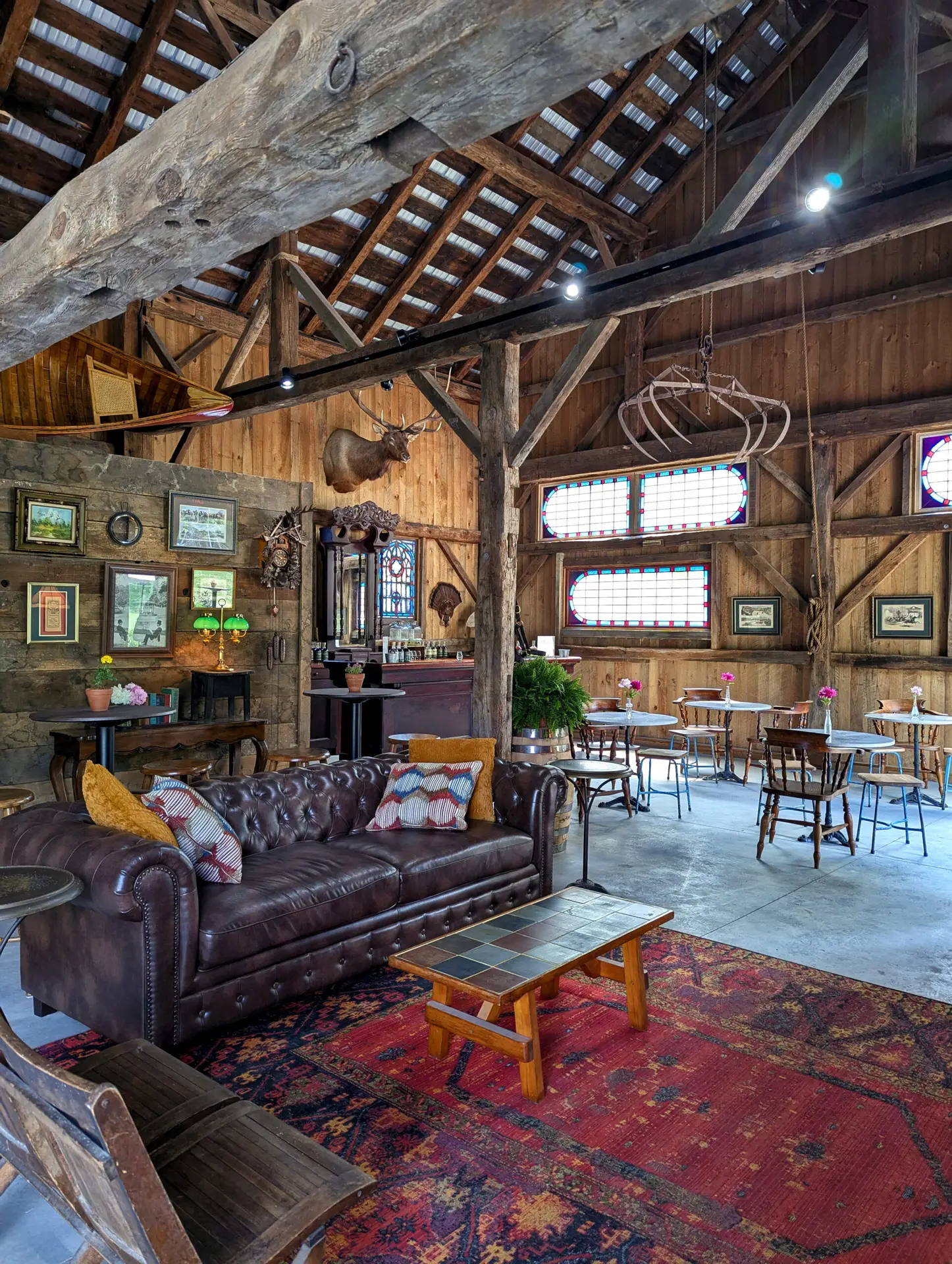
What does make financial sense are the high-quality, locally made agricultural products Old Tavern produces in those historic barns. The Burnt Hills barn—which Moreau’s team transported intact to its current home—now houses supplies used by Old Tavern’s flower farm. The Stillwater barn, which used to store grain, is now storing grain of a different type: whiskey. Dubbed The Granary, the space is now a barrel storage facility and tasting room used by Krasodomski for his spirit production. (The barn’s original hay hook, a giant claw used to transport hay from one side of the barn to the other, is still operational.) And the old Mott orchard barn from Halfmoon? That’s Old Tavern’s next big undertaking.
With construction—or, should I say reconstruction—starting at the agricultural village later this year, the old Mott barn will be reborn as Old Tavern Winery. (Currently, the winery operates out of a production facility located at the Old Tavern horse farm, which it has outgrown.) With the goal of opening to the public in 2027, the new space will feature a tasting room with outdoor seating as well as a production area and storage facility.
“We’re erecting the old barn as it was originally back in the 1860s,” Moreau says. “And then we’re building another new building that will encompass the old building to meet the energy code and Department of Health standards. So on the outside it’ll look like a brand-new building. But as soon as you open up the door, it’ll be the 1860s barn”—complete with the barn’s original cornerstone, into which the builders etched their names and
the date: 1868.
“The key is to be able to find these type of artifacts that give you the date,” Walt says. “That’s what actually gets addictive after a while.”
And there’s more. This spring, Nicole has plans to turn the agricultural village’s small teahouse—a one-room, glass structure she designed and Moreau constructed entirely out of windows salvaged from her grandmother’s camp on Saratoga Lake—into an onsite flower shop complete with coffee and light pastries called the Tea House Flower Café.
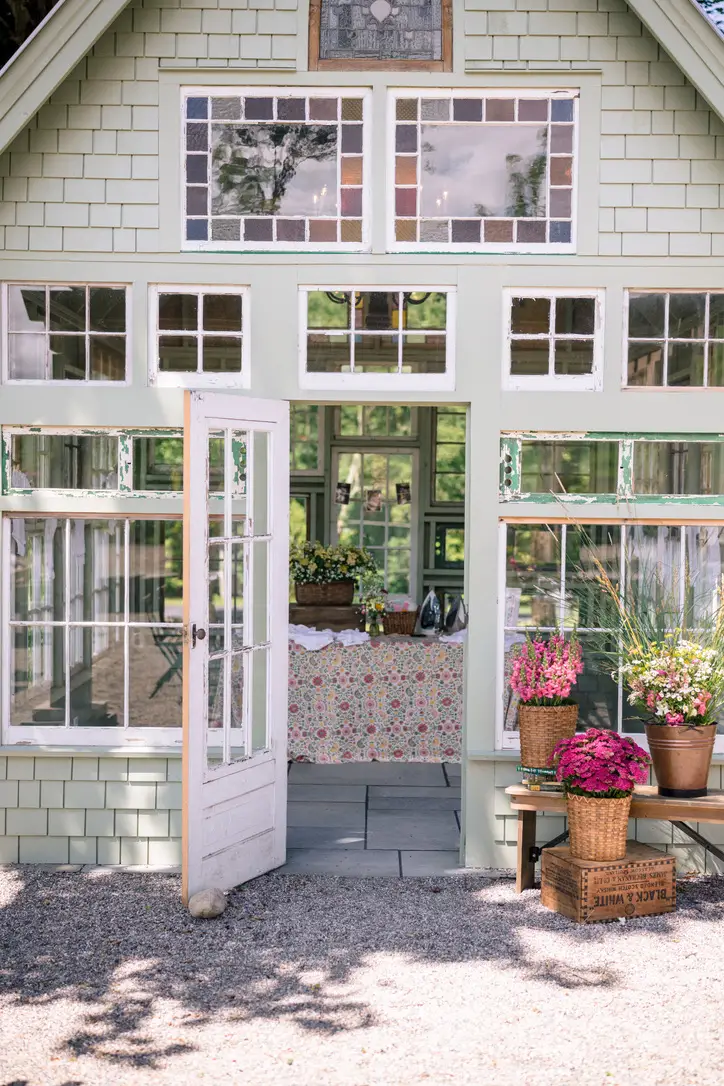
“We’re still ironing out the logistics, but the plan is to be open regular hours,” Nicole says. “Come in, shop our local flowers, grab a bouquet, get yourself a cup of coffee, sit on the patio if you want to hang out. The flower operations will be going on in the background.”
In talking with Nicole, her father, her husband, and their contractor (who seems to have been fully adopted as part of the family), I was struck by both their patience and their dedication to keeping Old Tavern Farm a farm in the truest sense of the word.
“Our whole purpose for doing this is to promote our products,” Walt says of the construction of the agricultural village. “It takes time to grow products. It’s not like you can sit there and say, ‘Hey, the flower business went really good and now, next month, we want twice as many flowers,’ because it takes a season to grow. Grapes—what Nicole does: It takes three years to get a set of grapes. Our growth strategy is to continue to build our product lines with this agricultural business, but we’re not taking shortcuts. Some people will go out and buy grapes from somebody else. We only use grapes that we have control over—that we grow. We want to be local. We’re tied to the area.”
Local horses, local flowers, local wine, local whiskey…and now local history. While the winery is Old Tavern’s next big project, Walt has down-the-road ambitions to turn that original Caldwell farm building—the one that was on the verge of tipping over—into a sort of museum filled with artifacts related to the Saratoga County properties from which the agricultural village’s structures came.
I ask Walt if he sees an end in sight—if the agricultural village will ever actually be “complete.”
“I hope so,” he says. “But we have a few more long-term tricks up our sleeve.”