Queen Victoria: The Monarch Who Defined an Era
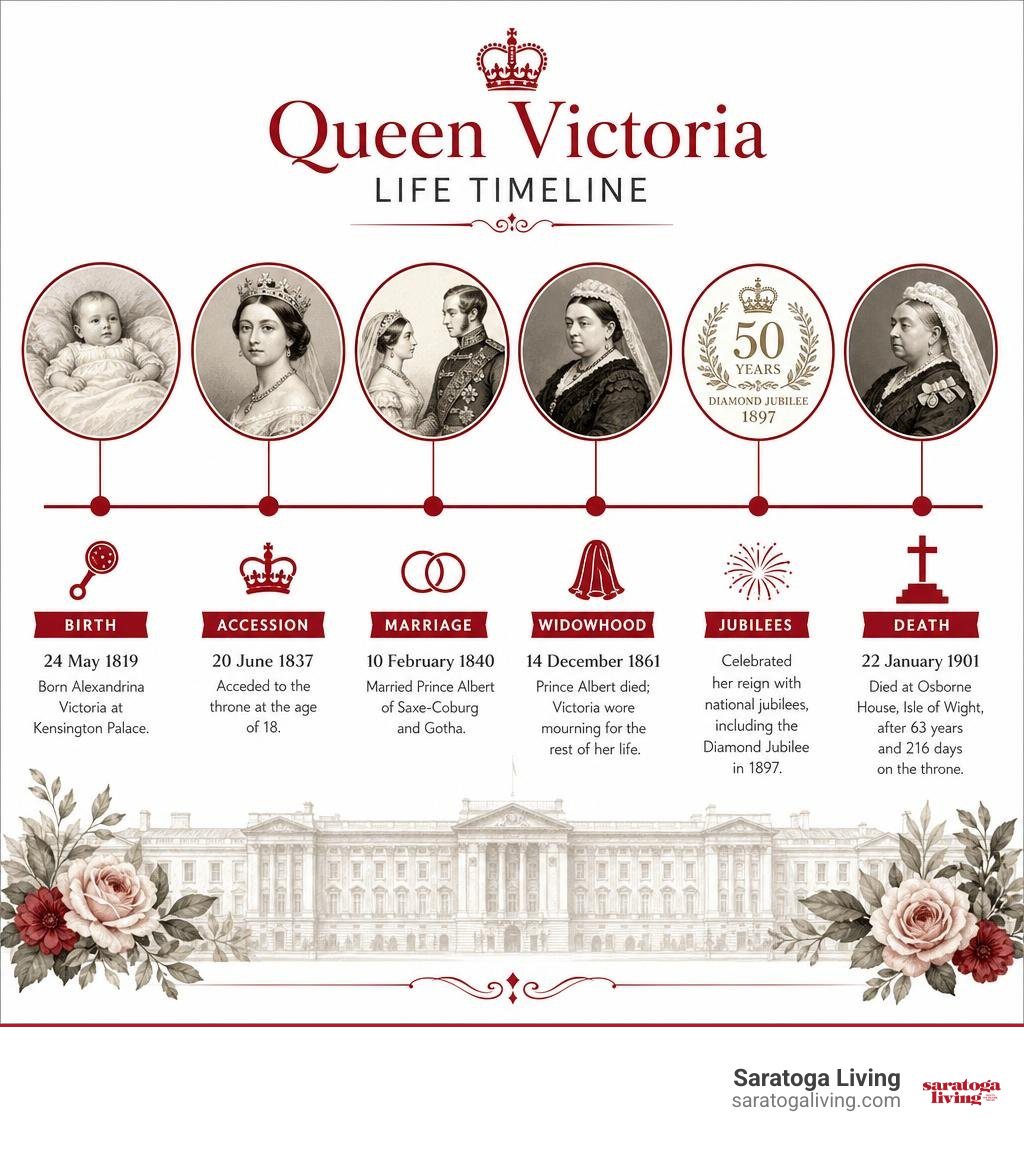
Queen Victoria was Britain’s monarch from 20 June 1837 until her death on 22 January 1901. Born Alexandrina Victoria at Kensington Palace on 24 May 1819, she reigned for 63 years and 216 days, the longest reign of any British monarch before Queen Elizabeth II.
Her name became shorthand for an age of immense change. The Victorian era saw Britain become an industrial powerhouse, expand its empire across much of the globe, and move closer to the modern constitutional monarchy, where the sovereign held influence but elected governments made policy. Victoria’s marriage to Prince Albert, her decades of mourning after his death, and her vast European family also made her private life part of public history.
This guide follows the key moments behind the crown: a tightly controlled childhood, accession at age 18, political crises, imperial power, jubilees, and the legacy that remains visible from London to Canada, where Victoria Day still marks her birthday.
Guest Posts explores the people, places, and stories that continue to shape culture today.
Early Life and the Kensington System
Royal Upbringing and Accession to the Throne
Victoria was the only child of Prince Edward, Duke of Kent and Strathearn (the fourth son of King George III), and Princess Victoria of Saxe-Coburg-Saalfeld. Her father died when she was barely eight months old, setting off a succession crisis among the aging royal brothers. Because her uncles George IV, Frederick Duke of York, and William IV failed to leave surviving legitimate heirs, the young princess became the heir presumptive to the British crown.
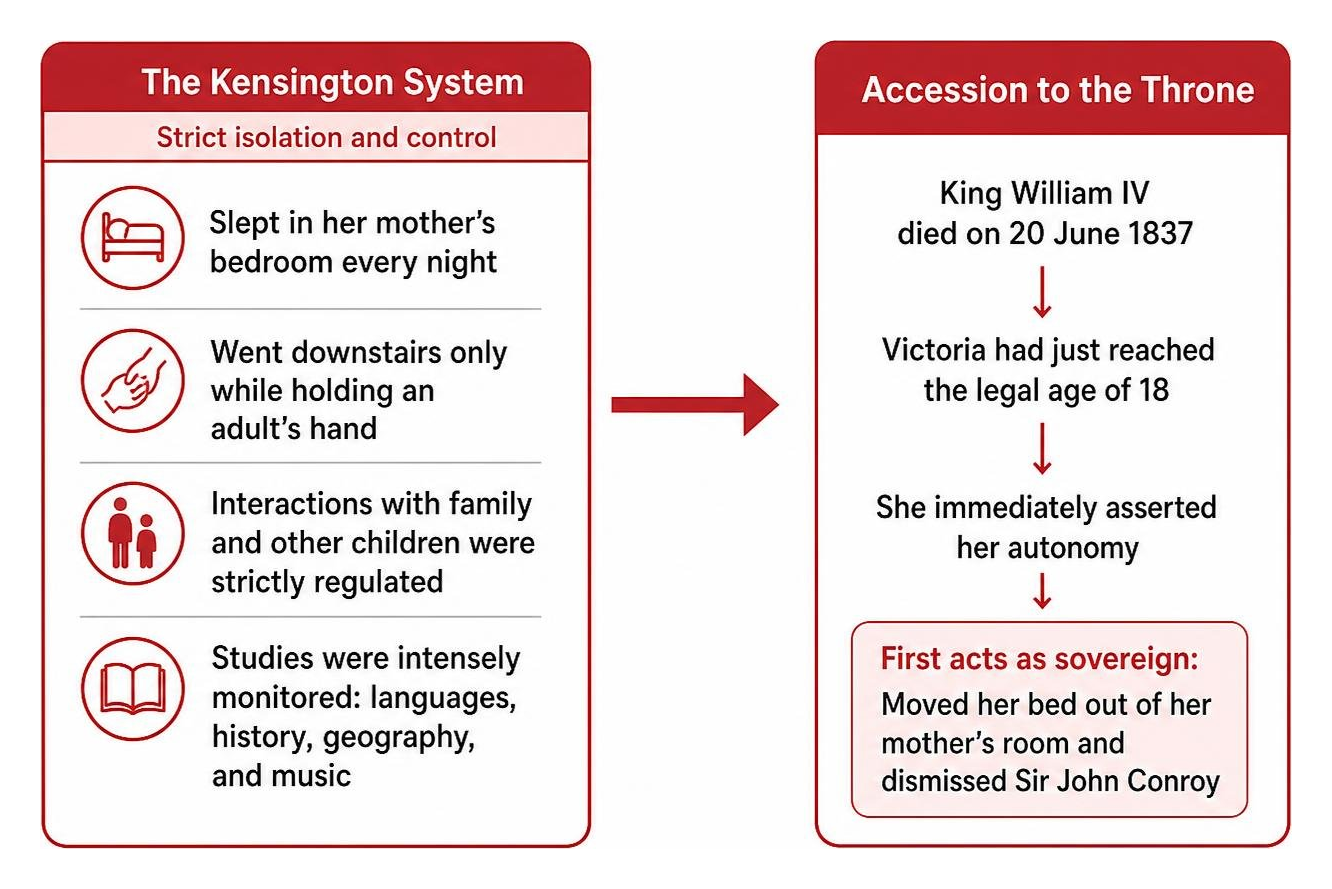
Her childhood, however, was anything but carefree. Victoria was raised under the rigid “Kensington System,” a strict set of disciplinary rules devised by her ambitious mother and the comptroller of the household, Sir John Conroy. Conroy sought to keep young Victoria entirely isolated from the royal court and dependent on his authority, hoping to rule as regent should she inherit the crown before turning eighteen. Under this system, Victoria was never left alone:
- She slept in her mother’s bedroom every night.
- She walked down stairs only while holding an adult’s hand.
- Her interactions with family members and other children were strictly regulated.
- Her studies were monitored, focusing on languages, history, geography, and music.
Despite these intense pressures, Victoria developed a fierce independence. When King William IV passed away on 20 June 1837, just a month after Victoria reached the legal majority age of eighteen, she immediately asserted her autonomy. Her first act as sovereign was to move her bed out of her mother’s room and dismiss Conroy from her immediate household. For those curious about the exact transition, you can explore the official historical record of Victoria’s accession and early reign.
How Queen Victoria Navigated Early Political Crises
As a young woman stepping into a male-dominated political arena, Victoria relied heavily on her first Prime Minister, Lord Melbourne, a charming Whig politician who served as her mentor, private secretary, and surrogate father figure. Over 400,000 visitors flooded London to celebrate her coronation on 28 June 1838, a grand yet slightly chaotic event during which the Archbishop of Canterbury famously forced the coronation ring onto the wrong finger. Parliament subsequently granted the new queen a civil list annuity of £385,000, securing her financial independence.
Her early political partisan leanings quickly sparked national controversy:
- The Lady Flora Hastings Affair (1839): Rumors circulated within the court regarding the health of Lady Flora Hastings, a lady-in-waiting to Victoria’s mother. Victoria suspected an illicit pregnancy involving Conroy. Medical examinations proved Hastings was suffering from an advanced liver tumor, leading to public outcry against the Queen’s perceived cruelty.
- The Bedchamber Crisis (1839): When Melbourne resigned, Tory leader Sir Robert Peel prepared to form a new government. Peel requested that Victoria replace some of her Whig-affiliated Ladies of the Bedchamber with Tory women to ensure political neutrality. Victoria obstinately refused, stating her household appointments were personal matters. Peel declined to serve as Prime Minister under those conditions, and Melbourne returned to office.
The Bedchamber Crisis demonstrated Victoria’s fiery temperament, but it also showed the limits of royal authority in an evolving constitutional system. The monarch could no longer disregard parliamentary consensus without public backlash.
The Reign and Political Evolution Under Queen Victoria
Marriage to Prince Albert and Modernization of the Crown
In 1839, Victoria met her first cousin, Prince Albert of Saxe-Coburg and Gotha. Enchanted by his intelligence and charm, she proposed to him, and the couple married on 10 February 1840. Their wedding established cultural traditions that endure to this day: Victoria wore an iconic white satin dress trimmed with Honiton lace, deliberately shunning heavy velvet robes to support the British lace industry, and their reception featured a wedding cake weighing nearly 300 pounds.
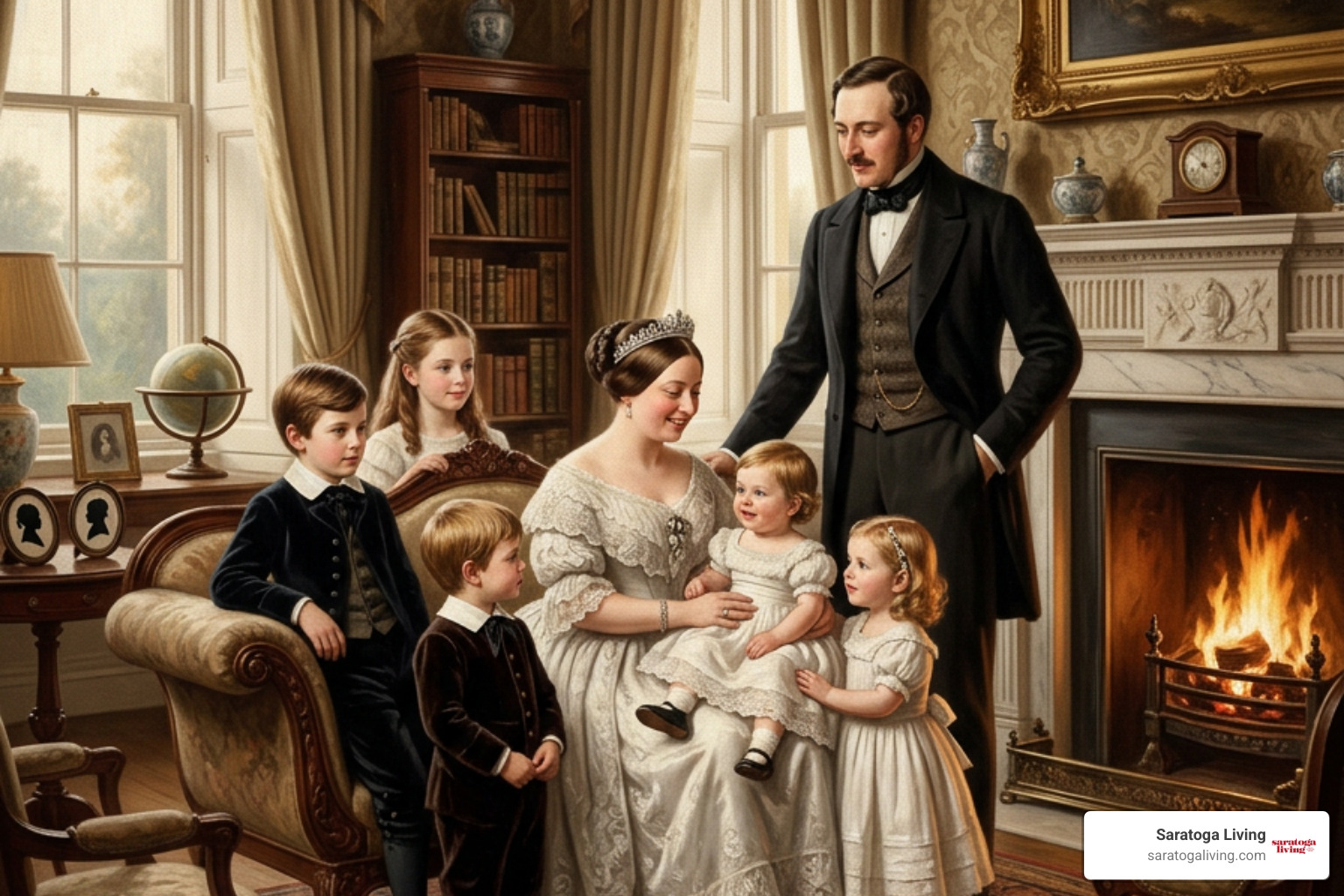
Albert proved to be an indispensable political partner, transforming the British royal family into a beacon of civic virtue, technological progress, and domestic stability:
- Technological Leadership: Albert championed British scientific innovation, spearheading the landmark Great Exhibition of 1851 held in the Crystal Palace. The surplus profits from this global exposition funded the development of London’s South Kensington cultural and museum district.
- Royal Modernization: Victoria became the first reigning British monarch to travel by train in 1842, embracing the industrial railway revolution.
- Domestic Family Brand: The royal couple distributed mass-market photographic portraits (cartes de visite), selling over 60,000 copies and pioneering modern media engagement by presenting an image of a harmonious, hardworking middle-class family.
Social Reforms, Imperial Policy, and National Turmoil
The Victorian era coincided with massive social shifts, deep domestic distress, and imperial expansion. Between 1845 and 1852, the Great Famine in Ireland led to devastating loss of life and mass emigration. While Victoria personally contributed £2,000 to the British Relief Association (a sizable private royal donation at the time), government relief efforts were widely condemned for their inadequacy.
Concurrently, Britain moved steadily toward representative democracy and institutional reform:
- The Repeal of the Corn Laws (1846): Supported by Albert and Peel, this move dismantled agricultural tariffs in favor of international free trade.
- Electoral Expansion: The Second Reform Act of 1867, the introduction of the secret ballot in 1872, and the Representation of the People Act of 1884 gradually granted voting rights to urban workers and agricultural laborers.
- Military Recognition: During the Crimean War (1853–1856), Victoria instituted the Victoria Cross, the highest military decoration awarded for valor, uniquely bestowed on merit regardless of military rank.
Despite these national achievements, Victoria faced extreme personal danger throughout her life, surviving eight separate assault or assassination attempts between 1840 and 1882. Each incident only served to bolster public sympathy and affection for the resilient sovereign.
The Widowhood Years, Imperial Expansion, and Jubilees
The Widow of Windsor, Personal Companions, and India
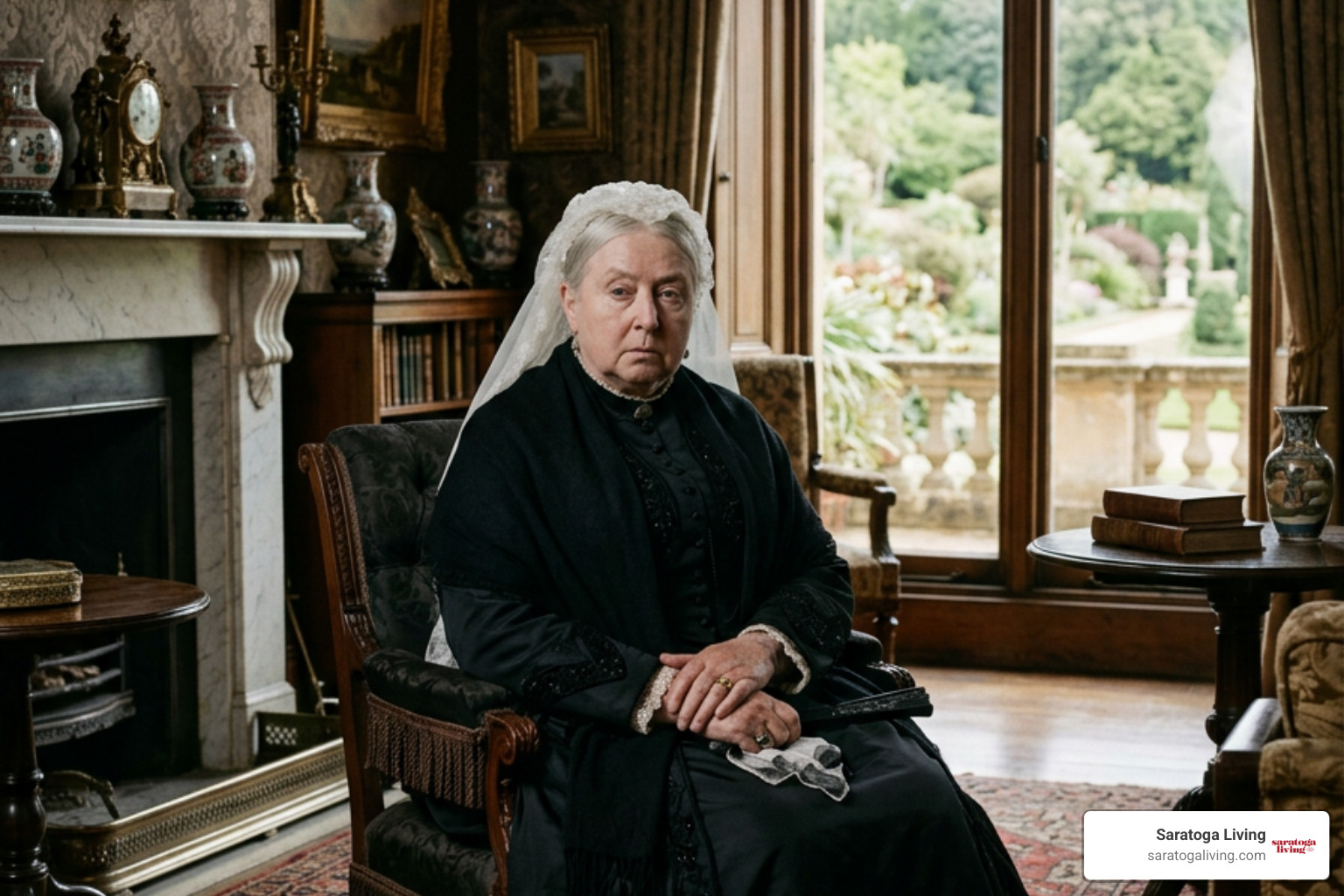
In December 1861, Prince Albert died unexpectedly from typhoid fever at the age of forty-two. Shattered by grief, Victoria sank into a profound depression, wearing black mourning dress for the remaining four decades of her life and retreating into virtual seclusion at Windsor Castle, Balmoral, and Osborne House. This prolonged absence earned her the moniker the “Widow of Windsor” and caused a temporary surge in republican sentiment among critics who questioned the necessity of an absent sovereign.
Her return to public engagement was supported by two close confidants:
- John Brown: Her loyal Scottish Highland ghillie, whose candid demeanor and support helped Victoria resume her personal outdoor pursuits in Scotland.
- Abdul Karim (The Munshi): Appointed to her household in 1887, Karim taught Victoria the Hindustani language, instructed her in Indian customs, and served as her personal clerk, despite intense friction with the royal household.
Politically, Victoria formed a close working relationship with Conservative Prime Minister Benjamin Disraeli, whose flattery charmed the Queen. In contrast, she clashed frequently with Liberal leader William Gladstone. In 1876, Disraeli steered the Royal Titles Act through Parliament, officially declaring Victoria the Empress of India on 1 January 1877.
Golden and Diamond Jubilees: Celebrating the British Empire
By the late nineteenth century, Victoria had transformed from an isolated recluse into the matriarch of an empire that encompassed a quarter of the globe and ruled over 400 million subjects.
| Milestone | Year | Historical & Global Significance |
|---|---|---|
| Golden Jubilee | 1887 | Celebrated 50 years on the throne with a banquet of 50 European monarchs and a grand procession to Westminster Abbey; marked the complete restoration of her popularity. |
| Diamond Jubilee | 1897 | Marked 60 years of her reign as a festival of the British Empire, featuring military contingents and prime ministers from all self-governing colonies. |
Her symbolic reach extended to North America, where she played an influential role in Canadian nation-building. Victoria supported the unification of the British North American provinces, selected Ottawa as the national capital in 1857, and signed the British North America Act in 1867 creating the Dominion of Canada. Learn more about Queen Victoria’s influence on Canadian heritage through the statutory holiday, Victoria Day, celebrated every May across the country.
Enduring Legacy and the Victorian Dynastic Network
The Family Tree and Royal Legacy of Queen Victoria
Through her nine children, Victoria forged alliances with major European royal houses, earning her the title the “Grandmother of Europe.” However, she was also an unwitting genetic carrier of hemophilia B, a blood-clotting disorder that spread through her daughters into the royal courts of Russia, Spain, and Germany—most notably affecting Tsarevich Alexei of Russia.
Victoria’s Children and Dynastic Lineages
| Child | Birth / Death | Royal Marriage | Notable Descendants / Dynastic Impact |
|---|---|---|---|
| Victoria, Princess Royal | 1840–1901 | Crown Prince Frederick William of Prussia | Mother of Kaiser Wilhelm II of Germany and Sophia, Queen of the Hellenes. |
| Albert Edward (Edward VII) | 1841–1910 | Princess Alexandra of Denmark | Father of King George V; direct ancestor of modern British monarchs. |
| Princess Alice | 1843–1878 | Grand Duke Louis IV of Hesse | Mother of Tsarina Alexandra of Russia (wife of Tsar Nicholas II) and Lord Mountbatten. |
| Prince Alfred | 1844–1900 | Grand Duchess Maria Alexandrovna of Russia | Duke of Edinburgh; father of Marie, Queen of Romania. |
| Princess Helena | 1846–1923 | Prince Christian of Schleswig-Holstein | Active in royal philanthropic foundations and nursing organizations. |
| Princess Louise | 1848–1939 | John Campbell, 9th Duke of Argyll | Viceregal consort of Canada; celebrated sculptor and arts patron. |
| Prince Arthur | 1850–1942 | Princess Louise Margaret of Prussia | Duke of Connaught; Governor General of Canada (1911–1916). |
| Prince Leopold | 1853–1884 | Princess Helena of Waldeck and Pyrmont | Suffered from hemophilia; Duke of Albany; patron of chess and literature. |
| Princess Beatrice | 1857–1944 | Prince Henry of Battenberg | Mother of Queen Victoria Eugenie of Spain; edited Victoria’s extensive journals. |
Victoria used her personal letters and diplomatic channels to preserve continental peace, notably writing directly to the German Emperor in 1875 to avert a second Franco-German war. When she passed away at Osborne House on 22 January 1901 at the age of eighty-one, an entire generation had known no other sovereign, signaling the close of the Victorian era and the dawn of modern 20th-century history.
Frequently Asked Questions About Queen Victoria
How tall was Queen Victoria?
Queen Victoria stood approximately 5 feet tall (around 152 cm). While she had a diminutive physical stature—standing about four inches shorter than the late Queen Elizabeth II—her commanding presence and resolute character made her an imposing figure on the world stage.
How many children did Queen Victoria have?
Queen Victoria and Prince Albert had nine children born between 1840 and 1857. Through these children, she had 42 grandchildren, whose marriages wove an intricate diplomatic web connecting the monarchies of Great Britain, Germany, Russia, Greece, Romania, Spain, Sweden, and Norway.
Why did Queen Victoria always wear black?
Victoria adopted perpetual black mourning attire following the sudden death of Prince Albert in December 1861. Deeply devoted to his memory, she wore black crepe gowns and white mourning caps for nearly forty years until her own death in 1901, popularizing strict mourning rituals throughout Victorian high society.
Conclusion
Queen Victoria’s extraordinary 63-year reign transformed the role of the British sovereign. By stepping away from overt partisan politics and embracing the moral, cultural, and technological life of her people, she pioneered the model of the modern constitutional monarchy. Through the expansion of industry, social reforms, and royal traditions that remain familiar today, her legacy continues to influence global culture.
At Saratoga Living, we love celebrating the history, pageantry, and enduring traditions that define our world—from grand royal milestones to timeless royal style and classic elegance.