If you’re up on your Spa City history, you likely already know the story—tragic as it is—of how Spencer and Katrina Trask founded Yaddo, the famed artists’ retreat tucked into the woods next to Saratoga Race Course that this year is celebrating its centennial. But did you know that the Trasks, alongside two of their best friends, made an indelible impact on our neighbor to the north, Lake George, too?
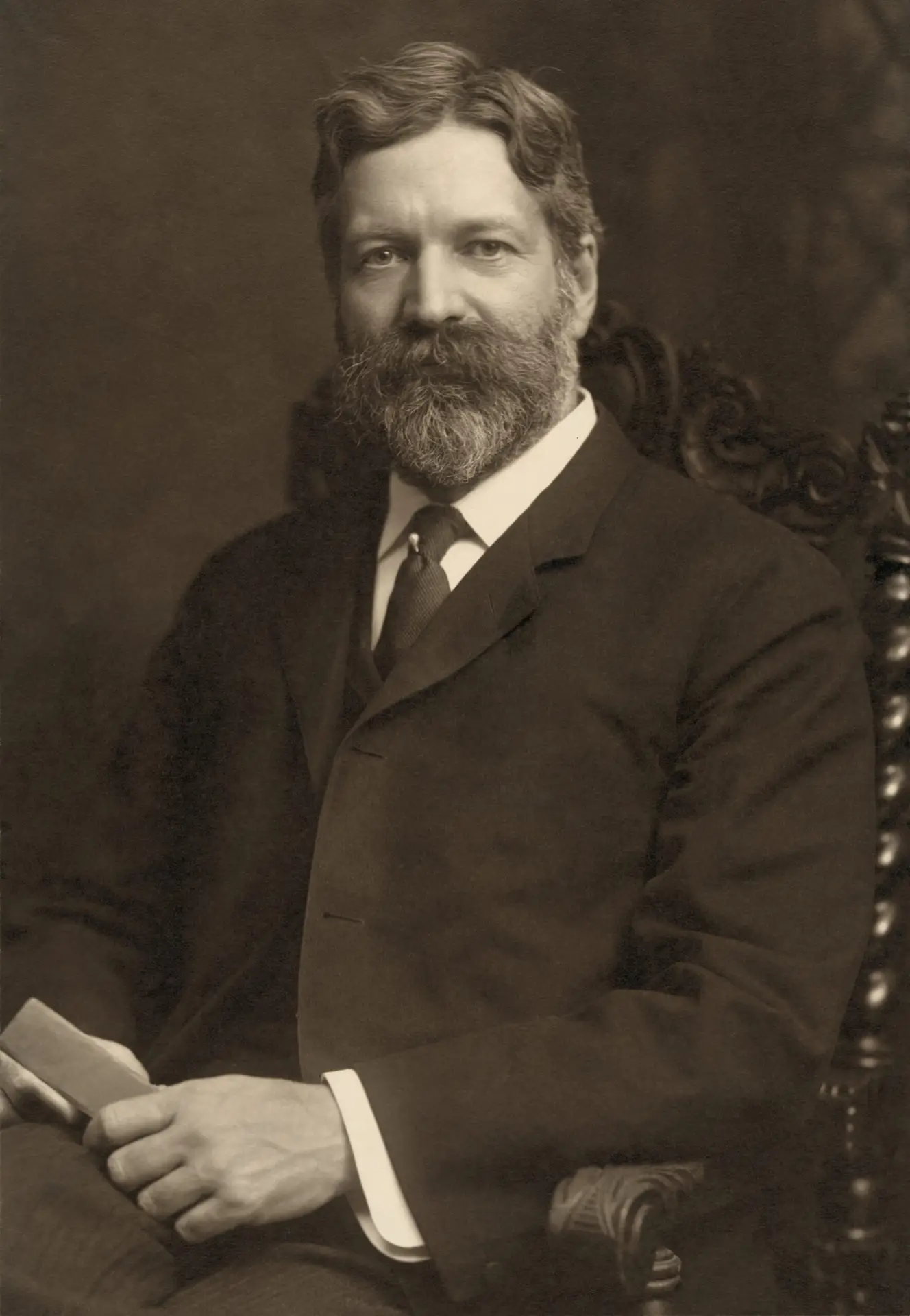
The story starts in Brooklyn in the 1870s, when Katrina Nichols met Spencer Trask, an 1866 Princeton graduate and scion of a wealthy family, and the Georgia-born George Foster Peabody, who studied at night at the Brooklyn YMCA. Both men were in love with her. When Katrina chose Spencer, the couple invited Peabody to their 1874 wedding, but he didn’t attend. A year after their marriage, they invited him to dinner, and he came.
“Spencer, I’m in love with your wife,” said Peabody.
“I don’t blame you,” Spencer replied. “I’m in love with her myself.”
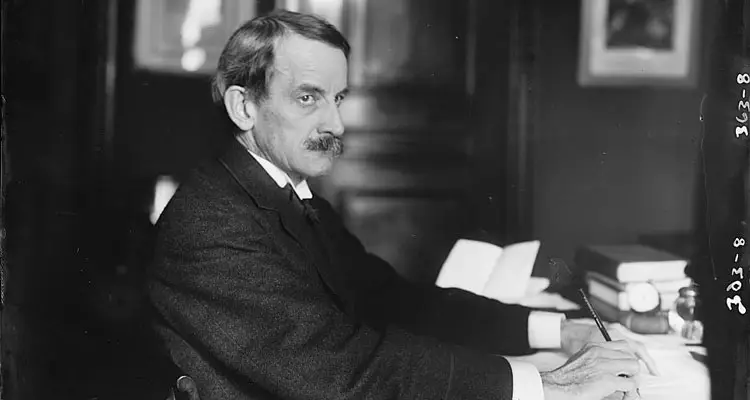
The pair wound up becoming lifelong friends and business partners, despite being in love with the same woman. When Peabody met Edward Morse Shepard, a City College graduate whose district attorney father died when he was 6, at the Young Men’s Democratic Club of Brooklyn in the early 1880s, he introduced him to his friends the Trasks. And then they proceeded to change the world.


Katrina was 10 years old when she first visited Lake George with her father, a backer of the Brooklyn Bridge, in 1863. She returned in 1866, and stayed at the Lake House, located on the future site of Shepard Park—which, coincidentally, she would help fund some 50 years later.
As a girl of 13, Katrina wrote that her favorite pastime in Lake George was peeking at the ladies dancing in their fancy gowns in the hotels. She also loved drifting in a flat-bottom boat by Diamond Island, where she would picnic and climb on the rocks, according to her memoirs. (Stay tuned: Diamond Island also makes an appearance later in her life.)
Shepard, too, had fond childhood memories of Lake George. He was 13 when he first passed through the region and was “enraptured.” He “resolved” to someday have a home there.
Thirty-five years later, in 1898, Shepard realized his dream and built a stone mansion on the lake. He called it Erlowest, a play on the name of his parents’ hometown of Westerlo, NY. But he never realized his other dream: to create a free public park on the lake. After two unsuccessful runs for mayor of Brooklyn and mayor of New York, Shepard was going to run for the US Senate in 1911, but withdrew, and died five months later of pneumonia. His nearly 100 employees at Erlowest wept, a Buffalo newspaper reported.
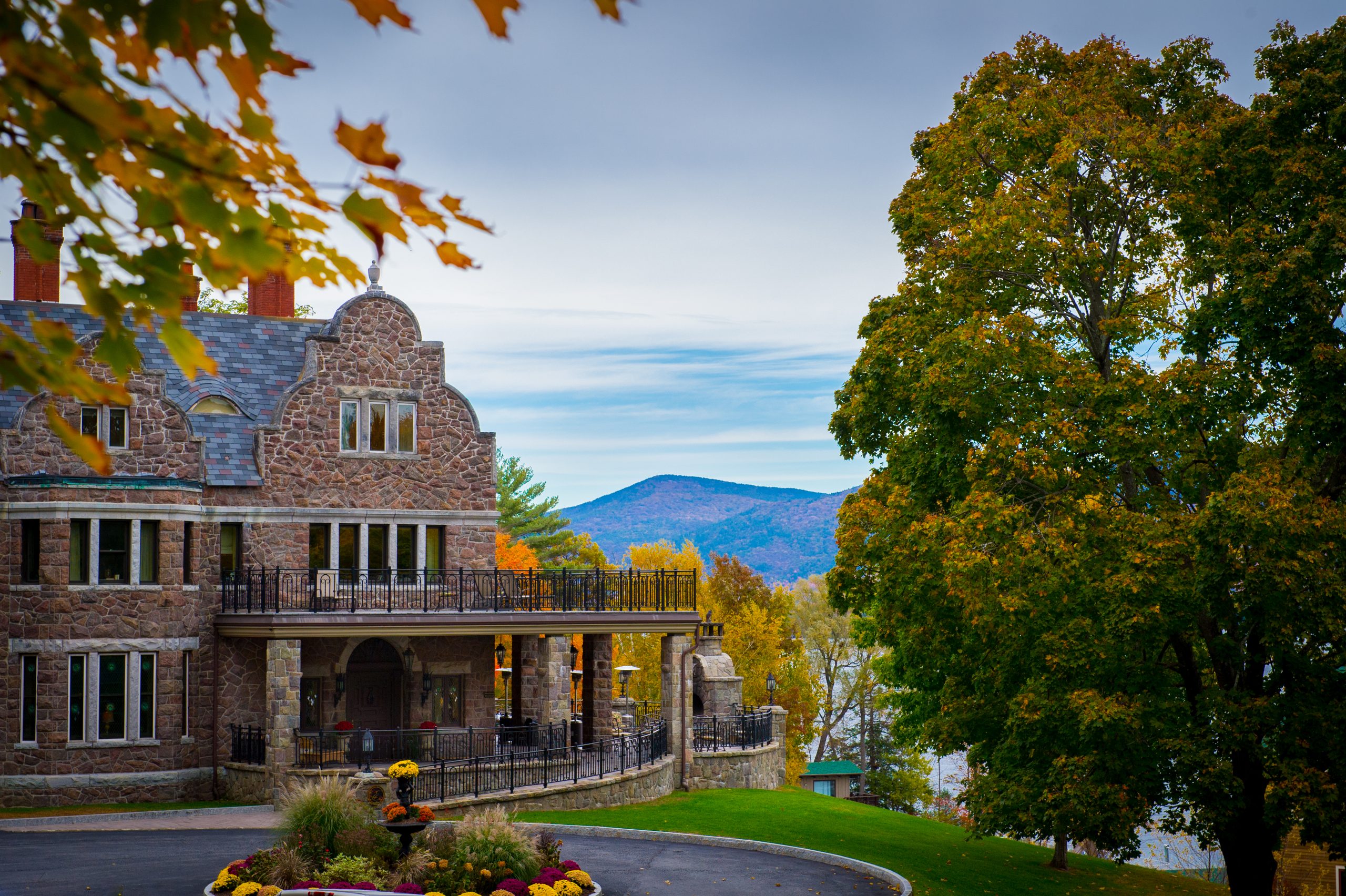
Never having married, Shepard left his mansion to his sister, Agnes Hewitt, who allowed officers to rest and recuperate there during World War I. Erlowest eventually found its way into the hands of Charlie Wood, founder of Lake George’s Storytown (now Great Escape) and Lake Luzerne’s Double H Ranch, before its current owners turned it into one of the region’s premier wedding venues.
Peabody, too, was a prominent figure of Lake George society around that time. In her 1951 biography of the financier, Louise Ware wrote, “He knew every child in Lake George by name, it was said, and he used to bow to these young friends in the street.”
While Peabody would go on to purchase the Warm Springs Resort in his native Georgia, where both he and President Franklin D. Roosevelt eventually died, around the turn of the 20th century, he called Abenia, his mansion on Lake George’s “Millionaire’s Row,” home. (It was just down the road from Erlowest.) Today, all that remains of Abenia, which Peabody eventually sold to Adolph Ochs, publisher of the New York Times when Spencer was the paper’s president, is the swan fountain and stone wall at what’s now Twin Birches resort.
After their four children died and their first Saratoga estate burned down—we told you the story of Yaddo was tragic—Spencer and Katrina stayed with Peabody at Abenia. In 1901, the three took a boat to explore land on Lake George to purchase for Mary Fuller, the daughter of a Troy industrialist. Fuller dreamt of opening a “Holiday House” that would provide respite for the working women of Troy, who often endured long hours in sometimes-dangerous conditions and were granted no sick leave or paid vacations.
“We drifted on the azure lake,” Katrina wrote of the excursion. “We explored the shores with delight and enthusiasm.” Spencer and Peabody ultimately purchased the old Crosbyside Hotel and gave it to Katrina, who donated it to Fuller, in 1901. Holiday House—a name Katrina later changed to Wiawaka—opened in 1903 with 176 guests. Katrina served as honorary president, and Spencer and Peabody stayed involved, building cabins and taking the guests on boat tours.
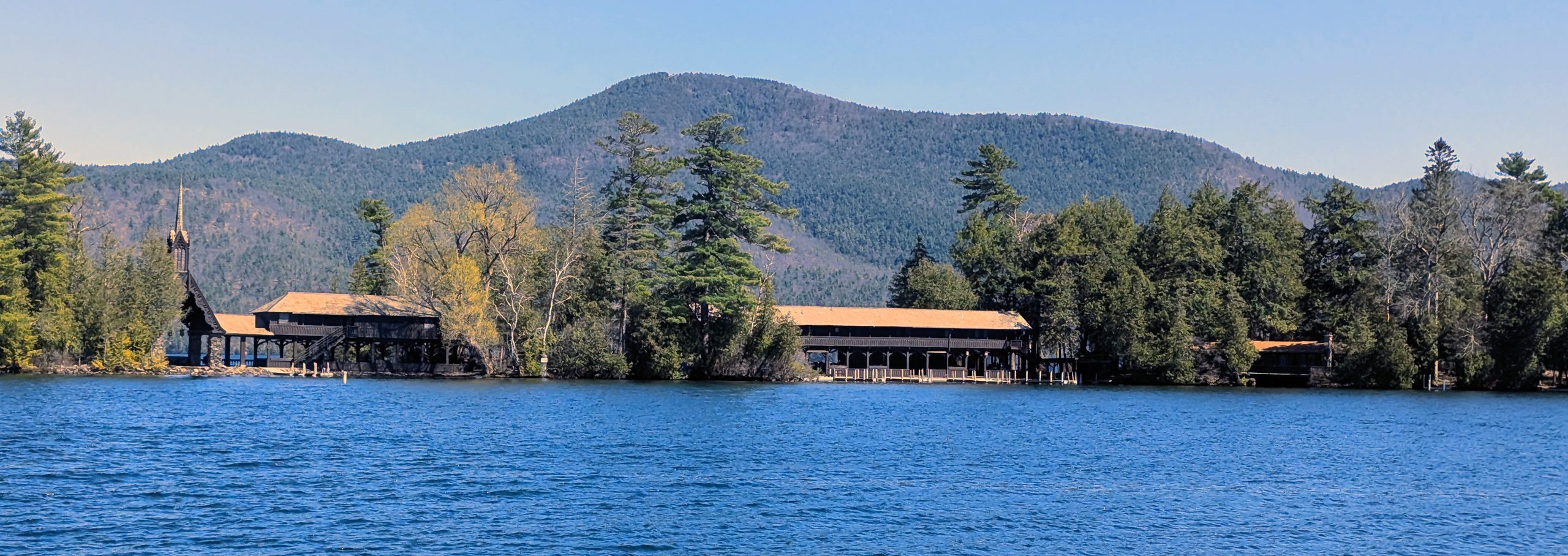
But mainland property wasn’t the only thing this love triangle had their eyes on. One summer, the Trasks rented a house on Clay Island, putting up all their staff in tents. Looking to find a place she and Spencer could call their own, Katrina had the idea to link the small Three Brothers Islands, located just south of Clay Island, together to create a “Venice on the lake.” Triuna, they’d call it, which means three in one.
Spencer bought tons of stones from farmers’ fields to connect the islands, and Triuna, with its dark wood chapel and bell tower, Moorish window frames, and diamond-paned windows—reminiscent of the Trask’s Saratoga estate, Yaddo—came together.
Katrina also came to be the owner of another island, located a little further south. In her memoir, Yaddo, she tells the story of a day at Lake George, when Spencer was in New York. Peabody, who was still in love with Katrina, filled a boat with roses, her favorite flower, and gave her two gifts: a diamond ring and Diamond Island. Shepard then gifted Katrina an 11-foot granite obelisk—a Peace Monument. In 1904, he had it dragged across the ice to the island, where it still stands.
Wondering how this one woman got so many gifts out of so many men? Well, she herself was extremely generous, too, ultimately donating Diamond Island to a conservancy in 1922 so the public can visit it today, and gifting Peabody her own sapphire ring so that he could sell it to fund the swimming pool he hoped to build in Memorial Hall at the University of Georgia, where the Peabody Awards bear his name. But that’s a different story.
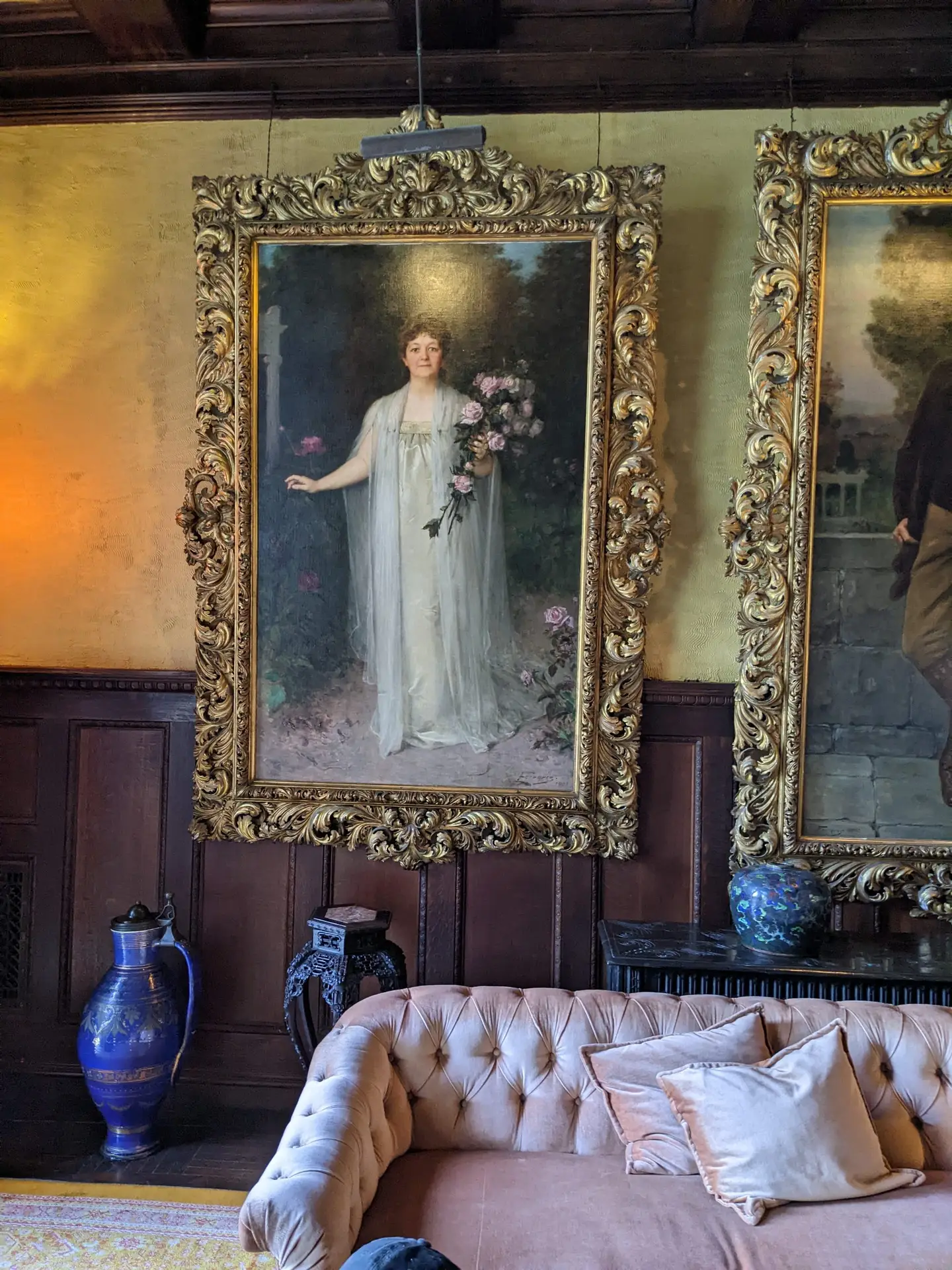
Before the first guests arrived at Yaddo in 1926, Spencer created a summer arts colony of his own on Lake George. Amitola, as he called it, was located on land he’d purchased just north of Mary Fuller’s Wiawaka. To prepare for the arrival of guests from the Art Students League of New York in 1908, Spencer and Peabody built a dorm called Wakonda. Prolific painter Georgia O’Keeffe, then 18, stayed in room 18.
“There is something so perfect about the mountains and the lake and the trees,” she later wrote to the writer Sherwood Anderson. “Sometimes I want to tear it all to pieces—it seems so perfect—but it is really lovely. I wish you could see the place here.”
When Spencer died the following year, Wakonda became part of Wiawaka, and Amitola closed. But O’Keeffe had been transfixed by Lake George and would return.
During summers spent with her husband’s family in Bolton Landing between 1918–1934, she produced more than 200 paintings. She’d also take the trolley to Glens Falls, walk to the village to get the mail, and hike Prospect Mountain, which, in 1925 was part of the 1,000 acres Peabody donated to the state. That land also includes what’s now Hearthstone Campground.
“When I think of death, I only regret that I will not be able to see this beautiful country anymore,” O’Keeffe wrote. “Unless the Indians are right and my spirit will walk here after I’m gone.” O’Keeffe died in Santa Fe in 1986 at the age of 98. The converted barn where she lived and worked in Bolton was burned in 1937 to make way for ranch houses, but guests of Wiawaka, which is still thriving as a women’s retreat and will host “Katrina Trask Week” this August 17–21, can see the room where O’Keeffe stayed and where she set up her easel.
One of spencer’s last acts in Lake George before his untimely passing was to help found the Lake George Club, which, still going strong today, was recently nominated for the National Register of Historic Places.
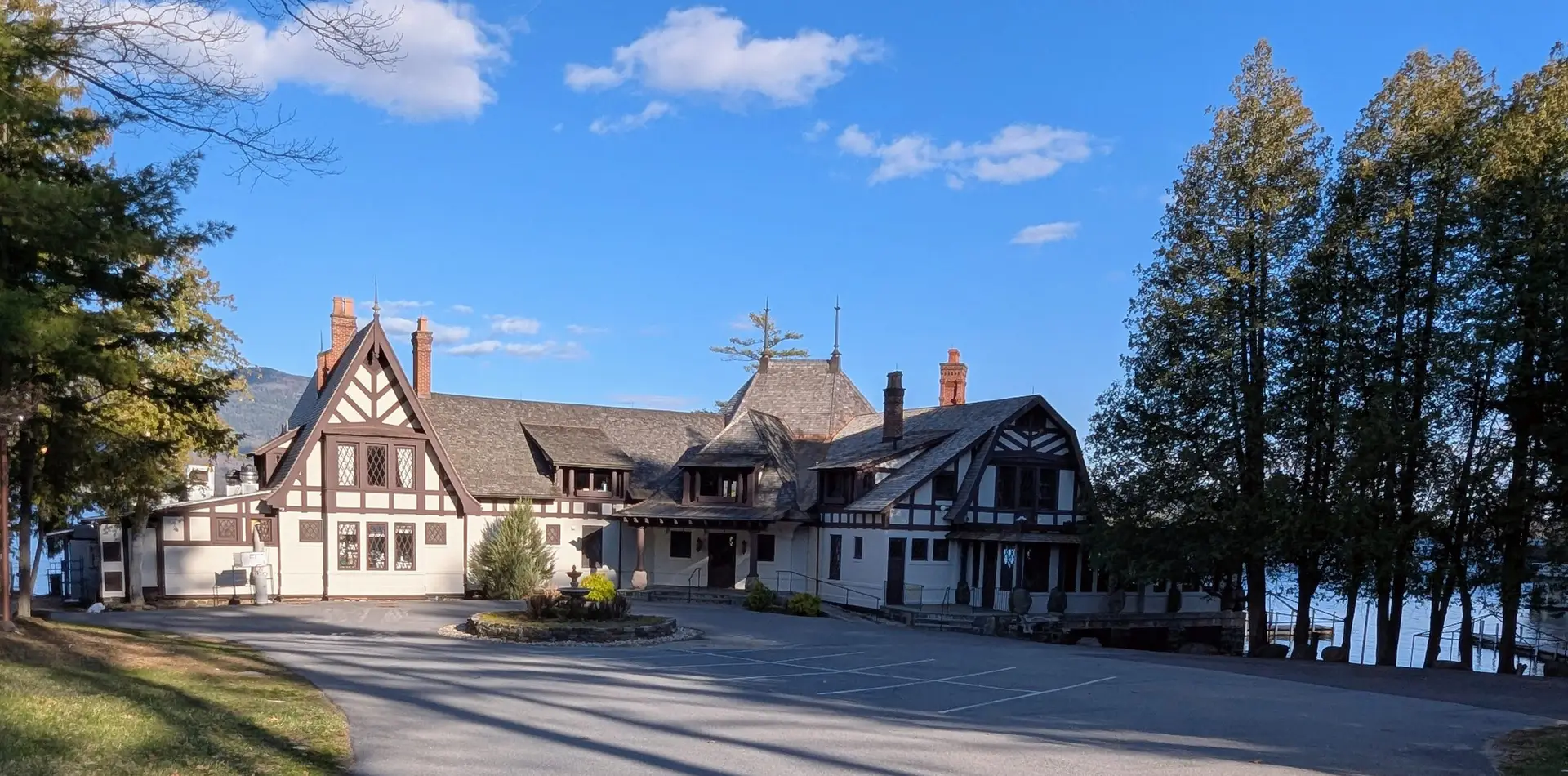
Peabody, who had a fleet of boats including a 21-foot electric-launch “Cosmaco” with 2½-horsepower that could go no more than five miles per hour, was a cofounder, too. Spencer’s boat, on the other hand, was a luxurious 50-foot cabin-top boat with a 90-horsepower Speedway engine called “The Swallow.” A more apt name would have been “The Swan Song,” for shortly after being elected the yacht club’s first president, Spencer died on December 31, 1909.
It was New Year’s Eve, and he had just left the festivities at Yaddo. He was on a train to meet Shepard in New York for a meeting of the Saratoga Reservation, which we know today as Saratoga Spa State Park. (In addition to all his work in Lake George, Spencer was also a backer of Thomas Edison; savior of the New York Times; and protector of Saratoga’s world-renowned springs.)
Finished dressing in his private compartment, Spencer was putting on his shoe when a freight train ran a light in Croton and crashed into the back of his train. He died instantly.
Shepard died a year and a half later. But the legacy of great men is not soon forgotten.
Shortly after spencer’s death, Peabody and Katrina commissioned sculptor Daniel Chester French to create a memorial fountain in his honor. Anyone who’s walked through Congress Park has probably seen the “Spirit of Life,” a statue of model Audrey Munson holding a basin overflowing with water tucked into a niche designed by Lincoln Memorial architect Henry Bacon. A passage on the wall behind the fountain reads, “To the memory of Spencer Trask/his one object in life was to do right/ and to serve his fellow men/he gave himself abundantly to hasten the coming of a new and better day…”
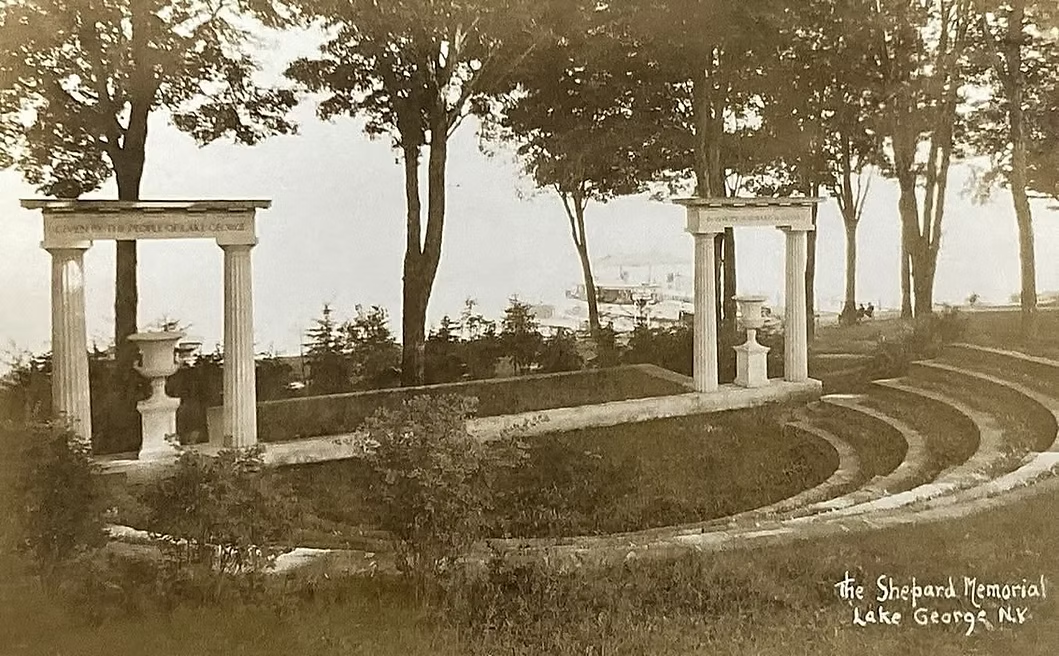
Several years later, Peabody, who was by then a member of the Skidmore College Board of Trustees, and Katrina, still active in community betterment despite the unspeakable losses she’d endured, spearheaded a community effort to make Shepard’s dream—a public park in Lake George—a reality. In 1917, a dedication was held for Shepard Park, at which Peabody read aloud a poem Katrina had written for the occasion.
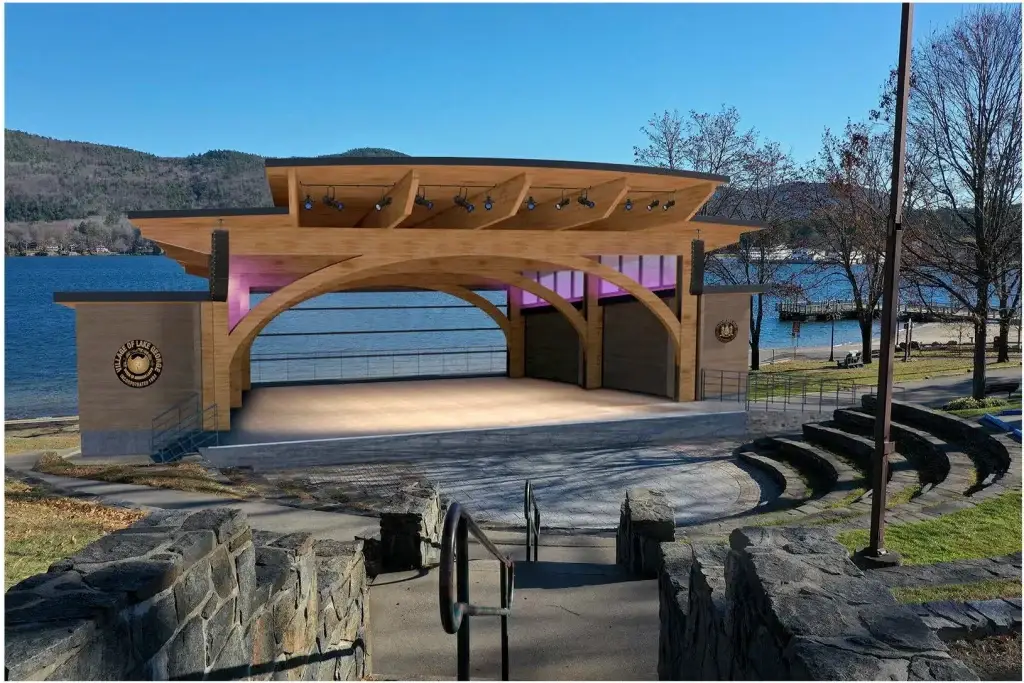
The centerpiece of the park was an amphitheater and stage, which hosted concerts, plays, lectures, and political speeches. Each of the stage’s Grecian columns had a plaque: “Erected by the People of Lake George” and “In Memory of Edward M. Shepard.” Those columns deteriorated and were demolished in the 1950s. A new bandstand was rebuilt in 1990, but it burned down in an electrical fire in June 2024. This summer, a brand-new bandstand, featuring a transparent rear wall allowing for unobstructed views of the Queen of American Lakes, will be unveiled.
As for Spencer’s aspirations, they too were eventually realized, though not until after Katrina’s passing in 1922. She’d been at Triuna in the summer of 1912 when a fire started by an employee’s carelessness destroyed a third of the property. Frail and in ill health, she had to be carried to a rescue boat. She supervised the rebuilding of Triuna from her sick bed at Yaddo, which itself had been rebuilt following a fire just 20 years earlier, but never left her Saratoga estate again.
Katrina did, however, marry Peabody, who’d never stopped loving her. She died less than a year later, bequeathing him both the Yaddo estate and Triuna. Triuna was eventually sold; it’s now owned by the Swire family and operates as a timeshare. Yaddo, which Spencer and Katrina had always dreamed of turning into an artist retreat, on the other hand? Peabody hired Elizabeth Ames as executive director, and in 1926, made his dear friends’ vision a reality.
One hundred years later, nearly 7,000 of the most talented writers, artists, and musicians in the world have been inspired at Yaddo. Their creative work is a testament to the vision of the Trasks and their friends, and will be for the next century, too.