The yellow rose of Texas will not be blooming among the pink Marylou Whitney roses at Cady Hill after all, as the Saratoga Springs estate that had been under contract since May went back on the market for $12.9 million in mid-October. Shawn Todd of Todd Interests, a Dallas-based firm that has developed more than $1.5 billion in housing, golf courses, and resort projects, was still moving forward with his separate contract offer to purchase Whitney Park, another historic property that has been home to three generations of Whitneys and Vanderbilts. A third property—a home in Lexington, KY that was a 1958 wedding gift from Cornelius Vanderbilt “Sonny” Whitney to his new bride, Marylou—is also still awaiting a buyer.
It all started after the passing of beloved Saratoga socialite Marylou Whitney in 2019. The following year, Whitney’s widower, John Hendrickson, put the 36,600-acre Adirondack estate known as Whitney Park, located in Long Lake, on the market for $180 million. The property, which had been in the Whitney family since 1897, is home to Camp Deerlands, a 17-bedroom “camp” that Sonny remembers visiting as a child.
Four years later, in the spring of 2024, Hendrickson also listed Cady Hill, the 120-acre Whitney family estate located at 40 Geyser Road in Saratoga, for $16 million. At the time, the widower told The Wall Street Journal that he “felt lonely without Marylou,” and that managing the properties was “too overwhelming for one man.” In August of that same year, while at Cady Hill preparing for a bingo night he sponsored for backstretch workers at Saratoga Race Course, Hendrickson suffered cardiac arrest and died at Saratoga Hospital. He was 59.
In March of this year, Hendrickson’s family announced that the net proceeds of the sale of Whitney Park would go to the Town of Long Lake, per Hendrickson’s wishes and Marylou’s blessing. And this past summer, five years after the property was first put up for sale, a buyer—Todd Interests—materialized, not just for the Adirondack estate, but for the Saratoga one, too.

While the sale of Cady Hill ultimately fell through, as of early October, Todd’s purchase of Whitney Park was still on, though many of the details of the purchase had not yet been released. Dan and Andrea Collins of Sotheby’s, the realtors of Whitney Park, and executor Ed Hendrickson, John’s brother, all signed nondisclosure agreements. Todd did not respond to saratoga living’s requests for information, but has said he has plans for a luxury hotel, fine dining, a high-end golf course, and a downhill skiing facility on 4,500 acres of the 36,600-acre Whitney Park. The remaining 32,100 acres could be protected from development if conservation easements are approved by state officials and preservation organizations, an option that at press time was being considered.
In an interview with the Adirondack Explorer’s James Odato from before the Saratoga purchase fell through, Todd said he “envisions broadening the amenities at Whitney Park and at Cady Hill” but wants to retain “the mystique and specialness of both places.” When asked by Odato if he is a preservationist or a developer, Todd said, “I don’t think the two are mutually exclusive…When historic, we’ve invested heavily to preserve.”
Governor Kathy Hochul has even gotten involved with the Whitney Park purchase, writing a letter to the trustees of Hendrickson’s estate and to the Texas developer on October 10. “As you know, my administration has been in conversation with Todd Interests, Inc. for several months about a number of potential conservation outcomes for Whitney Park, including entering into an agreement for the purchase of 32,000 acres of land by the state,” Hochul wrote. “As you consider the future of John’s estate and legacy, my hope is that together we can find a solution that preserves the property’s remarkable waterways, fisheries and forests and ensures the long-term stewardship of the property.”
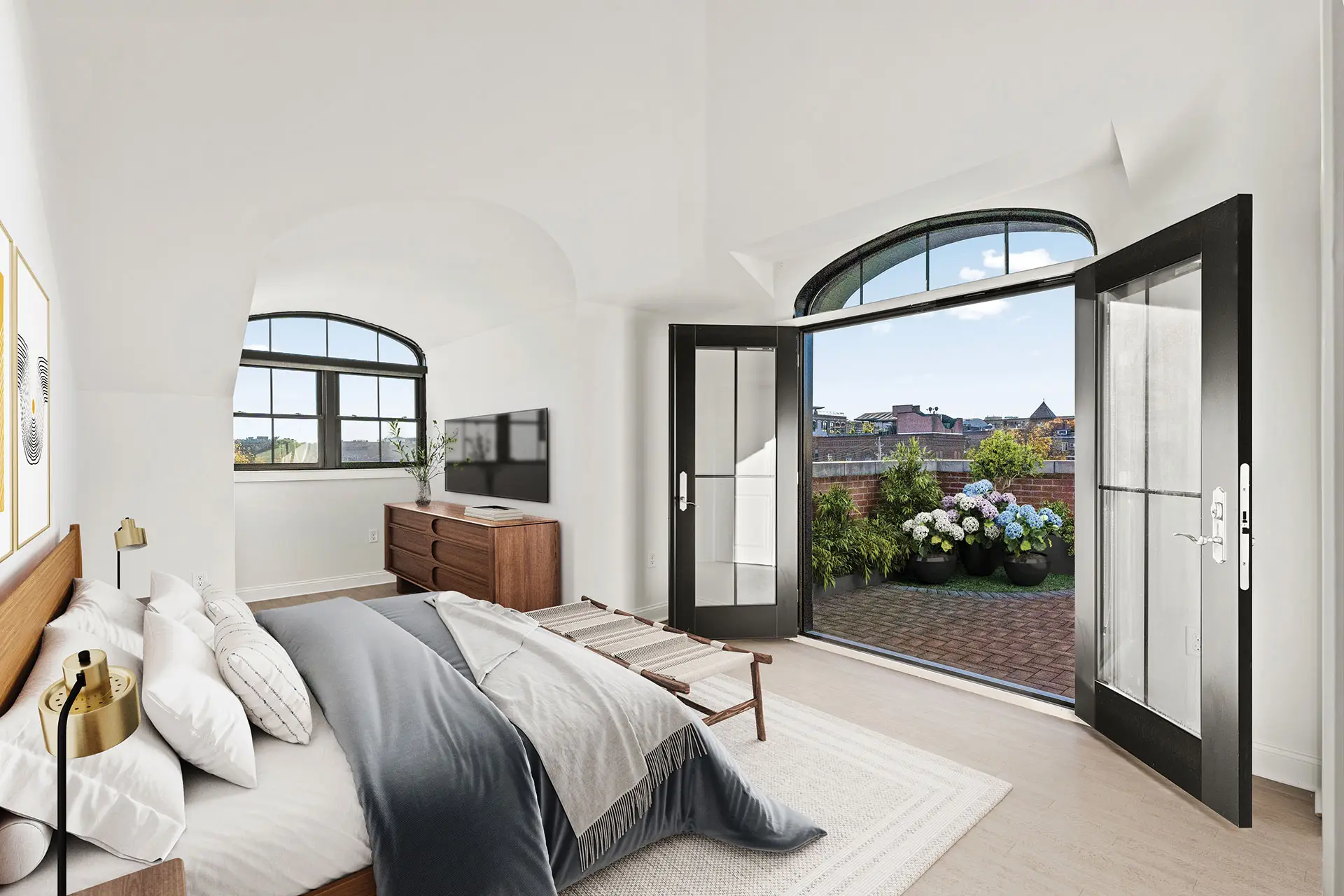
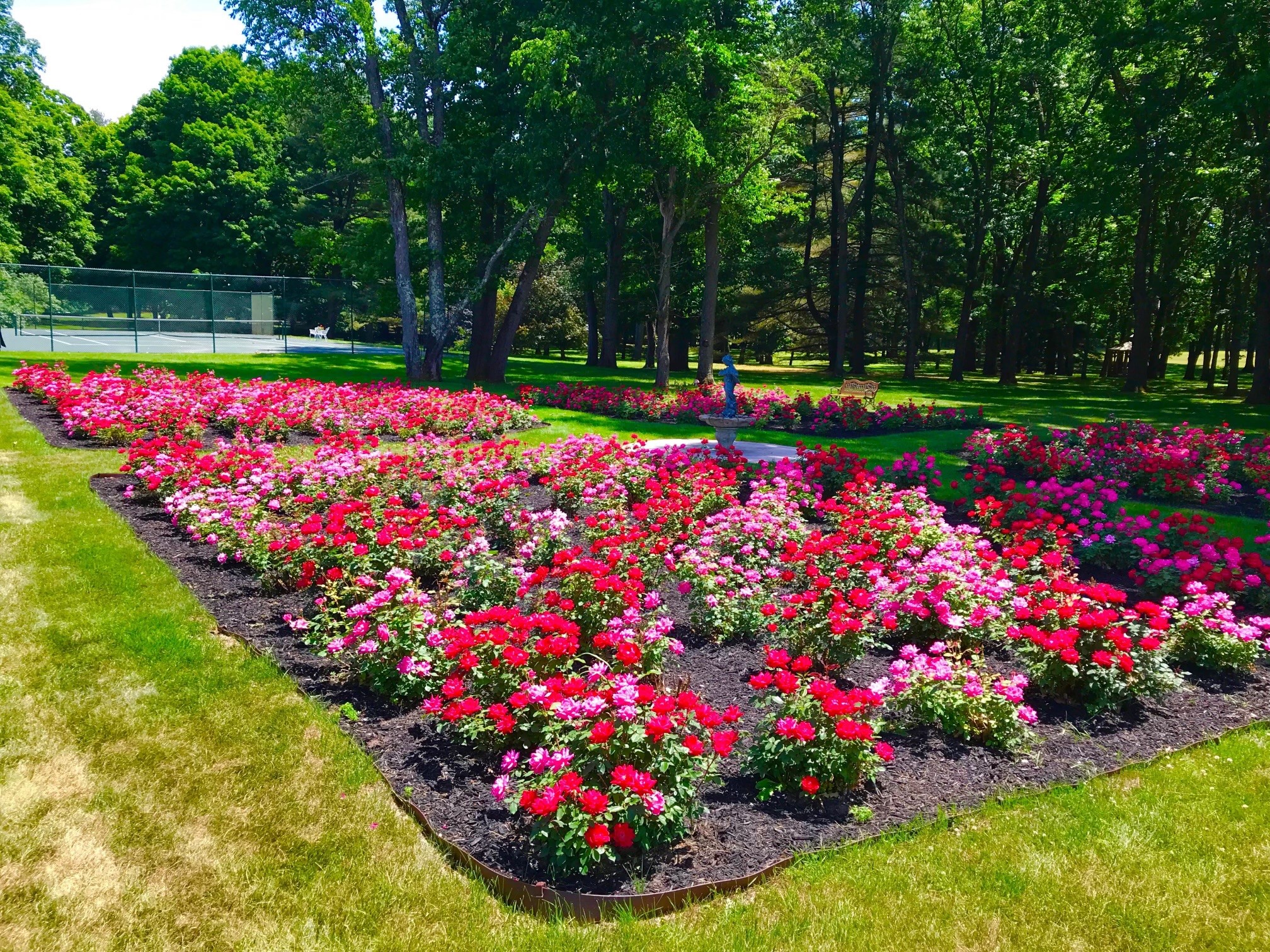
Now that Cady Hill is back on the market, Julie Bonacio has said she is seeking private buyers and developers for the 120-acre property, which is within walking distance of Saratoga Performing Arts Center. Possible uses include as an equestrian farm, a corporate retreat, or a wealthy family’s home compound. Investors may want to create a residential development there—it’s close to Geyser Road Elementary School—or create a winery or wedding venue.
But this isn’t just a story about real estate transactions. It’s about the lasting legacy of a family that helped shape the Saratoga we know and love today—the family that, in 1901, saved Saratoga Race Course from financial ruin. “Natives of Saratoga regard William C. Whitney as a patron saint,” the Illustrated Sporting News once wrote of Sonny’s grandfather, who also helped fund Belmont Park. Now, six years after her death, Marylou is still regarded as the indisputable Queen of Saratoga.
Sonny was 88 and Marylou a youthful 61 when I interviewed them at Cady Hill in 1987. He recalled riding the Wayfarer, his grandfather’s private rail car, to visit Whitney Park, which was then an 80,000-acre expanse of land that his family had purchased for $1.50 an acre. “When I first came to Camp Deerlands, I was 7,” Sonny recalled. “Every summer for years, both in school and in college, I spent the summer in the Adirondacks. It was really my second home.”
Getting there was quite a trip, Sonny remembered. After the rail car, the family would board the steamboat Sagamore (also the name of his cousin Alfred G. Vanderbilt’s great Adirondack camp), which would take them to the foot of Raquette Lake. Then they’d take a carriage or walk the 1.5-mile “carry” to Big Forked Lake before continuing on to Camp Deerlands, on Little Forked Lake—a 12-mile drive from Long Lake by car.
Sonny remembered a conversation between his father, Harry Payne Whitney, and grandfather, William C. Whitney, in which William told Harry, “This is one property I wish always to remain in the Whitney family.”
In 1926, Harry and his wife, Whitney Museum of American Art founder Gertrude Vanderbilt Whitney, bought Cady Hill in Saratoga. A former stagecoach stop and tavern at which George Washington is said to have stayed, the property dates back to the 1700s.
Harry and Gertrude sold Cady Hill to Sonny in 1936 for $16,000, according to county records. When Sonny married Marylou in 1958, he wanted to sell the property, but Marylou wanted to keep it. As usual, Marylou got her way. She lived there long after Sonny’s death in 1992, and passed away peacefully in the house in 2019, with Hendrickson, her third husband, and the couple’s friend Maureen Lewi by her side.
During our interview, Sonny shared with me his health regimen: “I smoke seven cigarettes a day,” he said. “I do it religiously: seven a day. It calms my mind.”
“We grow tobacco in Kentucky,” Marylou explained, referencing the couple’s third home in Lexington.
Now located on 72 acres bordering Gainesway Farm, Marylou Whitney Farm was once 1,200 acres encompassing what’s now Gainesway Farm—before Sonny retired from racing and sold off his land and horses. After his passing, Marylou used her inheritance to buy them back, tracking down the broodmare Dear Birdie to build her own stable of champions.
“Mr. Whitney got out of the business, and she got into it,” says Marylou Whitney Farm Manager Jouett Redmon III, part of the third generation to work for the family. (His father was manager before him, and used to travel from Kentucky up to Saratoga to decorate the Canfield Casino for the annual Whitney Gala the night before the Whitney Stakes; his grandfather worked with the broodmares before becoming the night watchman when he got older.)
“Mr. Whitney was a true gentleman,” Redmon says of Sonny. “He always had a joke. Marylou—she was super nice to me and my family. With their charity, they uplifted the community and were very supportive of the hospital, the rehabilitation center, and more.”
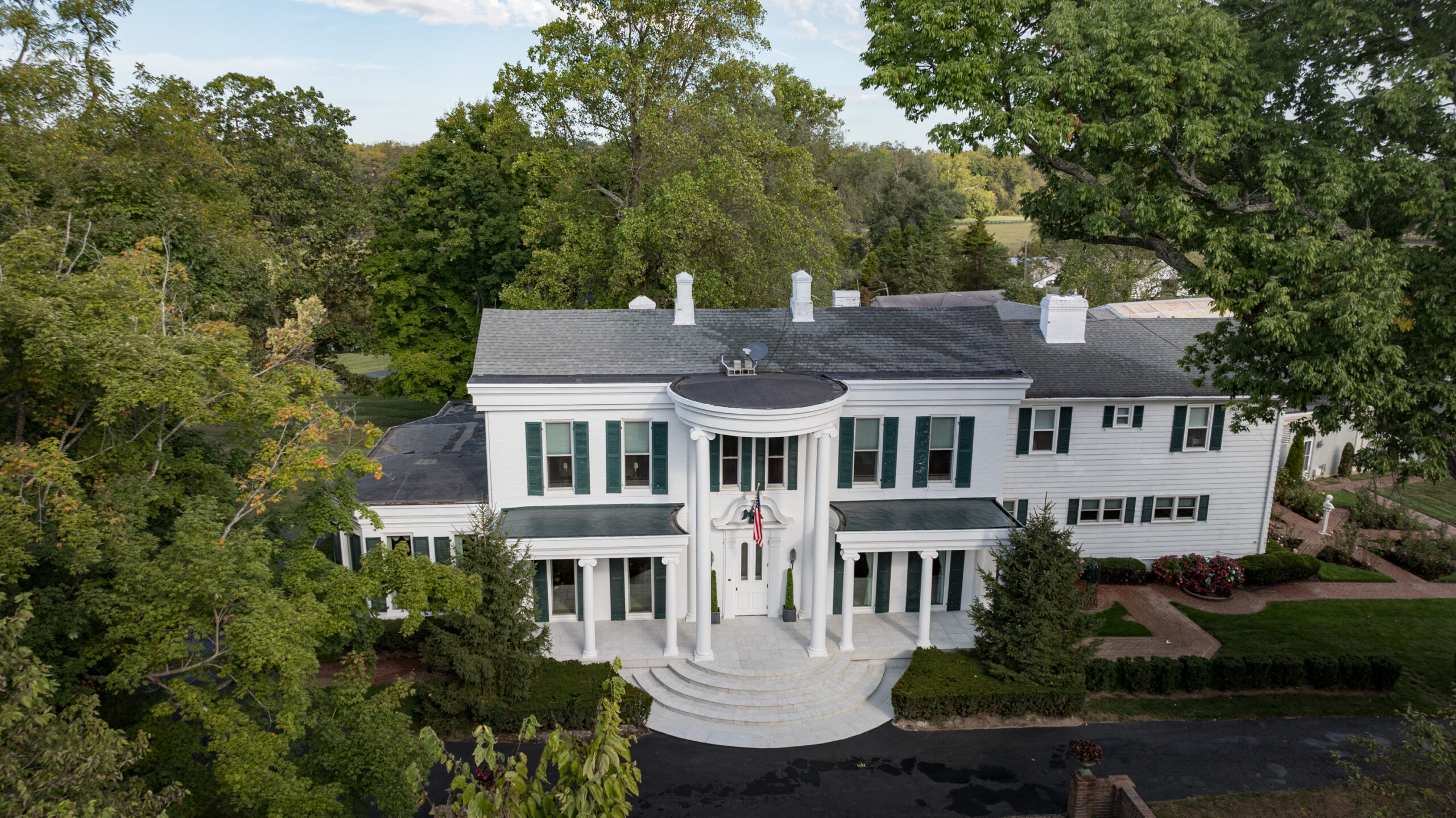
After spending their first year of marriage living at Camp Deerlands—with Marylou driving her four children from her previous marriage to Frank Hosford down the nine-mile logging road to school—Marylou and Sonny moved to Lexington, living in an 8,400-square-foot, newly renovated Federal-style home similar to Cady Hill. As she did in Saratoga, Marylou hosted celebrity guests at her Kentucky home; Redmon remembers welcoming Ann Margret, Ronald Reagan, Gerald Ford, Princess Margaret, Gene Kelly, Fred Astaire, Ginger Rogers, and John Wayne to the estate.
As of mid-October, Marylou Whitney Farm was still available and listed at $6.125 million. “It’s bittersweet—the passing of an era,” says Redmon, who was responsible for finding homes for the 55 retired Thoroughbreds that were spending their final days on the farm. “There’s a great outlook for the future, but it’s still sad.”
Another one of Redmon’s tasks: driving the racing trophies from four generations of Whitneys—and John Hendrickson—from Lexington to Saratoga’s National Museum of Racing and Hall of Fame, which Sonny founded and where John Hendrickson was serving as president at the time of his passing. Redmon and his wife, Kim, made the important trip on July 25.
“All the racing trophies—from HP Whitney, CV Whitney, Marylou Whitney, Whitney Stables, and John Hendrickson—went to the Museum,” Redmon says. “It’s a very fitting place for them to be and for future generations to enjoy.”
While a Whitney will no longer own the three properties at which the family built a bona fide American dynasty, their contributions to the sport of horse racing—specifically to Saratoga Race Course—and their legendary generosity will will forever be remembered in the towns they once called home.
The Whitney Properties, Through the Years
1897
William Collins Whitney, who served as Secretary of the Navy under President Grover Cleveland, purchases the then-80,000-acre Whitney Park in Long Lake for $1.50 an acre.
1915
W.C. Whitney’s son, Harry Payne Whitney, and his wife, Gertrude Vanderbilt, build Camp Deerlands on the shore of Little Forked Lake, one of more than 30 bodies of water located in what is now the 36,600-acre Whitney Park.
1917
H.P. Whitney purchases 614 acres of land in Lexington, KY.
1926
H.P. Whitney and Gertrude Vanderbilt purchase Cady Hill, a former stagecoach stop in Saratoga Springs at which George Washington is said to have stayed.
1930
H.P. Whitney’s son, Cornelius Vanderbilt “Sonny” Whitney, takes over Whitney Farm in Lexington and expands both its physical footprint and the family’s racing operation.
1936
H.P. Whitney sells Cady Hill to Sonny Whitney for $16,000.
1958
Sonny Whitney gifts a home located on Lexington’s Whitney Farm to his new bride, Marylou.
1965
Sonny Whitney sells half of his land in Kentucky and half the horses in his stable to John Gaines, who founds Gainesway, a Thoroughbred farm that’s still in operation next to Whitney Farm today.
1992
Sonny dies, and Marylou Whitney begins buying back horses to form her own stable.
1997
Marylou gets remarried at the age of 71 to John Hendrickson, a former tennis champion and aide to Alaska Governor Walter Hickel nearly 40 years her junior.
2020
Following Marylou’s death in 2019, John Hendrickson briefly lists Whitney Park for $180 million, without a real estate agent, before taking it off the market.
2025
Following Hendrickson’s death, his executors re-list Whitney Park for $125 million as well as the 120-acre Cady Hill for $12.9 million and the Lexington estate for $6.125.
Tales of Three Homes
Maureen Lewi and her late husband, Ed, were close friends with John and Marylou—and Sonny, too. Here, Maureen remembers the good times shared at her late friends’ properties.
As told to Maria McBride Bucciferro by Maureen Lewi
When I think about all three Whitney houses, four words come to mind immediately: warm, comfortable, beautiful, and inviting. And all had chapels!
The Kentucky house was on the farm. They were so good to the mares and geldings who had once raced for them but were now in their later years and deserving of a beautiful, peaceful lifestyle until their final days. A few key rooms in the house provided a magnificent view of them racing around the paddocks, which was a serene, heartwarming scene. My favorite memories are of the gorgeous living room filled with high-profile celebrity guests after the Derby—drinking Champagne, singing songs, telling jokes, and relaxing after a long Derby Day. Of course, Marylou was always the life of the party.
My most precious memories at Deerlands were of just the four of us sitting in the living room after dinner—gossiping, laughing, drinking Champagne, and just watching TV while the loons and beautiful night sounds filtered in through the screens. During the day, we’d walk out to the tiny cabin on the point of Salmon Lake for cocktails, stopping at the outhouse before making the trek back to Deerlands.
At Cady Hill, Sunday services in the chapel were very special—as was the cook Deliene’s coconut cake for after-chapel dessert. The really fun events were the all-night revelries in the backyard teepee, with the butler serving Champagne and tea sandwiches amidst the drums coming from the boombox.
Oh, what fun we had, no matter where we were!