Chadwick Boseman’s Life, Legacy, and Lasting Cultural Impact
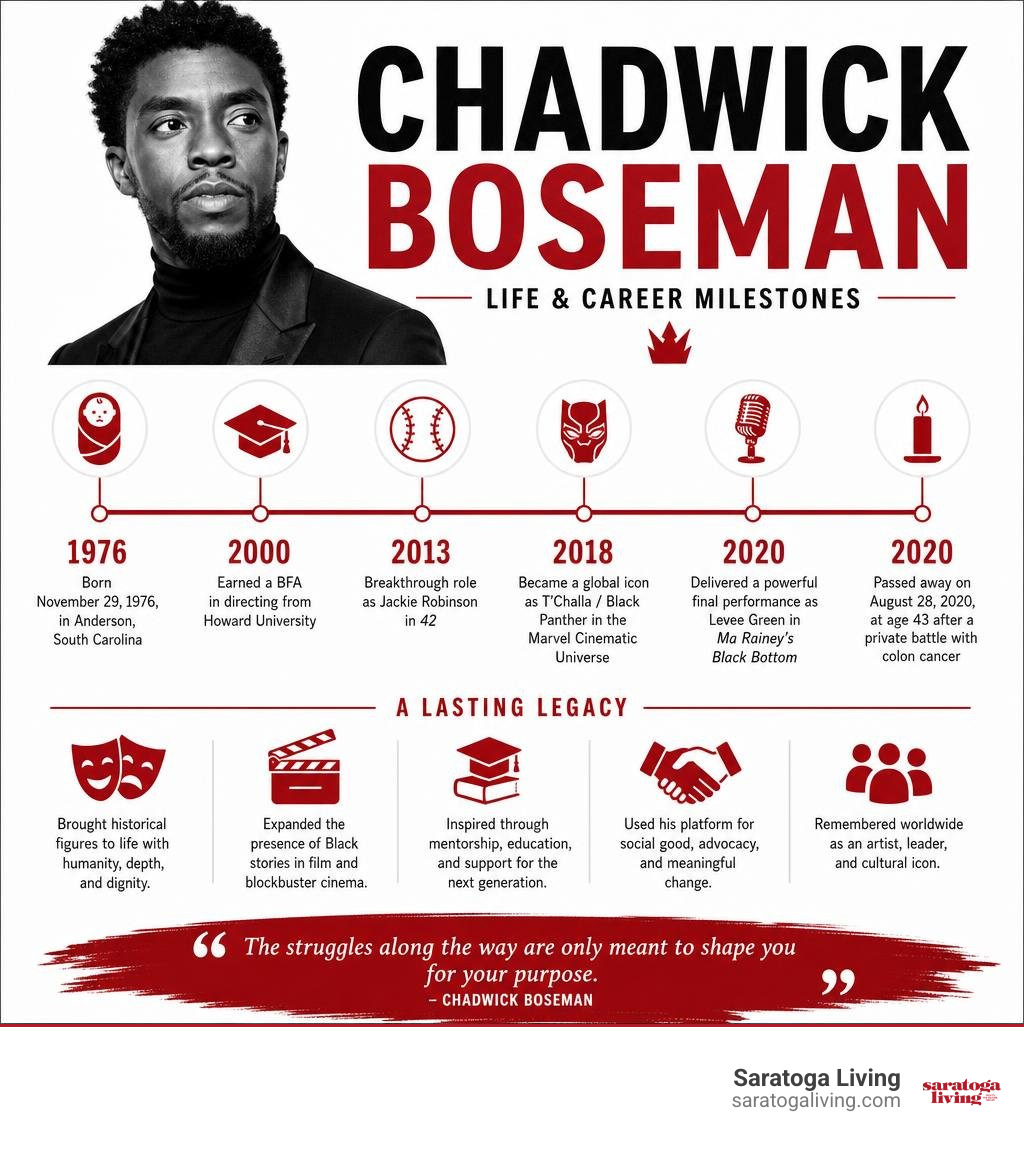
Chadwick Boseman was an American actor, playwright, and director whose performances brought Black history, ambition, and heroism to audiences around the world. Born in South Carolina in 1976, he became widely known for playing Jackie Robinson, James Brown, Thurgood Marshall, and Marvel’s King T’Challa, also known as Black Panther.
| Quick facts | Details |
|---|---|
| Born | November 29, 1976, in Anderson, South Carolina |
| Died | August 28, 2020, at age 43 |
| Education | BFA in directing from Howard University, 2000 |
| Breakthrough role | Jackie Robinson in 42 (2013) |
| Defining role | T’Challa in Marvel’s Black Panther and three other MCU films |
| Final major performance | Levee Green in Ma Rainey’s Black Bottom (2020) |
Boseman’s work mattered because he treated larger-than-life figures as fully human people. His rise from playwright and theater student to global star also changed what Hollywood could center in a blockbuster: Black stories with depth, pride, history, and imagination.
His death from colon cancer came after a private four-year illness, during which he continued completing acclaimed films. The public response was immediate and global, but his influence has continued through film, education, philanthropy, and a new generation of artists inspired by his example.
Guest Posts shares this guide to the life and work of an artist whose legacy remains central to modern culture.
Easy chadwick boseman word list:
Early Life and Education: Shaping the Vision of Chadwick Boseman
Chadwick Aaron Boseman was born on November 29, 1976, and raised in Anderson, South Carolina. Growing up as the son of Leroy, a textile worker and upholstery business owner, and Carolyn, a nurse, he developed a deep respect for hard work, community, and personal integrity. Long before he ever walked a red carpet in Los Angeles or worked with acclaimed Hollywood directors, Boseman understood the transformative power of storytelling.
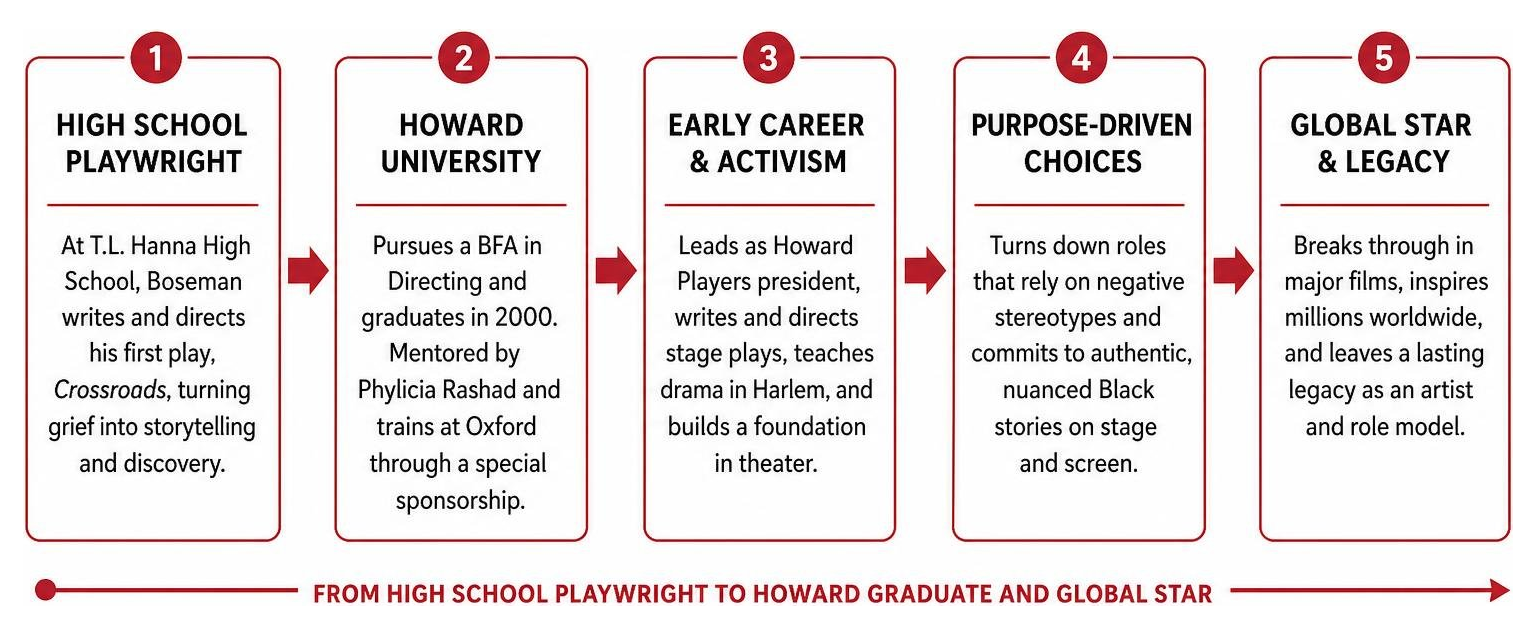
As a young boy, Boseman was drawn to design and initially dreamed of becoming an architect. However, a tragedy during his junior year at T.L. Hanna High School reshaped his creative calling. When a basketball teammate was shot and killed, Boseman processed his grief by writing his very first stage play, titled Crossroads. Directing and staging the performance for his classmates revealed to him how storytelling could heal pain, honor memory, and build community strength.
Following high school, Boseman enrolled at Howard University in Washington, D.C., where he pursued a Bachelor of Fine Arts degree in directing, graduating in 2000. He chose directing rather than acting because he initially wanted to understand how to write and guide complete narratives. To learn how to relate better to actors, he immersed himself in acting courses.
During his time at Howard, Boseman was mentored by the legendary actress and director Phylicia Rashad, who taught drama at the university. Recognizing the extraordinary potential of Boseman and a small cohort of classmates, Rashad personally arranged for financial sponsors—including award-winning actor Denzel Washington—to fund their enrollment in the prestigious Midsummer in Oxford summer program at the British American Drama Academy at Balliol College, Oxford. This intensive classical theater training expanded Boseman’s technique and grounded his lifelong commitment to artistic perfection.
Student Activism and Early Writing
Boseman’s college years were defined as much by his leadership as by his artistic development. As president of the Howard Players student organization, he helped lead student protests against the potential absorption of the College of Fine Arts into the broader College of Arts and Sciences, fighting passionately to preserve dedicated resources for Black fine arts students.
After graduating from Howard, Boseman moved to New York City to continue his studies at the Digital Film Academy. He actively worked in the off-Broadway scene as both a director and a writer. His original hip-hop theater play, Deep Azure, premiered at the Congo Square Theatre Company in Chicago and was nominated for a 2006 Joseph Jefferson Award for New Work. He also won an AUDELCO Award in 2002 for his stage performance in Urban Transitions.
To complement his writing and acting income, Boseman spent years teaching drama to youth at the Schomburg Center for Research in Black Culture in Harlem. These early experiences reinforced his firm belief that Black stories deserved respectful, nuanced representation on stage and screen. To verify facts about his early achievements, researchers frequently consult the official Chadwick Boseman | Britannica profile.
Howard University Roots of Chadwick Boseman
The influence of Howard University remained a cornerstone throughout Boseman’s entire life. The university’s emphasis on African American history, intellectual rigor, and cultural pride deeply informed the roles he chose to take on later in his career. Boseman intentionally refused early television roles that promoted negative Black stereotypes, even when it cost him employment. Early in his career, he was fired from the daytime soap opera All My Children after expressing concerns over script choices that relied on racial tropes—a role that was subsequently recast with his future Black Panther co-star, Michael B. Jordan.
In May 2018, Boseman returned to his alma mater to deliver the commencement address, urging graduates to embrace their purpose and stand firm in their values. His commitment to Howard came full circle when the university officially renamed its fine arts institution as the Chadwick A. Boseman College of Fine Arts, honoring his legacy as both a scholar and a champion for future generations of Black creators.
Breakthrough Biopics: Portraying American Legends
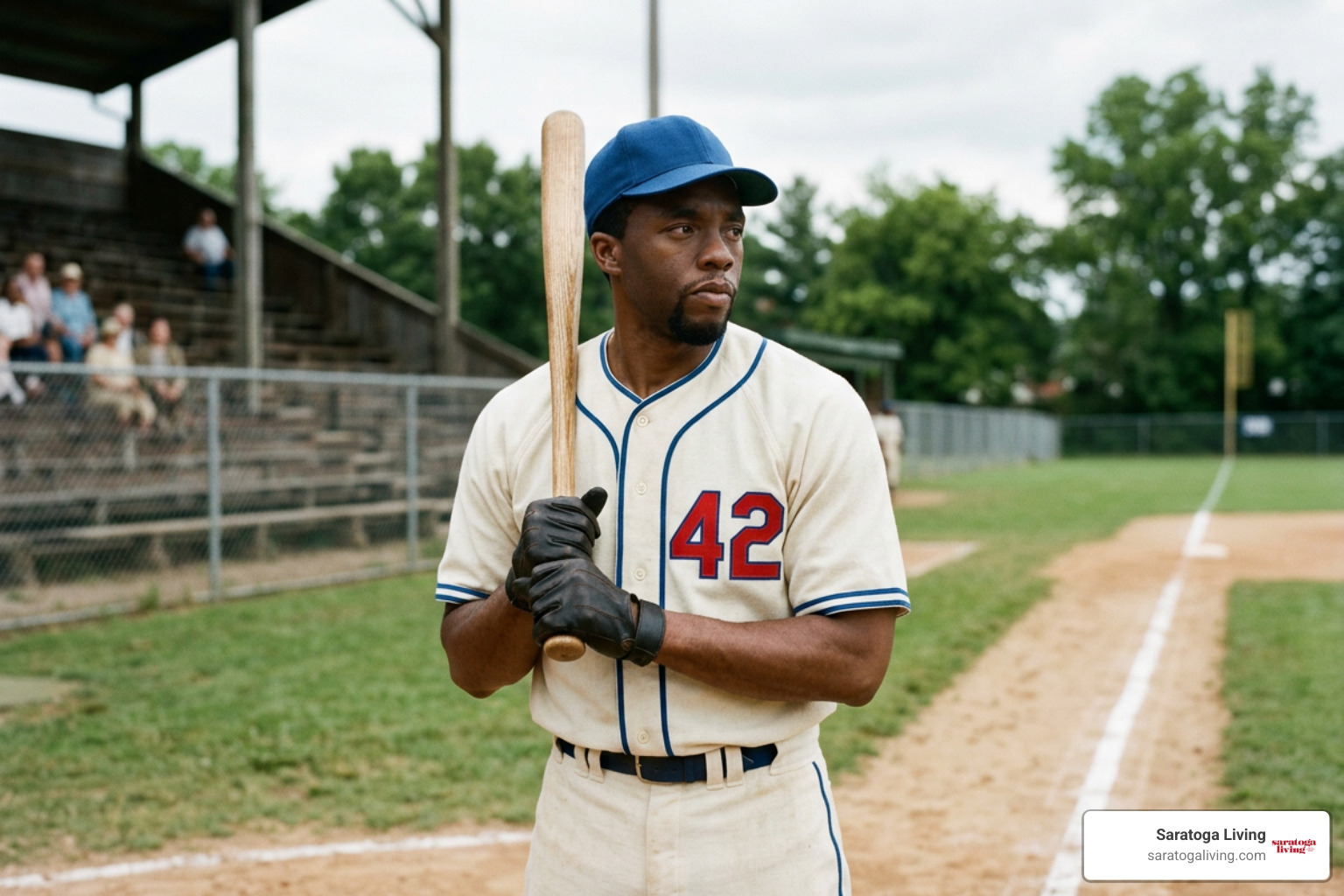
While Boseman built a solid television foundation with recurring roles on shows like Lincoln Heights and Persons Unknown, his true breakthrough came in 2013 when he landed the lead role of Major League Baseball legend Jackie Robinson in the biographical drama 42.
Playing Robinson required far more than physical resemblance; it demanded carrying the emotional weight of a man who broke the baseball color barrier under intense public hostility. Boseman trained five hours a day for five months with professional baseball coaches to replicate Robinson’s distinctive batting stance, running style, and athletic mannerisms. His dedicated performance earned critical acclaim and grossed over $95 million domestically, firmly establishing Boseman as a leading Hollywood talent capable of carrying major feature films.
Following 42, Boseman tackled another American icon: the “Godfather of Soul,” James Brown, in the 2014 biopic Get on Up. Boseman threw himself into two months of intense daily dance choreography and vocal preparation, spending five to eight hours each day mastering Brown’s energetic dance routines, stage presence, and unique speaking rhythm. Critics marveled at his ability to capture the complex, fiery spirit of the musician without slipping into caricature.
In 2017, Boseman starred as young civil rights lawyer and future Supreme Court Justice Thurgood Marshall in Marshall. Rather than depicting Marshall’s famous later years on the Supreme Court bench, the film focused on a high-stakes criminal defense case early in his legal career. Boseman brought a calm, witty, and razor-sharp intellect to the role, demonstrating his unmatched range in bringing historical giants to life.
Dedication to Historical Accuracy and Craft
Boseman’s approach to biographical storytelling was marked by rigorous research, physical transformation, and a deep respect for the legacy of the people he played. To ensure historical authenticity, he studied archival audio, split-screen video footage, and consulted closely with family members of the icons he portrayed. Jackie Robinson’s widow, Rachel Robinson, remarked that watching Boseman on screen felt like seeing her late husband alive again.
| Movie Title | Historical Figure Portrayed | Key Preparation & Training | Box Office / Critical Impact |
|---|---|---|---|
| 42 (2013) | Jackie Robinson | 5 months of daily baseball training; split-screen mechanics analysis | Grossed over $95 million; major breakthrough role |
| Get on Up (2014) | James Brown | 2 months of daily dance & footwork training (5–8 hours/day) | Widespread critical acclaim for dance & vocal performance |
| Marshall (2017) | Thurgood Marshall | Vocal cadence research; court trial archival review | Praised for captivating dramatic tension & historical depth |
Across every biopic, Boseman refused to let these historical figures be reduced to simple symbols. He portrayed their flaws, doubts, and human struggles, which allowed audiences to relate to them on a deeper emotional level. More details about his full artistic filmography are available via Chadwick Boseman — The Movie Database (TMDB) .
King T’Challa and the Cultural Impact of Black Panther

In 2014, Marvel Studios announced that Chadwick Boseman had been cast as T’Challa, the prince and future king of the fictional, technologically advanced African nation of Wakanda. Boseman made his memorable debut as T’Challa in Captain America: Civil War (2016), capturing attention with his regal demeanor, martial arts prowess, and distinctive Xhosa-inspired accent, which he fought to keep to preserve Wakanda’s uncolonized heritage.
The character’s standalone film, Black Panther (2018), directed by Ryan Coogler, became a monumental moment in modern cinema history. Opening to an unprecedented $218 million domestic box office over its initial four-day holiday weekend, Black Panther ultimately grossed over $1.3 billion worldwide. It shattered long-standing industry myths that Black-led films could not succeed globally.
Beyond box office records, Black Panther became the first superhero film ever nominated for the Academy Award for Best Picture. The movie celebrated Afrofuturism—a creative movement blending African culture, advanced science, and futuristic art—offering audiences worldwide a vision of Africa unblemished by colonialism. Boseman’s portrayal of King T’Challa became a global symbol of noble leadership, integrity, and cultural pride.
Redefining Black Representation in Hollywood
Black Panther was not only because of its box office success, but because of its predominantly Black cast, crew, and creative leadership. Boseman understood the immense responsibility on his shoulders and viewed the role as a cultural mission. He worked closely with costume designers, dialect coaches, and stunt choreographers to ensure that Wakanda felt authentically grounded in real African traditions and languages.
The film’s impact reached far beyond movie theaters. Children around the world wore T’Challa costumes, and the crossed-arm “Wakanda Forever” salute became a universal gesture of Black excellence, unity, and resilience. In recognition of his global cultural influence, Boseman was named to the 2018 TIME 100 list of the world’s most influential people. His costumes and script pages were later acquired by the Smithsonian’s National Museum of African American History and Culture (NMAAHC) to preserve this historic cinematic achievement.
Private Battle: Filming Masterpieces While Fighting Cancer
In 2016, Boseman received a devastating medical diagnosis: stage III colon cancer. Over the next four years, the disease progressed to stage IV. Yet, Boseman chose to keep his health battle entirely private, sharing the diagnosis only with his immediate family and a tiny inner circle of trusted friends.
What Boseman accomplished between 2016 and 2020 while battling cancer is nothing short of extraordinary. Between countless surgeries, hospital visits, and grueling rounds of chemotherapy, he filmed major blockbuster movies that required intense physical exertion. He performed demanding stunt work for Black Panther, Avengers: Infinity War, and Avengers: Endgame, while also starring in the action thriller 21 Bridges (2019), Spike Lee’s Vietnam War drama Da 5 Bloods (2020), and the feature adaptation of August Wilson’s Ma Rainey’s Black Bottom (2020).
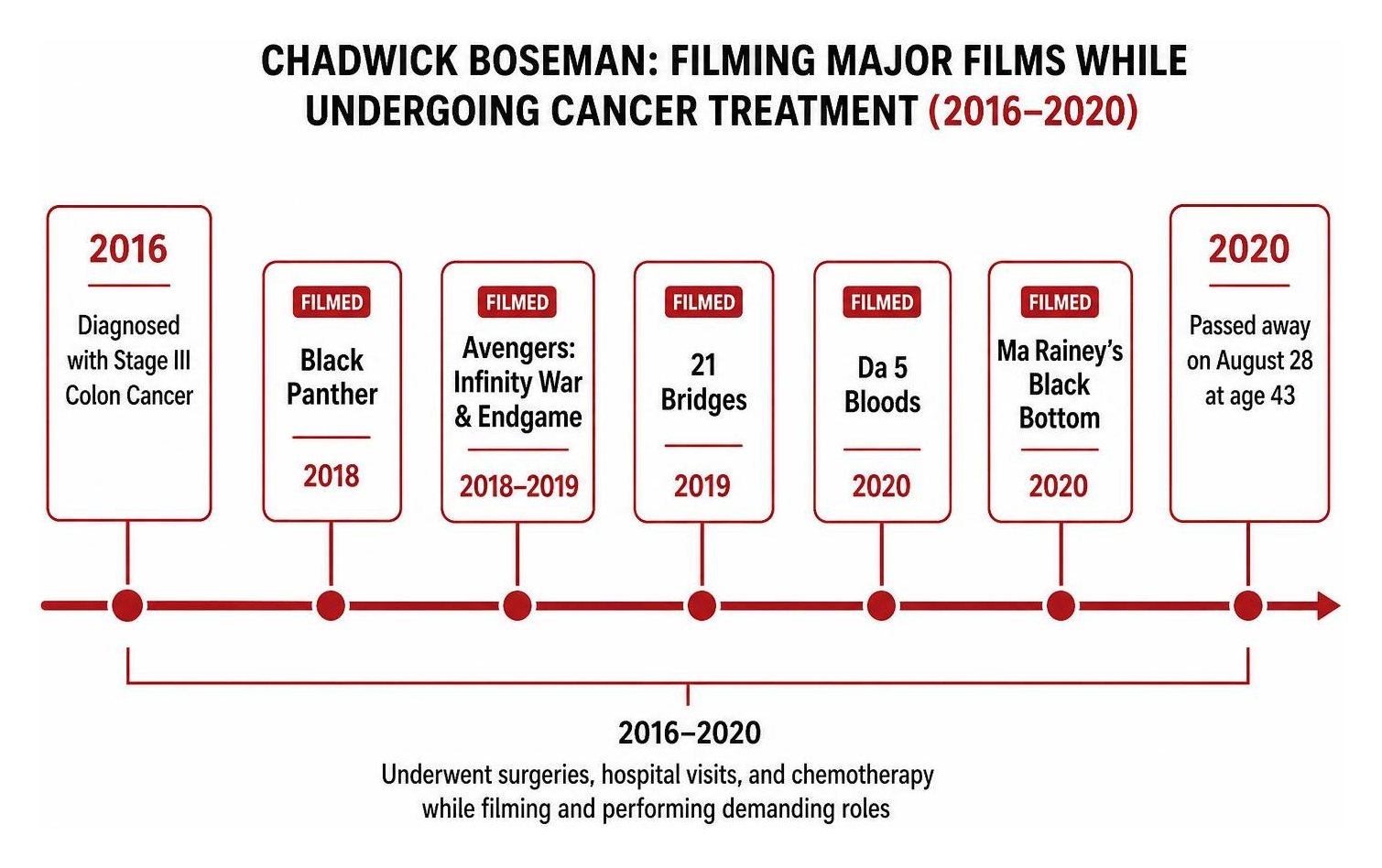
Throughout his treatments, Boseman brought an incredible level of energy and focus to his work. On the set of Da 5 Bloods, playing the revered fallen squad leader Norman Earl “Stormin’ Norm” Holloway, he filmed intense outdoor scenes in hot jungles while quietly enduring chemotherapy. His colleagues later recalled his unwavering enthusiasm and generosity on set, completely unaware of the severe physical pain he was enduring behind the scenes.
Final Performances and Posthumous Awards of Chadwick Boseman
Boseman’s final film performance as the ambitious trumpet player Levee Green in Ma Rainey’s Black Bottom is widely regarded as one of the finest acting achievements of his career. Opposite Viola Davis, Boseman delivered a searing, emotionally raw performance that captured a young musician’s desperate fight for creative freedom and recognition in 1920s Chicago.
Following his death on August 28, 2020, at the age of 43, the film industry showered his final performances with prestigious awards. Boseman posthumously won the Golden Globe Award for Best Actor – Motion Picture Drama and the Screen Actors Guild Award for Outstanding Performance by a Male Actor in a Leading Role. He also became the eighth actor in Academy Award history to receive a posthumous acting nomination for Best Actor. In 2022, Boseman won a Primetime Emmy Award for Outstanding Character Voice-Over Performance for voicing alternate versions of T’Challa in Marvel’s animated series What If…?. Readers seeking a complete overview of his life and awards can visit Chadwick Boseman – Biography, Actor, Black Panther, Death .
Philanthropy, Advocacy, and Enduring Tributes
Beyond his achievements in film, Boseman was deeply committed to community support, equity, and philanthropy. In April 2020, during the early months of the global pandemic, he personally donated $4.2 million in personal protective equipment (PPE) to hospitals serving Black and African American communities heavily affected by COVID-19.
Boseman was also a quiet champion for pay equity in Hollywood. While starring in and producing the 2019 thriller 21 Bridges, he learned that the studio refused to meet the salary request of his co-star, Sienna Miller. Boseman donated a portion of his own salary to ensure Miller received the compensation she deserved—an act of generosity that Miller later shared publicly to highlight his exceptional character.
He regularly visited pediatric cancer patients at St. Jude Children’s Research Hospital, bringing joy and movie gifts to young children battling the very same disease he was secretly fighting himself. He also personally donated $10,000 to the Boys & Girls Club of Harlem to provide free Black Panther movie tickets to local youth.
Global Response and Historical Honors
The news of Boseman’s passing on August 28, 2020, brought an outpouring of public grief across the globe. The official tweet posted by his family announcing his death became the most-liked tweet in Twitter history, receiving over 7 million likes within days as fans, political leaders, civil rights organizations, and fellow actors paid tribute.
Civil rights organizations, including the NAACP, issued formal resolutions celebrating his life, noting that Boseman used his talent to subvert negative stereotypes and elevate Black history. Netflix and Howard University partnered with his widow, Simone Ledward-Boseman, to establish the Chadwick A. Boseman Memorial Scholarship, which covers full four-year tuition for incoming fine arts students at Howard.
To explore extensive primary documentation regarding his life, death, and encyclopedic film credits, readers can consult Chadwick Boseman – Wikidata as well as the comprehensive entry on Chadwick Boseman .
Frequently Asked Questions About Chadwick Boseman
What was Chadwick Boseman’s breakthrough film role?
Chadwick Boseman’s breakout film role came in 2013 when he starred as baseball pioneer Jackie Robinson in the biographical drama 42. Directed by Brian Helgeland, the movie showcased Boseman’s ability to combine intense athletic authenticity with deep emotional drama. His performance was widely praised by film critics and Jackie Robinson’s widow, launching him into top-tier Hollywood roles.
How did Chadwick Boseman balance his career with his cancer fight?
Following his stage III colon cancer diagnosis in 2016, Boseman chose to keep his health private while undergoing multiple surgeries, recovery periods, and daily chemotherapy regimes. He scheduled treatments around demanding film production schedules, completing major physical roles in Black Panther, 21 Bridges, Da 5 Bloods, and Ma Rainey’s Black Bottom. His determination allowed him to leave behind a remarkable body of artistic work during his final four years.
What posthumous awards did Chadwick Boseman receive?
For his final film role as Levee Green in Ma Rainey’s Black Bottom (2020), Boseman posthumously won the Golden Globe Award for Best Actor – Motion Picture Drama, the Screen Actors Guild Award for Outstanding Male Actor in a Leading Role, and earned an Academy Award nomination for Best Actor. In 2022, he received a Primetime Emmy Award for his voice work in Marvel’s animated series What If…?.
Conclusion
Chadwick Boseman’s legacy reaches far beyond his box office records or award statuettes. He was a dedicated artist who approached every script as an opportunity to honor Black history, elevate storytelling, and inspire future generations. From his early days as a student playwright fighting to protect fine arts education to his unforgettable presence as King T’Challa, Boseman brought dignity, purpose, and excellence to everything he touched.
His quiet courage while working through severe illness demonstrated a strength that matched any superhero he played on screen. Today, his work continues to educate, entertain, and inspire millions across the globe. To stay connected with inspiring stories across film, fine arts, and regional culture, Explore Saratoga Living arts and culture coverage.