Before he was a seven-time GRAMMY winner, before he was the subject of a Netflix documentary, before he co-composed the score of an award-winning Pixar movie, and before he collaborated with the likes of Alicia Keys, Stevie Wonder, and Beyoncé, New Orleans native Jon Batiste was a 17-year-old student at Saratoga’s Skidmore Jazz Institute. Now, more than 20 years later, the genre-defying musician is debuting his ninth studio album in the city that helped shape him in more ways than one
“A lot of people who are still in my life and who are major parts of my life I met at Skidmore,” Batiste tells Saratoga Living ahead of his August 22 performance at SPAC, at which he’ll debut his new album, Big Money, alongside the Philadelphia Orchestra. “Coupled with the fact that it was in the early years of me developing my craft and my artistry, every time I visit Saratoga, it feels like a second home to me.”
While Batiste hasn’t performed at SPAC since he headlined the 2018 Saratoga Jazz Festival, the former Late Night With Stephen Colbert bandleader does come back to the Spa City on a regular basis to visit his in-laws; his wife, one of the aforementioned people that he met at Skidmore, is the Emmy-winning journalist and author Suleika Jaouad, whose father was a professor at the college.
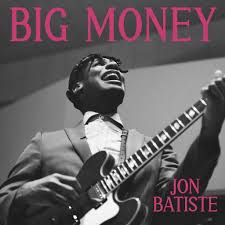
Batiste’s upcoming SPAC show is special not only because it will fall on the day his new album is released and serve as a kickoff to his 30-plus-stop Big Money Tour, but because it will be the first and only time an audience will hear an orchestral exploration of the songs, which, on the album, are stripped down and in many cases recorded in one take. “It allows for us to take these songs and expand the palette,” says Batiste, who is no stranger to working with large orchestras, as evidenced by American Symphony, the moving 2023 Netflix documentary that follows Batiste as he composes a symphony while his wife undergoes cancer treatment. “We can get as big and as broad as we want, and then we can also shrink it back down to the source, and go back and forth.”
Big Money consists of nine songs including the already-released title track and a cover of Ray Charles’ “Lonely Avenue” featuring Randy Newman, a fellow singer, songwriter, and composer who’s known for his award-winning work on the musical scores of Pixar movies Cars, Monsters, Inc., A Bug’s Life, and the Toy Story series. (Batiste, on the other hand, won an Academy Award for Best Original Score for Pixar’s Soul.) Other collaborators on the album include “Rise Up” singer-songwriter Andra Day and frequent Jay-Z collaborator No ID.
Big Money marks a change of pace from Batiste’s last album, 2024’s Beethoven Blues, in which the pianist reimagines Beethoven’s most iconic works through an improvisational blues and gospel lens. Whereas Beethoven Blues is purely instrumental and listeners are required to make their own meaning out of the melodies, Big Money is more explicit in its message. The title track is a catchy critique of American greed with lyrics like “Mama said, boy don’t you be no dummy/ Everybody chasin’ that big, big money” and “Nah, might as well live for something you can feel/ Nah, might as well live for something real,” the latter of which Batiste, in an interview with Rolling Stone, connected to the rise of AI.
“This album is about the heart of humanity and raging against what greed has done to our nation,” the artist said in a statement. “There’s a blanket of pollution, both around the earth and in our souls. We are out of balance. It used to be one person, one vote. Now it’s one dollar, one vote. With this philosophy we have over-stretched our natural limits and the limits of what the earth can bear. We are the wealthiest nation in the history of the world, so we certainly have enough resources to give everybody enough to eat, to have clean water, to have basic health care.”
Big Money differs from Batiste’s previous works sonically, too. And it makes sense: He doesn’t submit to the arbitrary limits imposed by terms like “classical” and “R&B.”
“My approach to music is trying to make an album that my wife, Suleika, will like,” he tells Saratoga Living. “There is no such thing as genre—it’s just what you, as the artist, are into at this moment in time. What is it that is inspiring you? You’ll realize that you are so multifaceted and that we all have so much within us that it’s impossible to categorize people. I can only categorize a person by calling them the genre of themself.” Batiste goes on to explain how he thinks of genres merely as marketing and organizational tools the music industry created for radio that are actually rooted in a separation of race and gender. “It’s music based upon societal barriers that existed,” he says. “It’s coming from a place that isn’t actually the truth of what the music is.”
To that end, for Big Money, Batiste invented his own genre, or at least reclaimed what an existing genre means, if only to appease those of us who struggle to define his ever-changing sound in a few succinct words. He’s calling it “New Americana,” a reframing of Americana that draws on forms of music traditionally left out of the genre but that are undoubtedly a part of the essence and sound of America itself. In the album—on which he primarily plays guitar rather than piano—folk, gospel, soul, blues, reggae, and jazz intermix with bluegrass and other elements that are traditionally considered to be “Americana.”
This line of thinking isn’t new for Batiste. When conceiving of Beethoven Blues, he thought about how the term “classical music” encompasses specifically European classical music, but doesn’t encapsulate classical American music like blues and other forms that came from our nation’s sharecroppers, farmers, and pioneers and upon which this country was built. The name “Beethoven Blues,” he felt, distilled the essence of that notion and described the contents of the album in language people would understand.
Clearly, Batiste, who was at one time regarded primarily as a jazz performer, has expanded his thinking—and his repertoire—since his days at the Skidmore Jazz Institute, a two-week intensive program that every summer invites some 65 aspiring young musicians to learn from top jazz practitioners and educators right here in Saratoga Springs. But it’s undeniable that the Spa City served as a springboard for the young New Orleanian’s career: Not only is it where he met his wife, but it’s where he met Joe Saylor and Phil Kuehn, members of his Late Show With Stephen Colbert band, Stay Human, with whom he performed from 2015-2022. It’s also the place he developed a relationship with Saratogian Don McCormack, who founded of the Skidmore Jazz Institute in 1988. Batiste still stops by to see McCormack when he’s in town.
Other can’t-miss Saratoga stops on Batiste’s list? The Saratoga Farmers’ Market, the Saratoga Springs Public Library, Mrs. London’s, Hattie’s, and, of course, the house Jaouad grew up in. “It’s one of my favorite places to go and hang out,” he says of the home. “We have so many great memories and so many holidays that we’ve spent there. Any time we’re in Saratoga, I won’t be staying in a hotel.”
And that’s fitting. Because even though Batiste wasn’t born here, and even though he doesn’t live here, you can ask any local fan of music that doesn’t fit neatly into a box meant to emphasize our differences: Jon Batiste, the great unifier of our musical generation, is an honorary Saratogian in our book.