What makes a good photograph? Is it an expensive camera or a professional lens? While equipment matters, a good photo starts with composition. Even an ordinary scene can look amazing when you know how to arrange objects in the frame.
If you’re new to photography, composition is one of the first skills you should learn. Before investing in expensive gear, start with the basics. Here are 12 photography composition tips that will help you take better pictures and make your photos look more professional.
What Is Composition in Photography?
Photography composition is the ability to arrange objects harmoniously within a frame. However, achieving this isn’t always easy. Before taking a picture, ask yourself three questions: “What do I see? Why am I taking this photo? How can I share my idea with the viewer?”
Good composition helps viewers understand what your photo is about. It draws attention to the main subject and removes unnecessary distractions.
For example, imagine photographing a friend in front of a building. Parked cars, street signs, and people in the background might distract from your friend. Simply moving a few steps to the side and choosing a cleaner background can make a big difference.
How Composition Works in Different Types of Photography
The same basic principles apply to different types of photography, but each genre has its own needs.
In portrait photography, composition focuses on the person. Photographers pay attention to facial position, eye direction, and the background to create natural, flattering images.
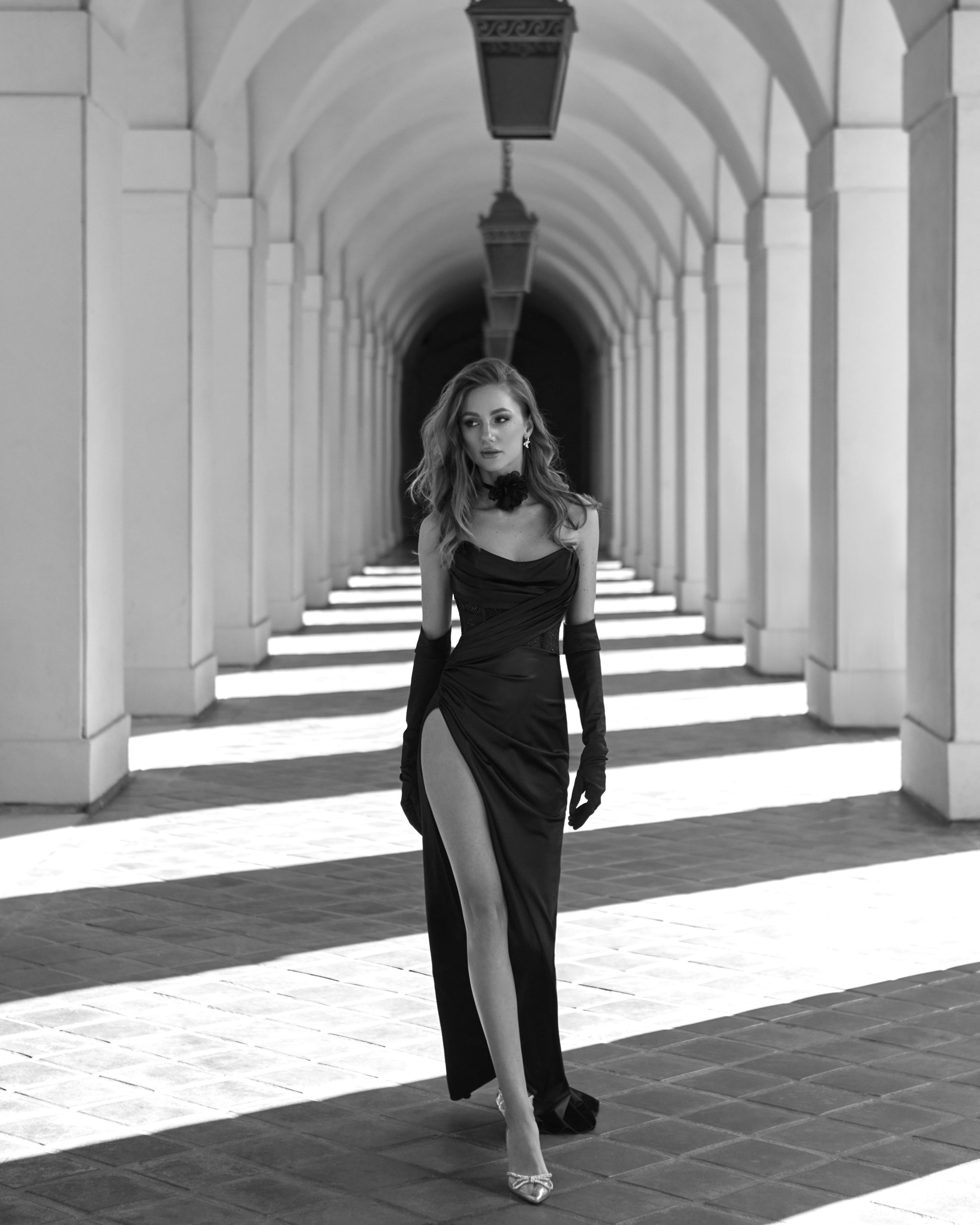
In fashion photography, composition should focus on the model and their clothing. Every element in the frame should work together to create a complete image.
“Sometimes, the best fashion portraits come from intentionally breaking the rules of composition,” says Miami fashion photographer Daria Koso. “But to do that successfully, you first need to understand those rules and know exactly why you’re breaking them.”
In landscape photography, photographers use the horizon, mountains, trees, and other natural elements to create depth and balance.
In street photography, composition brings order to busy scenes. Buildings, people, shadows, and streets can all become part of the story.
Whatever you photograph, the goal is to make the important elements work together.
12 Photography Composition Tips to Improve Your Photos
You don’t need years of experience to improve your photography. Start with these simple techniques and practice them whenever you take pictures.
1. Follow the Rule of Thirds
The rule of thirds is one of the easiest composition techniques to learn. Imagine dividing your photo into nine equal parts using two horizontal and two vertical lines.
Instead of placing your subject in the center, try positioning it along one of the lines or where two lines meet.
For example, when taking a portrait, place the person’s eyes near the upper horizontal line. If they’re looking to one side, leave some space in that direction.
Most cameras and smartphones have a grid option to help you practice. Remember, though, that centered compositions can work just as well.
2. Use Leading Lines
Leading lines guide the viewer’s eyes toward your subject. You can find them in roads, sidewalks, stairs, fences, and even shadows.
Imagine photographing someone standing at the end of a long walkway. The edges of the path naturally lead the viewer’s attention toward that person.
Before taking a picture, look for lines that can improve your composition. Try different camera positions until they point toward the main subject.
Avoid lines that lead attention away from what you want to show.
3. Add Depth to Your Photos
Some photographs almost feel three-dimensional. This happens when photographers use objects at different distances from the camera.
For example, when taking a portrait in a park, include a few leaves in the foreground, place your subject in the middle, and keep trees in the background.
These layers make the image feel deeper and more interesting.
You can also use a wide aperture to blur the background. Just remember that every element should support your subject, not distract from it.
4. Try Symmetrical Composition
Symmetry means that both sides of an image look similar or balanced. It’s common in buildings, bridges, hallways, and windows.
Imagine a model standing in the middle of a large doorway. Placing the model in the center can create a clean, powerful composition.
When photographing symmetrical scenes, keep your camera straight and try to stand directly in front of the subject.
Experiment by taking one centered photo and another with the subject off to one side. Compare how each composition feels.
5. Leave Some Negative Space
Negative space is the empty area surrounding your main subject. It might be a clear sky, a plain wall, or an empty beach.
Many beginners try to fill every part of the frame. However, leaving some space can make your subject stand out.
Imagine a person wearing a bright red coat against a large gray wall. The empty background draws attention to the coat and creates a clean look.
Negative space works especially well in portrait, fashion, and advertising photography. Just make sure your subject remains easy to notice.

6. Use Natural Frames
Natural framing means using objects around you to create a border around your subject.
Doors, windows, arches, and tree branches are all good examples.
Instead of taking a simple portrait outside a house, try photographing the person through an open doorway. This helps separate the subject from the background and adds depth.
The frame doesn’t need to surround the person. Even a few objects along the edges can work.
Make sure these elements don’t cover important details or distract from your subject.
7. Choose a Simple Background
A messy background can ruin an otherwise great photograph.
Before taking a picture, look behind your subject. Are there parked cars, trash cans, signs, or other distracting objects? Does a pole appear to be growing out of someone’s head?
Sometimes, moving just a few steps can solve the problem.
You can also use a wide aperture to blur distracting details, but choosing a clean background is often more effective.
Make it a habit to check the entire frame before pressing the shutter.
8. Experiment With Different Camera Angles
Most people take pictures while standing up and holding the camera at eye level. Try something different.
Get down low, shoot from above, or move to the side. Each angle changes how your subject looks.
For example, photographing a fashion model from a lower angle can make the pose more dramatic. Shooting from above can work well for groups or objects arranged on a table.
Try photographing the same subject from several positions. Choose the angle that best shows what you want viewers to notice.
9. Look for Patterns and Repetition
Patterns are repeated shapes, colors, lines, or objects. You can find them in windows, brick walls, fences, and floor tiles.
These repeated elements create order and make photos more interesting.
Imagine someone wearing colorful clothing in front of a wall with identical gray panels. The pattern creates a simple background while the person stands out.
Sometimes, breaking a pattern can make an image even stronger. Look for one different object among repeated shapes and make it your main subject.
10. Pay Attention to Colors
Colors affect how people see your photos. Bright colors attract attention, especially against neutral backgrounds.
For example, a yellow jacket will stand out against a gray building. A green outfit against green trees might be harder to notice.
Before taking a picture, check whether the colors work well together. Look for bright background objects that could distract from your subject.
You don’t need advanced color theory. Start by choosing backgrounds that help your main subject stand out.
11. Use Movement to Make Photos More Natural
Movement can make photographs feel more natural and full of energy.
When photographing people, ask them to walk, turn, move their hands, or look in different directions.
This works particularly well in fashion photography, where movement can show the shape and texture of clothing.
Remember to leave some space in the direction your subject is moving. For example, if someone is walking toward the right, give them room on that side of the frame.
Use a fast shutter speed when you want to capture sharp movement.
12. Don’t Be Afraid to Break the Rules
Photography has many composition rules, but you don’t always have to follow them.
Professional photographers sometimes place subjects near the edge of a frame, crop faces, or leave large empty spaces to create unusual images.
However, you should understand the rules before breaking them.
Try taking one photo using traditional composition and another with an unusual approach. Compare the results.
Which image looks better? Which one communicates your idea more clearly?
The more you practice, the easier these decisions become.
Conclusion
Good photography starts with learning how to see and arrange the world around you. You don’t need an expensive camera to practice composition. Even a smartphone is enough.
Experiment with different angles, backgrounds, colors, and framing techniques. Over time, you’ll begin to recognize good compositions before taking a picture.
Better equipment can help, but it won’t replace your ability to create a strong image. Learn to see a good photograph first. The camera can come later.