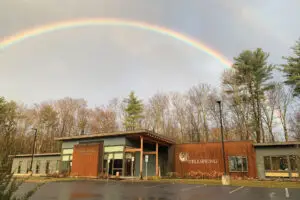
Saratoga’s motto runs “Health, History, Horses,” and the first word points straight at the springs. For generations, visitors came to drink the water, and the bottles followed them home. Each bottle made a promise, and some of those promises were bold.
That instinct to bottle a natural remedy has not gone away. Amanita muscaria, the red fly agaric of fairy tales, is now sold as mushroom products in capsule form for adults in states where it is legal. Saratoga’s own bottling story offers a smart way to read those labels.
How Did the Springs Build a Wellness Town?
The springs drew people long before the racetrack did. In 1771, members of the Mohawk nation showed Sir William Johnson the mineral springs, and they used the water in their own medicines. Today the area holds about 50 different mineral spring sites.
Gideon Putnam settled near High Rock Spring in 1789. “This is a healthy place,” he wrote in his memoirs. By 1803, he had opened a 70-room boarding house beside Congress Spring, the first hotel in town.
The Spa City still chases wellness today. Visitors can soak at the Roosevelt Baths or book a new infrared sauna studio on Broadway.
What Did the State’s Bottles Promise?
New York built its own spa complex in the 1930s, with $3,200,000 from the Reconstruction Finance Corporation. The bottling plant, designed by Dwight James Baum, started its machines in June 1935. The Saratoga Automobile Museum keeps a detailed bottling plant history on its site.
The plant filled four waters, and each came with its own pitch:
- Geyser was “prescribed by physicians because of its alkaline properties.”
- Hathorn was sold as “primarily a laxative,” taken before breakfast.
- Coesa was “recommended by physicians for certain conditions of the gall bladder.”
- State Seal was billed as “ideal for low-salt diets.”
Ads in Harper’s Bazaar, Vogue and The New Yorker urged readers to “take the cure at Saratoga.” The state stopped bottling in 1971. A private company revived two waters in 1980 and quit in less than a year.
Those slogans now read like marketing, and that is the lesson. A label tells you what a seller wants you to believe. The reader’s job is to ask what it actually shows.
Why Do Capsules Appeal to Modern Buyers?
A capsule is a small shell filled with a set weight of powder. For a dried mushroom, it packages the material in a uniform, sealed form that is easy to label.
Amentara’s Amanita capsule listing describes 500 mg of Amanita muscaria powder inside a gelatin capsule. The ingredient line reads “100% Amanita Muscaria Powder.” The company says its Amanita is dried at 100 degrees Fahrenheit. It adds that the caps are only decarboxylated to the extent that drying causes naturally.
That last detail matters. Ibotenic acid, a compound in the fresh cap, converts to muscimol as the mushroom dries. Raw material contains more ibotenic acid, which can cause unwanted side effects in high doses, and correct preparation reduces it.
How Should You Read a Capsule Label?
Treat any capsule bottle the way a skeptical 1930s visitor might have treated a spa ad:
- Check the species. The full Latin name should appear, not just “mushroom blend.”
- Find the plant part and preparation. Whole dried cap, extract and raw powder are different products.
- Note the fill weight. It should be printed clearly per capsule.
- Look for sourcing details. Amentara points to family foragers in Siberia and Eastern Europe.
- Read the claims line. This listing states it is “not intended to diagnose, treat, cure, or prevent any disease.”
- Find the warnings. The page says to keep it away from children and to avoid use while pregnant or nursing.
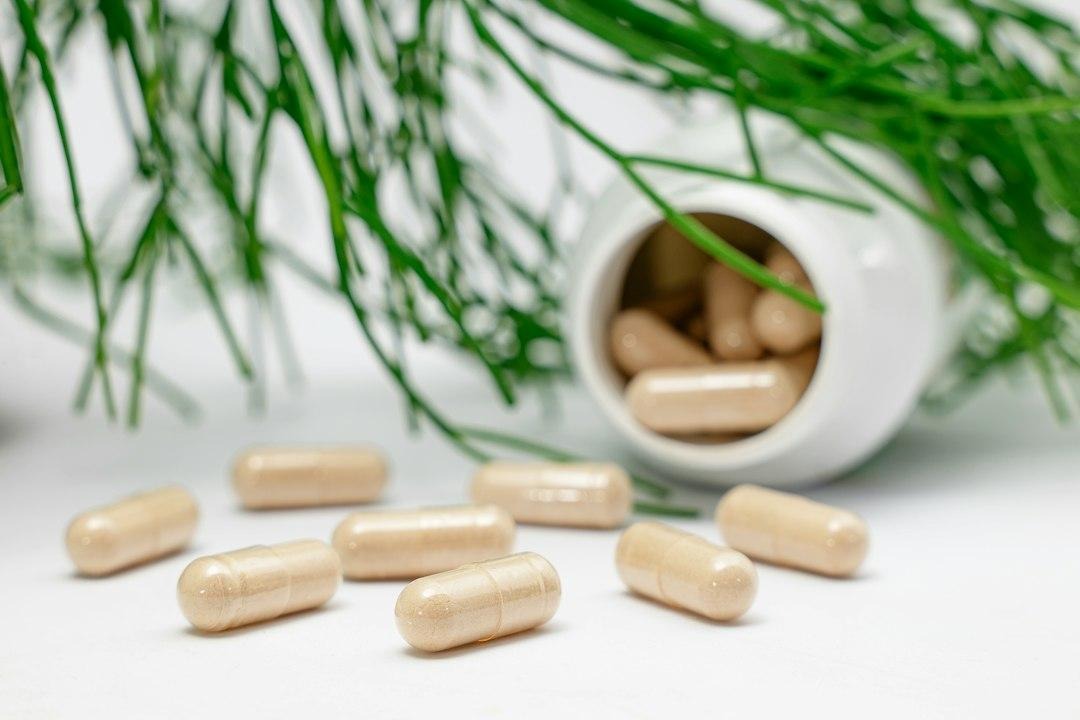
A seller’s seal and a lab sheet help, yet neither settles the question alone. Amentara backs its range with a Trust Seal covering ethical sourcing, purity checks and buyer education. A certificate of analysis is one signal, since reports can be falsified and Amanita is hard to measure precisely.
How Old Is the Fly Agaric’s Reputation?
Like Saratoga’s springs, this mushroom earned its reputation through centuries of use. Among the Koryak of Siberia, a tale tells of Big Raven, who needed strength to help his brother Whale. He found it in earth spirits identified with the fly agaric, as Peter Furst retold for the Penn Museum.
The Koryak and Chukchi also understood that preparation changed how the mushroom behaved. In folk medicine, it was used for complaints such as rheumatism and dysentery, a 2025 literature review notes. A late-1200s chapel fresco in central France has even been read by some writers as showing the mushroom, though art historians dispute it.
Formal research is thin, and some of it is poorly designed or funded by sellers. Give weight to tradition, shared personal experience, your own discernment and a professional’s guidance alongside any study.
Which Cautions Come Before Any Order?
- Capsules like these are for adults only and belong well out of children’s reach.
- Legality varies by state. Amentara ships Amanita everywhere except Louisiana, which bans it.
- Like many plants and fungi, it can cause unwanted side effects, especially if misused or improperly prepared.
- Interactions are possible, most notably with other GABAergic compounds, so consult a medical professional before combining.
- No seller may legally market it as a certain cure, so lean on your own discernment.
Reading the Bottle, Then and Now
Saratoga’s bottlers sold water with big promises, and buyers learned to read between the lines. The same habit serves anyone holding a capsule bottle in 2026. Look past the slogan and judge what the label can actually show.
Frequently Asked Questions
Can You Still Taste Saratoga’s Mineral Springs?
Yes. Saratoga Spa State Park, a National Historic Landmark, runs a mineral springs tour. Cups are provided so visitors can taste the springs.
What Is Inside an Amanita Muscaria Capsule?
This listing describes milled, dried Amanita muscaria cap powder in a gelatin shell. Fill weight, preparation and sourcing vary by seller, so read each label closely.
Which State Bans Amanita Muscaria?
Louisiana prohibits it under a 2005 state law, and sellers such as Amentara do not ship it there. Other states and towns can change their rules, so check before ordering.
When Did Saratoga’s State Bottling Plant Close?
The state stopped bottling and vacated the plant in 1971. A private firm briefly bottled State Seal and Geyser water there from the fall of 1980.