In A Pair of Aces, a brand-new historical novel based on true events, co-authors Marie Benedict and Victoria Christopher Murray tell the story of an unlikely pair of women—a Black prosecutor and a Jewish brothel madam—who join forces in New York City in 1936 to bring down mob boss Charles “Lucky” Luciano. What the book won’t tell you? These characters had deep ties to Saratoga Springs.
Born in Italy, Luciano emigrated to the US with his family in 1906, when he was 8. By the time he was a teenager, he’d dropped out of school and become a member of Lower Manhattan’s Five Points Gang. He was arrested 25 times from 1916–1936 on an array of charges, but never spent serious time in prison. In 1931, after having both his boss and his rival killed, Luciano established the Commission—a governing council of crime bosses—and became the de facto leader of American organized crime. And if NYC was his home court, Saratoga was his playground.

Saratogian Joe Tarantino didn’t know the well-dressed man who frequented his family’s deli on Division Street, even when he stepped into Tarantino’s taxi outside the Chicago Club on Woodlawn Avenue. “Charming my mother with his classic Italian and dark wavy hair; paying for his salami and provolone sandwich with a $10 bill,” Joe said. “A year or two later, I found out he was Lucky Luciano.”
After working for Arnold “The Brain” Rothstein at Brook Resort on Church Street, Luciano actually ran the Chicago Club for a time; Colliers’ magazine charged that, by 1936, no one could open a casino in Saratoga Springs without the approval of Luciano. He frequently dined at Alphonse DeRossi’s family restaurant on Beekman Street. “My sister waited on him,” DeRossi told me. “He was pleasant, low-key. He wasn’t demanding.”
Another taxi driver, Joe Deuel, also saw a softer side to the mobsters who summered in Saratoga. “They showed a complete other side of themselves,” he said. “They’d help people and they’d donate a lot of money to the St. Clement’s Bazaar.”
And yet, Murder, Inc., the enforcement arm of the mob, was linked to 85 killings.

A Pair of Aces picks up Luciano’s story—or, rather, the story of the two women who finally put him behind bars—in April of 1935.
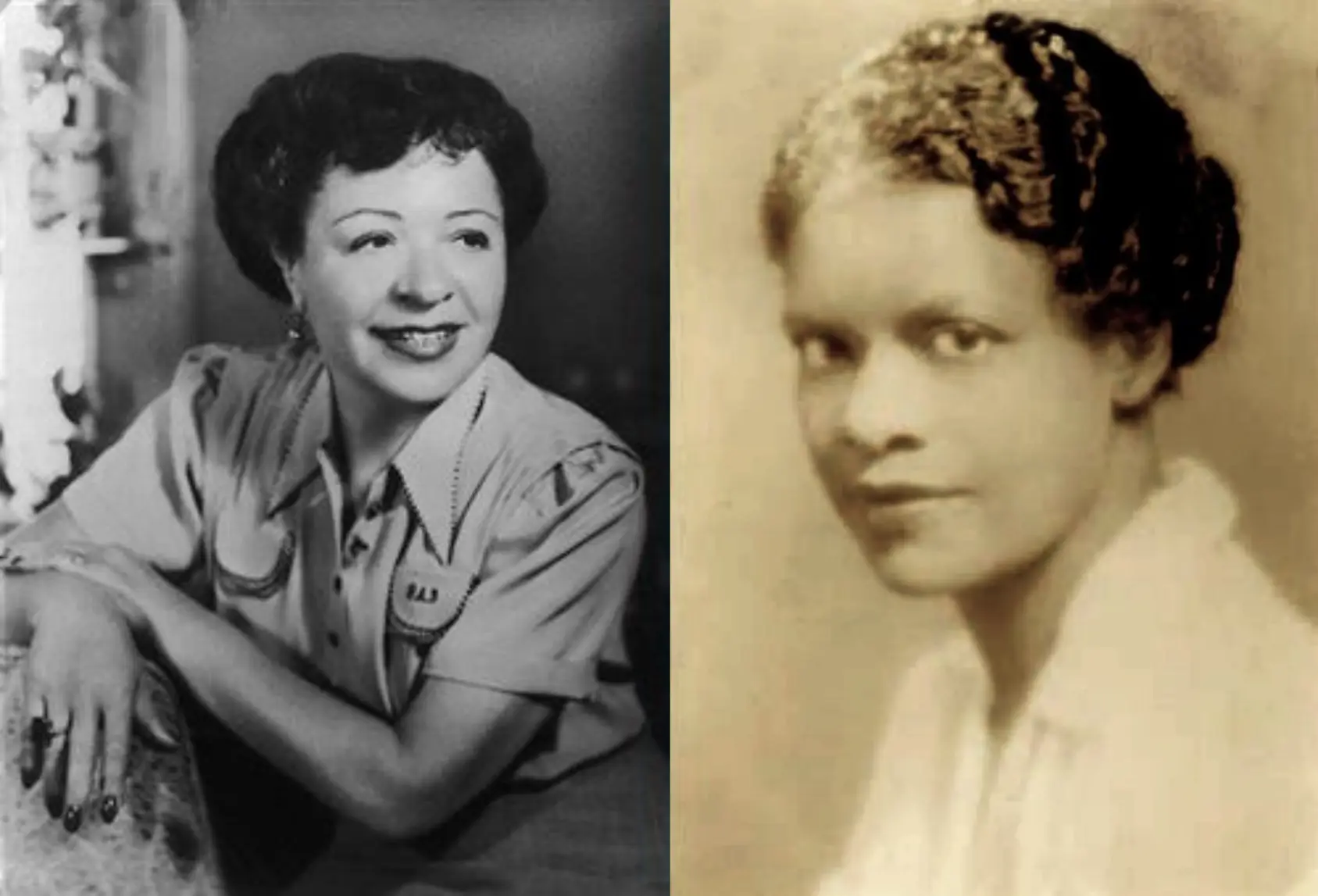
A graduate of Smith College from Harlem, Eunice Carter was the only woman and the only person of color among then-special prosecutor Thomas Dewey’s team of attorneys. It was her idea to tie Luciano, whom Dewey had declared Public Enemy No. 1, to the drug-addicted and abused prostitutes and bookers she observed every day at the Women’s Court. She teamed up with New York City Madam Polly Adler, who rallied Florence “Cokey Flo” Brown, Jenny Fischer (aka “Jennie the Factory”), and other madams and sex workers to testify against Luciano.
In her 1953 memoir A House is Not a Home, Polly Adler recalls renting a home on Union Avenue near the track in the mid 1920s and parading her bevy of beauties at the Saratoga Race Course clubhouse. “Saratoga was heaven for my girls,” she wrote. “They all went jock-crazy.”
When her house was raided after an unhappy local customer claimed he had been robbed of $1,600, Adler “gave as character references the men who controlled the biggest gambling houses in Saratoga. They knew I operated on the square.”
Adler sent the girls home early, and ran her house as a speakeasy for the rest of the meet.
“At the end of the season, I broke even, but my biggest gamble had succeeded,” Adler wrote. “At last I’d made contact with the clientele I’d been shooting for, my address book was crammed with new names, and I knew Saratoga would pay off for me in New York.”
One of Adler’s notable clients? Lucky Luciano, who frequented her bordellos during the 1920s and ’30s.
There’s a photo of Owney “The Killer” Madden smirking at Saratoga’s Grand Union Hotel. But he surely wasn’t smiling on April 1, 1936, when Special Prosecutor Thomas Dewey had Luciano arrested while he was hiding out at Owney’s resort in Hot Springs, AR. Luciano was convicted on 62 counts of compulsory prostitution and sentenced to 30–50 years in prison.
In 1938, Luciano was working in the prison laundry at Clinton Correctional Facility in Dannemora when biographer Leo Katcher asked him what he wanted to do when he got out. “I’ll follow the horses from Saratoga to Belmont to Florida to California,” Luciano said. “I’ll watch women laughing and dancing.” Instead, when he was released after only nine-and-a-half years behind bars, he was deported to Italy.
As for Eunice Carter, she visited Saratoga Springs at least three times after the 1936 trial, according to her grandson Stephen L. Carter’s 2018 biography on her, aptly named Invisible. A granddaughter of slaves, Carter is still relatively unknown for her key role in bringing down Luciano.
“This was not merely an era of segregation,” writes Stephen, a law professor at Yale. “This was an era when a black man planning to drive from New York to Florida had to have a family to stay with every town south of Pennsylvania because few hotels took colored guests.”
When Dewey left the District Attorney’s office to run for governor of New York in 1942, Eunice was a Dewey delegate at the state Republican Convention in Saratoga. She later campaigned for him, but didn’t go with him to Albany when he won the election. The four potential successors he named did not include her. For all her success, she was still invisible. Until now.
A Pair of Aces is available wherever you buy books, including Saratoga’s Northshire Bookstore.