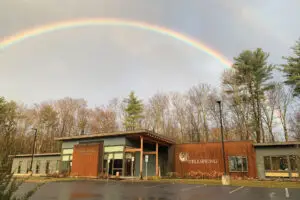
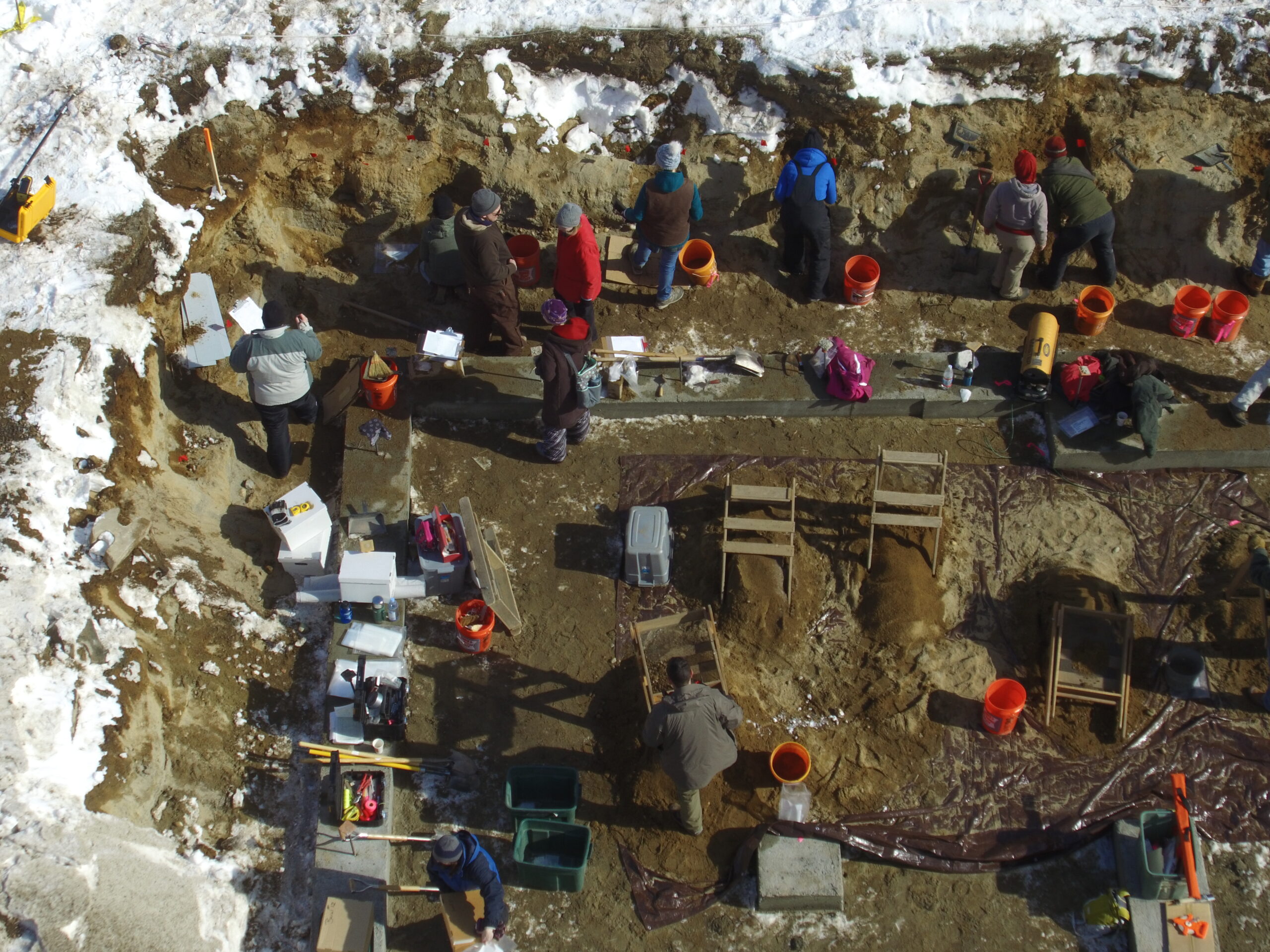
In February 2019, a backhoe operator for a construction crew building a duplex a block from Canada Street in the Village of Lake George spotted something sticking out of the side of a trench. Closer examination revealed the objects to be human bones. Lots of them.
Digging up human skeletal remains isn’t unusual in Lake George. People have been finding stark remnants of the region’s bloody past since the early 1800s, when the first American “tourist class” began making the side trek north from Saratoga Springs to view what were referred to back then as “the ruins from the old French war” (aka the French and Indian War). Since then, construction of mom-and-pop motels, restaurants, a full-sized replica fort, sewer lines—anything, it seems, that requires disturbing the ground—is likely to uncover the remains of someone who probably died during America’s colonial period, when armies of British, American, French, and Native American forces fought, hunkered down, and died here.
But the discovery made in the winter of 2019 turned out to be different. While most of the human skeletons uncovered in the area previously have been confirmed to date to the French and Indian War, this latest find—eventually totaling 44 individuals—was from the American Revolution.
Now, just in time for America’s 250th anniversary, those bodies—several of them soldiers who aided our nation’s fight for independence—will be re-interred at a new memorial at Lake George Battlefield State Park.
While Saratoga’s role as the Turning Point of the American Revolution is widely recognized, Lake George’s place in the War for Independence isn’t as well known. What’s now Lake George Village was once the home of a Continental Army hospital treating American soldiers who fell ill from various diseases—chief among them smallpox—contracted during the failed invasion of Canada, a campaign that started in the fall of 1775 and ended in June 1776. Americans retreated south via Lake Champlain, led by a merchant sea captain turned general from Connecticut: Benedict Arnold.
Smallpox broke out in the American ranks in early 1776 and spread quickly, decimating entire regiments. Lewis Beebe, a physician from Connecticut who arrived in Quebec that spring, kept a journal that chronicles the ragged army’s ordeal. “Death is now become a daily visitant in the Camps,” he wrote on June 26 at Crown Point, noting that as many as 500 soldiers were incapacitated by smallpox.
In July, Beebe arrived at Lake George’s southern shore, where he noted that the number of sick in the army hospital was approaching 2,000. After spending three weeks in Stockbridge, MA recovering from illness, Beebe returned to Lake George, where he wrote: “Visited the hospital found the number of sick to be about 700, viewed the burying place counted upwards of 300 graves, which had been opened in about 5 weeks, the appearance of which was melancholy indeed, to see such desolation made in our army.”
Lisa Anderson, curator of bioarchaeology for the New York State Museum, led the painstaking effort to recover all the skeletal remains from the Courtland Street site (located near the site of the Continental Army hospital) and determine how many people they represented.
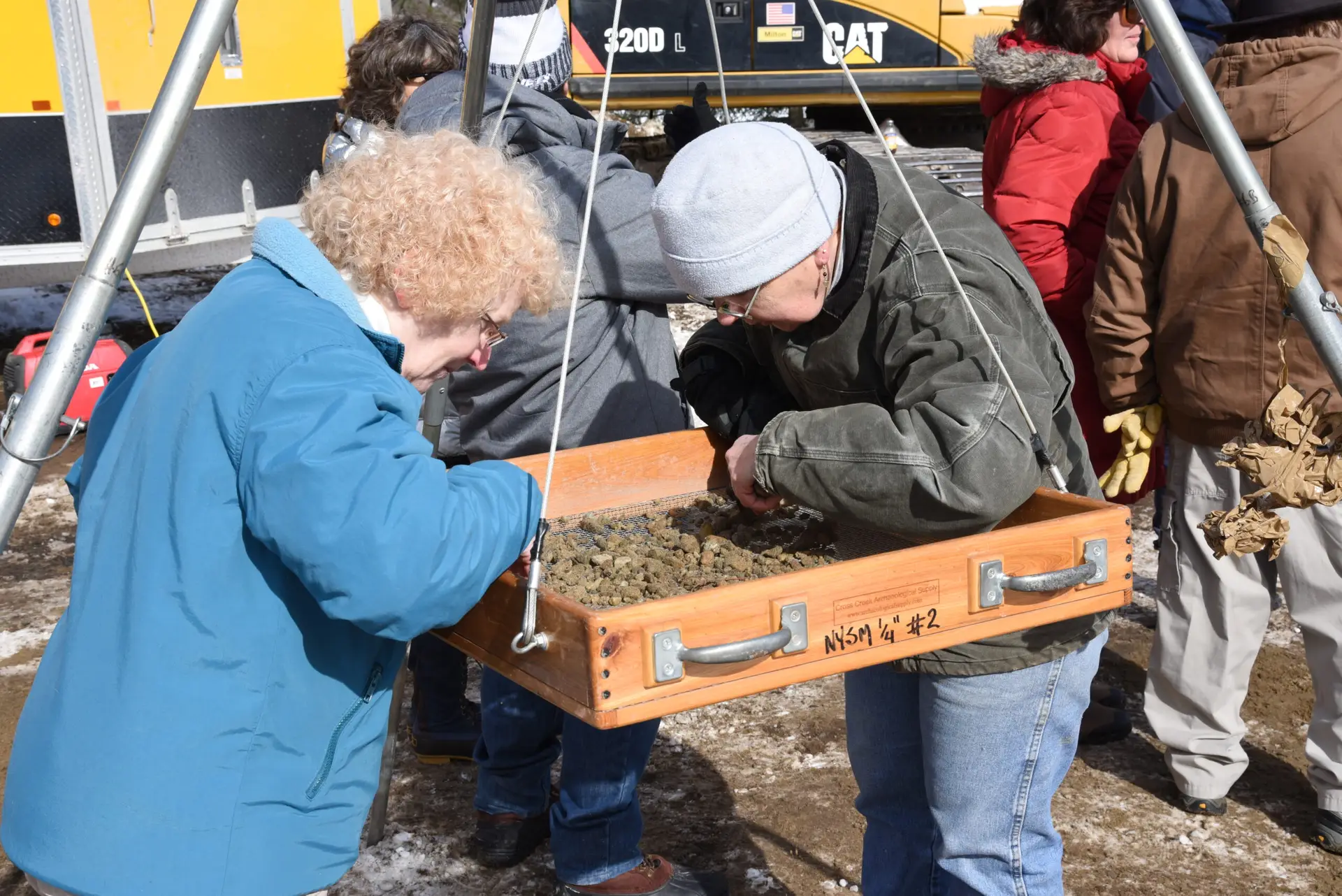
“We don’t have people, we have parts of people,” Anderson says, noting that a team of professional archaeologists and volunteers spent 15 months sifting through a soil pile “the size of a house” to piece together arm and leg bones to determine that at least 44 people had been buried there.
Anderson says analysis of the remains indicated they were predominately males in their teens or twenties who likely died during the Revolutionary War era, which corelates with the ages of the American soldiers who fought in the Northern Campaign, the colonies’ effort to invade Quebec and convince British-controlled Canada to join the American cause.
While there’s no way of knowing how many of the 44 were soldiers, several pewter uniform buttons with the insignia of Pennsylvania’s 1st Battalion were found with one set of remains. The battalion, mustered in Philadelphia, is one of several Keystone State units known to have fought in Canada.
On May 20 of this year, those remains will be transported via a Route 9 motorcade from the New York State Museum in downtown Albany back to Lake George, where they’ll be re-interred at a new $680,000 “Repose of the Fallen” memorial on the Friday before Memorial Day weekend.
“The reinterment of these 44 patriots at Lake George Battlefield Park—on the grounds where they drew their final breaths—provides a very tangible piece of history education for the thousands of guests who visit our site each year,” says John DiNuzzo, president of the Lake George Battlefield Park Alliance, the nonprofit group spearheading the project and the steward of the small museum located across Fort George Road from the memorial. “To speak about what happened 250 years ago at Lake George may spark interest and curiosity for people, but seeing the magnificent plaza that will house these remains and tell their story generates a level of appreciation that will resonate.”