Val Kilmer: The Actor Behind Iceman, Batman, and Doc Holliday
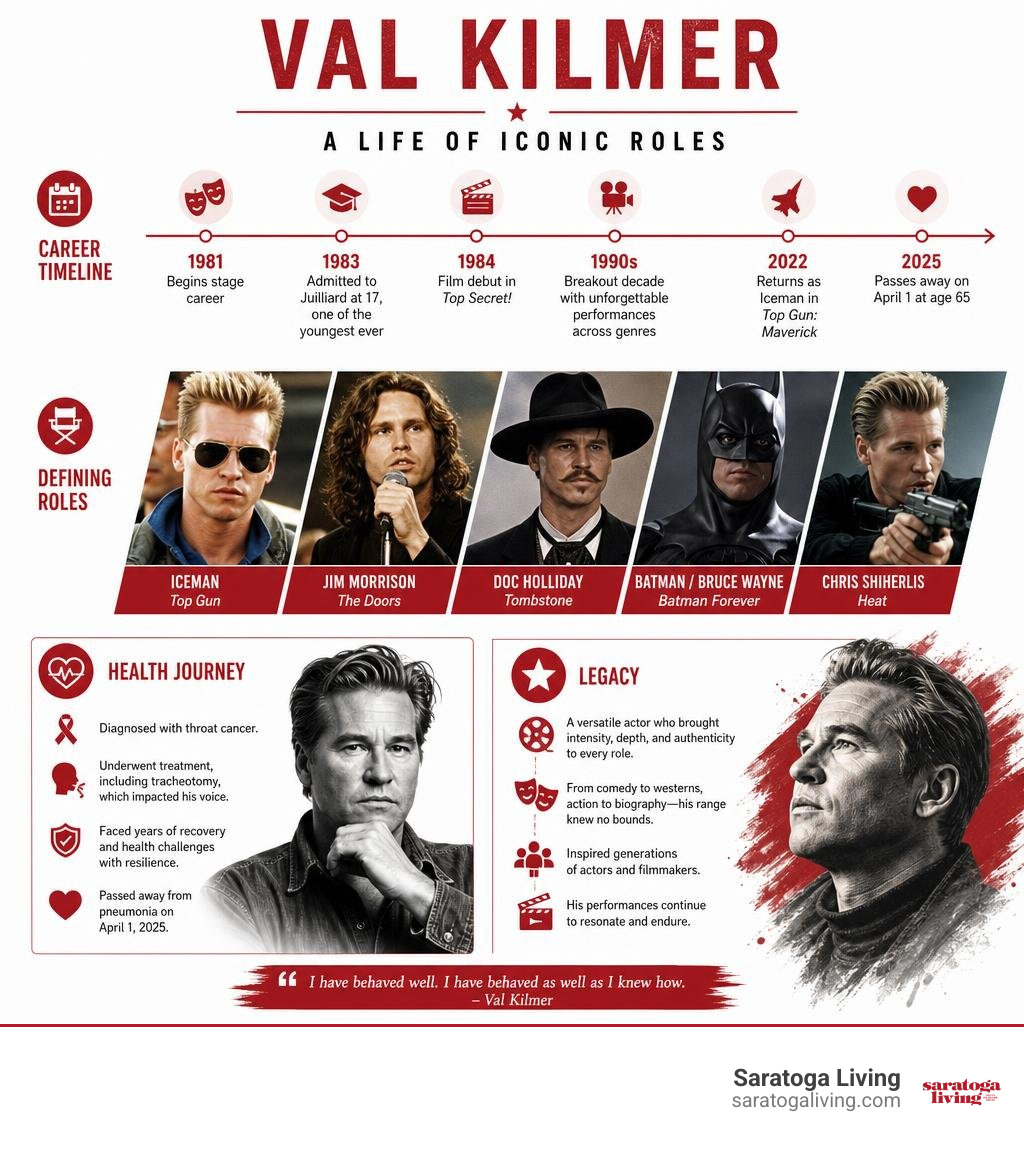
Val Kilmer was an American actor known for his range, intensity, and some of Hollywood’s most memorable characters. He played Tom “Iceman” Kazansky in Top Gun, Jim Morrison in The Doors, Doc Holliday in Tombstone, Bruce Wayne in Batman Forever, and Chris Shiherlis in Heat.
Kilmer died of pneumonia on April 1, 2025, at age 65, after years of health challenges following throat cancer treatment. His films crossed comedy, westerns, action movies, crime dramas, and musical biography, collectively earning more than $3.85 billion worldwide.
From his early stage work and record-setting admission to Juilliard to his moving return as Iceman in Top Gun: Maverick, Kilmer built a career that was never easily defined. He could be funny, magnetic, difficult, vulnerable, and unforgettable – sometimes in the same role.
This guide looks at the artist behind the headline-making Hollywood reputation: his remarkable performances, family life, cancer battle, final work, and lasting influence on film culture. Written by Guest Posts.
Val kilmer glossary:
Early Roots, Tragic Loss, and Dramatic Training
Born on December 31, 1959, in Los Angeles, California, Val Edward Kilmer was raised in a Christian Science household alongside his brothers. He demonstrated creative flair and sharp intellect from an early age. During his time at Chatsworth High School, his peers included future stars Kevin Spacey and Mare Winningham, establishing a creative atmosphere that nurtured his emerging theatrical ambitions.
Tragedy struck the family in 1977 when Kilmer’s 15-year-old younger brother, Wesley, drowned in a swimming pool following an epileptic seizure. The sudden loss devastated the family and left an emotional imprint on Kilmer that lasted throughout his life. Decades later, he channeled that profound grief into his raw, vulnerable performance in the 2002 neo-noir thriller The Salton Sea.
Early Life and Val Kilmer at Juilliard
Kilmer’s natural talent earned him historic distinction at just 17 years old, when he became the youngest person at the time accepted into the Drama Division of the prestigious Juilliard School in New York City (as a member of Group 10).
While training at Juilliard, Kilmer pushed artistic boundaries. He co-wrote and starred in the stage production How It All Began, which was directed by Des McAnuff and produced by Joseph Papp for the Public Theater. In 1983, Kilmer made his Broadway debut in Slab Boys alongside Sean Penn and Kevin Bacon, showcasing an early stage career and artistic background that prioritized classic dramatic craft over commercial vanity.
Transition to Breakthrough Comedy
Unlike many classically trained dramatic actors who avoid broad satire, Kilmer made his feature film debut in the 1984 Zucker, Abrahams, and Zucker spoof Top Secret!. Playing the spoof rock star Nick Rivers, Kilmer showcased comedic timing and performed his own vocals, even releasing a real-world rock and roll soundtrack under the character’s moniker.
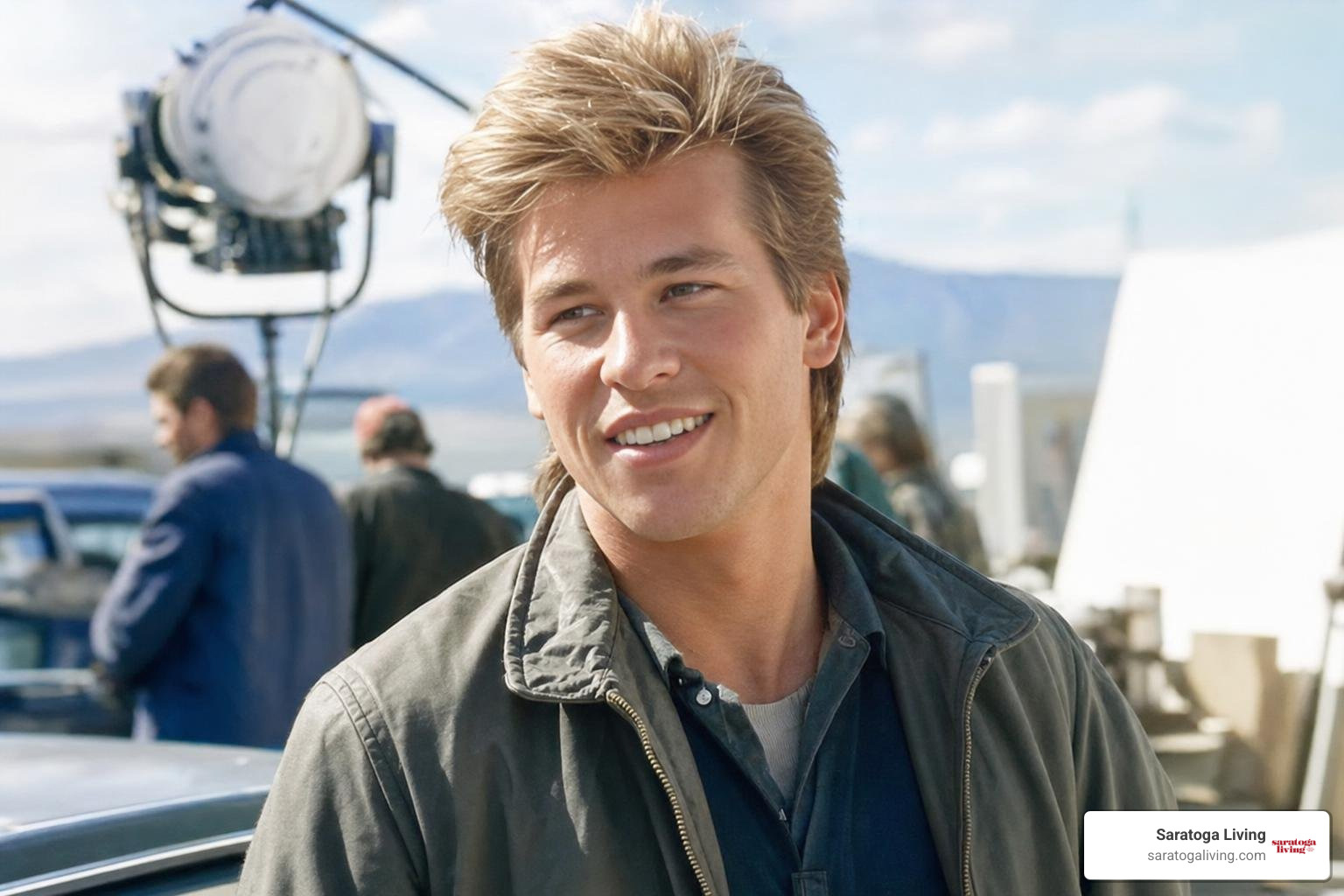
He followed this success with the 1985 cult comedy Real Genius, playing the brilliant, eccentric physics prodigy Chris Knight. These early roles proved that despite his intense classical training, Kilmer possessed breezy charisma and an effortless comedic touch.
Box Office Stardom and Defining Cinematic Roles
Over four decades, films featuring Kilmer generated more than $3.85 billion at the global box office. His ascent into international superstardom came with Tony Scott’s 1986 aerial blockbuster Top Gun. Kilmer was initially reluctant to take the role of Lieutenant Tom “Iceman” Kazansky, but Scott promised to flesh out the character. Top Gun went on to gross over $344 million worldwide, establishing Iceman’s steely, chiseled presence as an enduring piece of pop culture iconography.
| Film Title | Release Year | Character | Worldwide Box Office Gross |
|---|---|---|---|
| Top Gun | 1986 | Tom “Iceman” Kazansky | $344.3 Million |
| The Doors | 1991 | Jim Morrison | $34.4 Million |
| Tombstone | 1993 | Doc Holliday | $56.5 Million |
| Batman Forever | 1995 | Bruce Wayne / Batman | $336.5 Million |
| Heat | 1995 | Chris Shiherlis | $187.4 Million |
| The Saint | 1997 | Simon Templar | $169.4 Million |
| The Prince of Egypt | 1998 | Moses / God (Voice) | $218.6 Million |
| Top Gun: Maverick | 2022 | Tom “Iceman” Kazansky | $1.495 Billion |
Val Kilmer in Iconic Hollywood Roles
Kilmer pursued transformation rather than comfortable typecasting. For Oliver Stone’s 1991 biopic The Doors, Kilmer engaged in an exhaustive method preparation. He lived and dressed like Jim Morrison for nearly a year, learned 50 songs by heart, and mastered Morrison’s vocal cadence so precisely that surviving Doors guitarist Robby Krieger could not distinguish Kilmer’s studio takes from Morrison’s original recordings.
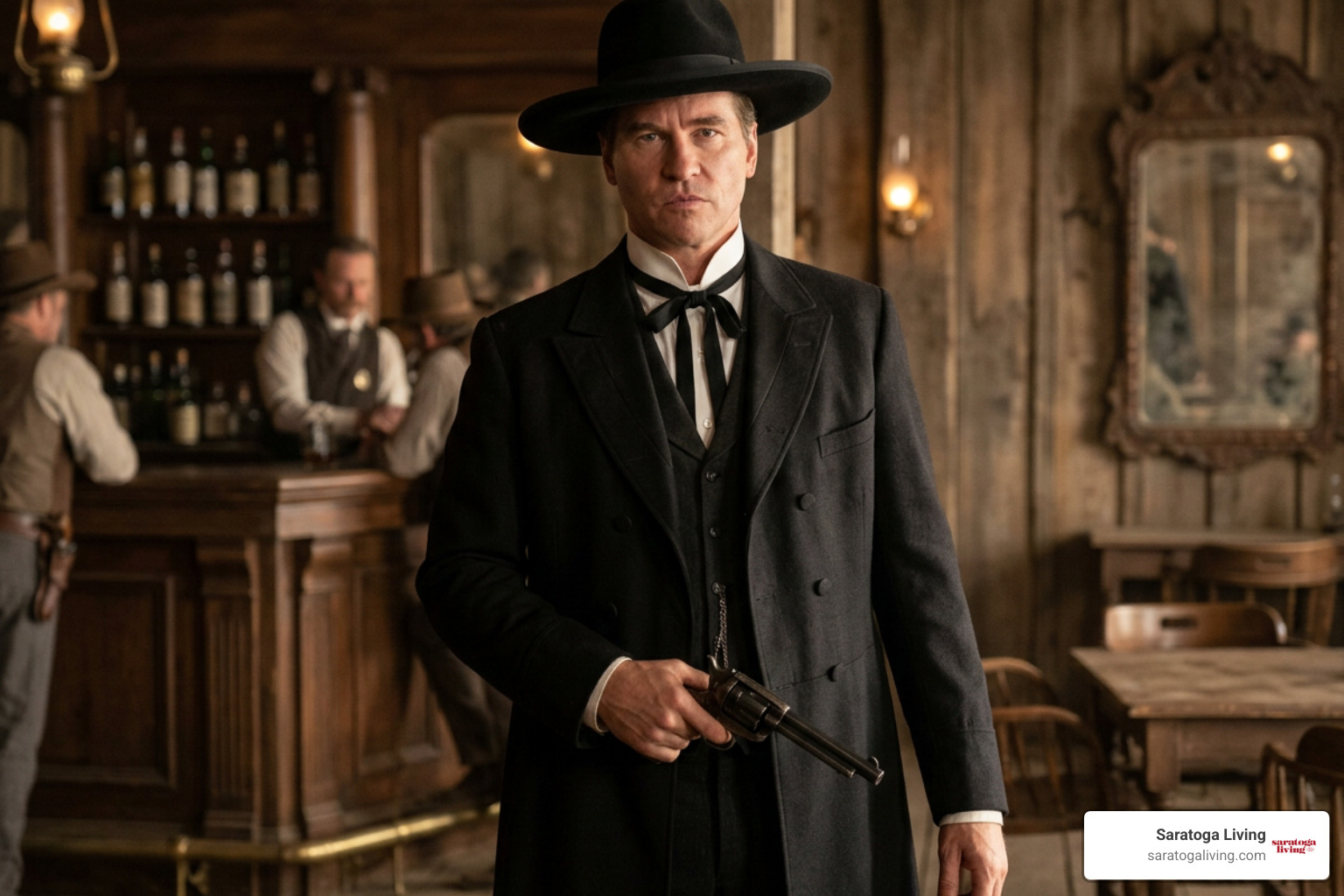
In 1993, Kilmer turned in what many consider his signature performance as the dying, quick-witted gunslinger Doc Holliday in Tombstone. Although he did not know how to play piano, he practiced Frédéric Chopin’s Nocturne in E minor, Op. 72, No. 1 for months solely for a single dramatic scene. He followed that with a cameo as the ghostly Elvis mentor in True Romance and a performance as the loyal, lethal thief Chris Shiherlis in Michael Mann’s crime epic Heat (1995), balancing explosive action with emotional nuance.
Much like exploring The Definitive Guide to Shia LaBeouf’s Life and Career, reviewing Kilmer’s filmography illustrates how total artistic immersion shapes an actor’s legacy. Readers can explore the full range of this Val Kilmer cinematic career and major milestones to see how his characters evolved over four decades.
Blockbuster Peak and The Saint
In 1995, Kilmer donned the cape and cowl as Bruce Wayne in Joel Schumacher’s Batman Forever. Batman co-creator Bob Kane declared Kilmer’s take on the character to be the finest on-screen interpretation up to that point. The film was a box office smash, grossing $336.5 million worldwide. However, Kilmer disliked feeling restricted inside the heavy suit, and behind-the-scenes creative tension with Schumacher led him to step away from the cowl.
Instead, Kilmer took on the lead role of Simon Templar in the 1997 espionage thriller The Saint, commanding a $6 million salary. The film earned $169.4 million globally and allowed him to showcase multiple disguises, accents, and alter egos. The following year, he lent his voice to both Moses and God in DreamWorks’ animated feature The Prince of Egypt (1998), demonstrating his range across different film styles.
Hollywood Reputation, Relationships, and Health Journey
Kilmer’s relentless dedication to character occasionally generated friction on set. Directors like Joel Schumacher and John Frankenheimer (who directed him in 1996’s troubled The Island of Dr. Moreau) publicly called him demanding and difficult. For his part, Kilmer maintained that his intensity stemmed from a desire to elevate the storytelling, describing his approach as challenging rather than disruptive.
Many colleagues defended Kilmer’s character and generosity. Co-stars like Kurt Russell, Mira Sorvino, and Drew Barrymore praised his collaborative spirit. While filming the 2010 drama Bloodworth, Kilmer requested that an unneeded romantic scene with co-star Hilarie Burton be removed to protect the narrative and ensure her comfort, opting instead for a quiet scene sharing barbecued ribs.
In his personal life, Kilmer married English actress Joanne Whalley in 1988 after meeting on the set of the fantasy adventure Willow. The couple had two children, Mercedes and Jack, before divorcing in 1996. Kilmer also maintained high-profile relationships, including a close friendship with Cher, who offered him a place to stay and direct support during his later health challenges.
Outside of acting, Kilmer expressed his creativity through poetry and visual art. In 1983, he self-published a poetry collection titled My Edens After Burns, filled with verse inspired by Michelle Pfeiffer. He managed a 6,000-acre ranch in New Mexico for years and later founded Kamp Kilmer, an arts incubator and collaborative platform for visual artists. Looking back at multifaceted artists, as in The Complete Guide to Anne Heche Life, Career and Legacy, reveals how personal creative expression often extends well beyond Hollywood productions.
Throat Cancer Battle and Vocal Reconstruction
In 2015, Kilmer was diagnosed with throat cancer. Though his Christian Science beliefs initially made him cautious about modern medical interventions, he underwent chemotherapy, radiation, and two tracheostomies at the urging of his children.
The medical procedures left Kilmer cancer-free, but they permanently altered his vocal cords, requiring a tracheostomy tube and making conventional speech difficult. Refusing to step away from storytelling, Kilmer partnered with software firm Sonantic to build more than 40 AI-driven vocal models trained on his archival recordings.
In 2021, Amazon Studios and A24 released the acclaimed documentary Val, directed by Ting Poo and Leo Scott. Sourced from hundreds of hours of personal home video footage Kilmer shot across 40 years, the documentary premiered at the Cannes Film Festival to widespread critical acclaim, with Kilmer’s son Jack narrating his father’s written words.
Final Roles, Passing, and Global Tributes
Kilmer returned to the big screen in the 2022 blockbuster Top Gun: Maverick, which grossed nearly $1.5 billion worldwide. The production team incorporated Kilmer’s real-life illness into Iceman’s story line. Rather than using synthetic speech, director Joseph Kosinski and the sound team digitally clarified Kilmer’s actual recorded voice for his poignant reunion with Tom Cruise.
On April 1, 2025, Kilmer passed away at Ronald Reagan UCLA Medical Center in Los Angeles at the age of 65 from complications related to pneumonia and respiratory failure. Tributes poured in from across the entertainment world. Tom Cruise celebrated Kilmer’s craftsmanship, calling him a fearless artist whose work elevated everyone around him. For a deeper look back at his career, readers can explore this Val Kilmer career retrospective and obituary.
The Enduring Legacy and Impact of Val Kilmer
Kilmer’s career was defined by his range and refusal to stick to a single formula. In 1992, legendary critic Roger Ebert described him as “the most unsung leading man of his generation.” Whether mastering period dialogue in Tombstone, embodying rock-and-roll mythology in The Doors, or touring his one-man Mark Twain stage show Citizen Twain, Kilmer approached every role with singular focus.
His dedication to acting, stagecraft, and visual arts leaves an enduring imprint on American cinema, standing alongside other celebrated figures featured in A Comprehensive Guide to Chadwick Boseman’s Life and Legacy.
Frequently Asked Questions
What caused Val Kilmer’s death and when did he pass away?
Val Kilmer died on April 1, 2025, at the age of 65 at Ronald Reagan UCLA Medical Center in Los Angeles. His death was caused by pneumonia and acute respiratory failure, complicated by the long-term effects of previous throat cancer treatments and tracheostomy procedures.
Did Val Kilmer use AI for his voice in Top Gun: Maverick?
While Kilmer worked with AI voice company Sonantic to model his voice for personal and archival projects, director Joseph Kosinski confirmed that Top Gun: Maverick did not use artificial intelligence for his scene. Instead, sound editors used advanced digital processing to clarify and enhance Kilmer’s actual spoken voice recordings.
Why did Val Kilmer leave the Batman franchise after Batman Forever?
Kilmer chose not to return for Batman & Robin due to scheduling conflicts with the 1997 film The Saint, artistic frustration with the physical constraints of the Batman suit, and ongoing creative friction with director Joel Schumacher.
Conclusion
From his early days as Juilliard’s youngest drama prodigy to his era-defining turns in Top Gun, The Doors, and Tombstone, Val Kilmer brought uncompromising commitment to the craft of acting. His resilience in the face of life-altering illness proved that his passion for art extended far beyond commercial stardom.
Here at Saratoga Living, we celebrate artists and creators who leave a lasting mark on American culture. Whether we are exploring world-class cinema or celebrating iconic cultural figures at the Belmont Stakes, we honor the visionaries whose work continues to entertain and inspire generations of audiences.