Find Baggy Jeans That Look Intentional
Baggy jeans are roomy through the seat and thighs, with a wide leg that falls freely instead of narrowing at the ankle. To find a flattering pair, start with a waistband that sits securely without digging in, enough hip room to move comfortably, and a hem that skims your shoes rather than dragging on the ground.
The key is purposeful volume. Baggy denim should look relaxed, not like you bought several sizes too large. Choose rigid or heavier denim for a cleaner shape, or a softer cotton-and-Lyocell blend for easier movement. A mid-rise pair is often the simplest starting point, while low-rise cuts lean more Y2K and casual.
This silhouette has moved well beyond weekend streetwear. In 2026, baggy jeans work with crisp shirts, structured blazers, polished loafers, boots, and sneakers – making them a useful option for everything from downtown errands to a relaxed Saratoga gathering.
Guest Posts shares straightforward guidance to help you choose and wear the trend with confidence.
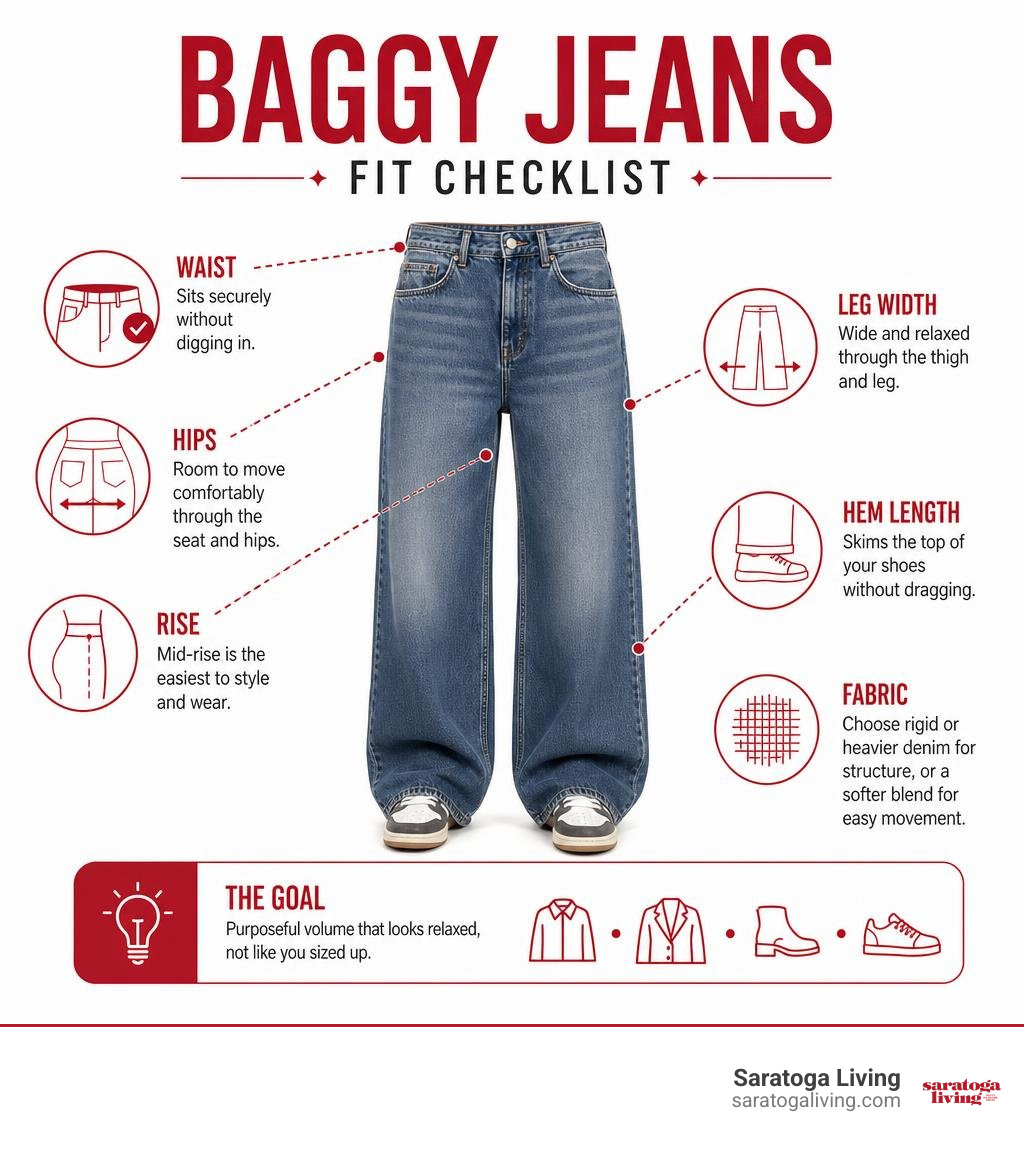
Easy ** baggy jeans** glossary:
Understanding the Baggy Denim Silhouette
When we talk about relaxed denim today, we aren’t talking about throwing on whatever ill-fitting trousers happen to be lying around. Modern baggy denim is an engineered silhouette designed around specific drape dynamics, deliberate proportions, and structured comfort.
A well-crafted pair features a relaxed seat that sits effortlessly over your hips, giving you total freedom of movement through the thighs while cascading down to a broad leg opening. Unlike vintage extremes where fabric pooled uncontrollably, contemporary styles like the Mid Rise UltraSoft Easy Baggy Jeans | Gap balance that roominess with intentional tailoring so the denim flows gracefully over footwear. Whether you’re dressing for a casual weekend stroll or heading to a stylish evening gathering like Fit Check: A Mid-September Night’s Dream, understanding the baseline architecture of these cuts makes all the difference.
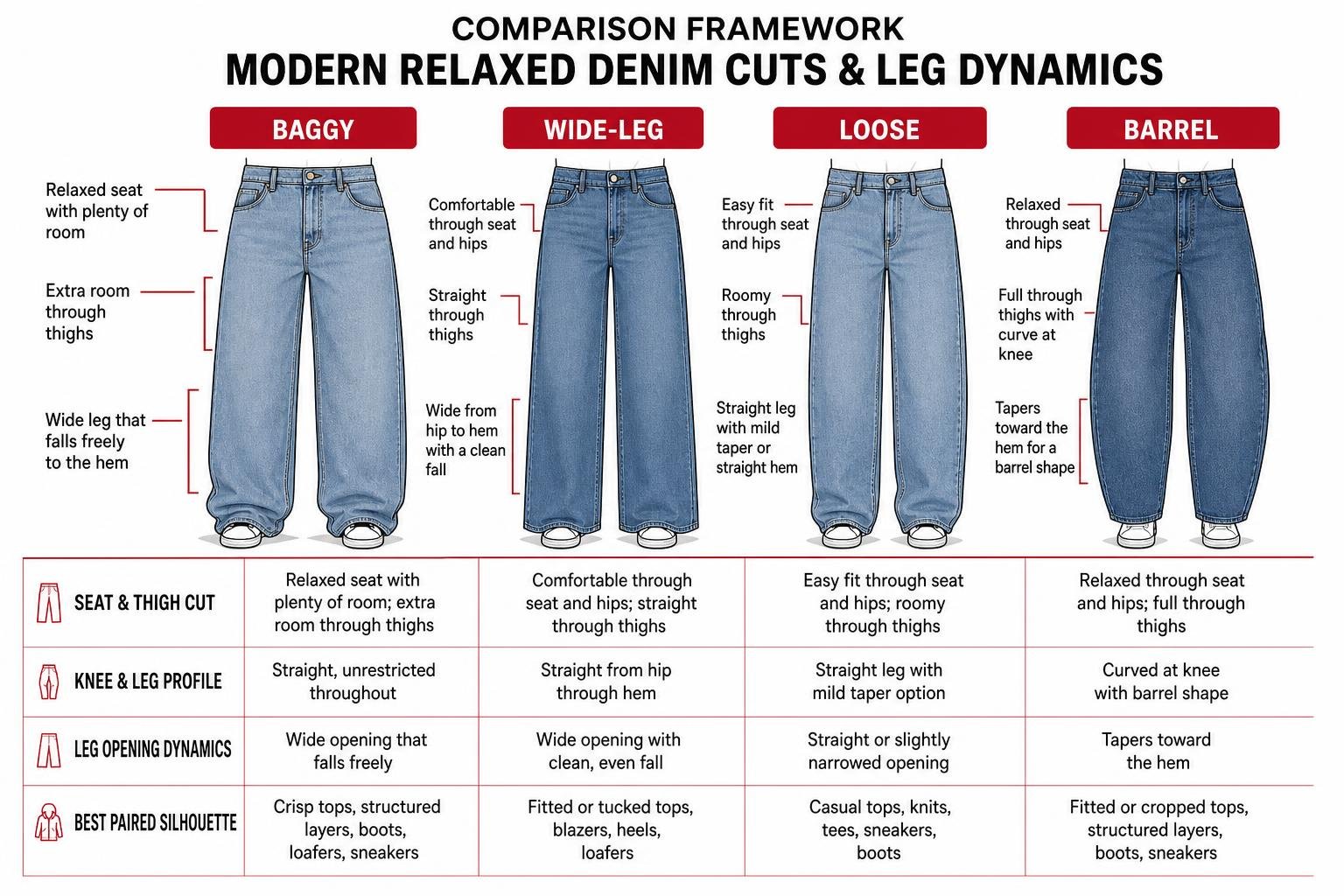
Baggy vs Wide-Leg, Loose, and Barrel Cuts
With so many relaxed options on the racks in 2026, it is easy to mix up the terminology. Here is how baggy jeans stand apart from adjacent styles:
| Denim Style | Seat & Thigh Cut | Knee & Leg Profile | Leg Opening Dynamics | Best Paired Silhouette |
|---|---|---|---|---|
| Baggy Jeans | Relaxed seat, generous thigh ease | Straight and wide through the leg | Wide, designed for an effortless ankle break | Fitted tops, cropped jackets, structured coats |
| Wide-Leg Jeans | Fitted at natural waist and upper hip | Expands continuously from hip to floor | A-line flare with a very wide, clean hem | Tucked-in shirts, slim knits, elevated heels |
| Loose/Relaxed Jeans | Gentle room throughout seat | Classic straight cut without excessive volume | Standard straight leg opening (16″–18″) | Casual tees, workwear overshirts, retro trainers |
| Barrel-Leg Jeans | High waist, roomy upper leg | Pronounced bow/curve outward at the knee | Distinctly tapered or cropped at the ankle | Sleek ankle boots, pointed flats, tucked blouses |
While wide-leg denim acts almost like a tailored trouser that sweeps out from the waistline, baggy jeans maintain consistent volume through the entire leg. Barrel cuts, by contrast, bow outward dramatically at the knee before curving back inward at the hem.
Essential Fit Criteria for Baggy Jeans
The secret to mastering this trend lies in buying your genuine size rather than sizing up several inches. True baggy denim is patterned specifically with extra ease in the hips, thighs, and calves while keeping the waistband proportional.
- Waist Placement: The waistband should rest comfortably at your natural waist or hip line without requiring a belt to be cinched so tight that the fabric bunches awkwardly underneath.
- Hip Ease: You want enough ease through the pelvis to sit, walk, and climb stairs without tension lines pulling horizontally across the front pockets.
- The Puddle Length: Look for an inseam that provides a light, clean break over your shoe upper. A slight “puddle” adds effortless street style flair, but dragging hems will fray quickly and ruin the visual lines.
Key Features to Consider When Buying Baggy Denim
Finding the right pair comes down to examining materials, rise, and hardware details before committing.

Rise, Fabric Weight, and Stretch Options
Denim weight heavily dictates how a wide pant leg hangs. Lightweight fabrics tend to collapse inward, while heavy, 100% rigid cotton (typically 12 to 14.5 oz) gives a wide-leg cut architectural structure and clean lines.
If you prefer everyday softness without losing drape, modern blends incorporating Tencel™ (Lyocell) or recycled cotton offer incredible fluidity. For instance, styles like the Men’s Light/Pastel Blue Y2k Super Baggy Jean | Cotton On United States combine rigid vintage aesthetics with contemporary comfort, making them fantastic wardrobe additions when considering How to Shop for the Man Who Has Everything.
- Mid Rise: Typically sitting around 10 inches, this is the most versatile rise. It elongates the legs while offering complete coverage and support.
- Low Rise: Sitting squarely at the hips, low-rise cuts channel late-1990s nostalgia and pair naturally with boxy streetwear or cropped layers.
- Rigid vs. Stretch: While a hint of elastane provides flex, non-stretch or low-stretch denim holds its wide silhouette far better throughout repeated daily wear.
Trending Washes and Y2K Details
The 2026 denim landscape embraces a full spectrum of expressive finishes:
- Vintage Light Pastels & Acid Washes: Washed-out sky blues and bleached finishes offer a relaxed, summer-ready aesthetic.
- Deep Raw Indigo: Clean, dark washes lend an elevated, semi-tailored sensibility that easily transitions from day to night.
- Y2K Nostalgic Details: Gathered waistbands with internal drawcords, utility hammer loops, and subtle knee distressing channel authentic turn-of-the-millennium skate culture.
How to Style Baggy Jeans for Any Occasion
The golden rule of styling oversized pants is intentional proportion management. When your lower half carries significant volume, your upper half and footwear must create balance.

Balancing Proportions with Tops and Layers
To avoid an unkempt aesthetic, frame your waist or introduce structured outerwear:
- Fitted Base Layers: A slim baby tee, ribbed tank, or tucked-in bodysuit provides an immediate counterweight to voluminous pants.
- Cropped Outerwear: Cropped denim jackets, structured leather bombers, or boxy zip-ups highlight your waistline while letting the wide legs do the talking.
- Elevated Tailoring: Draping an oversized wool coat or tailored blazer over a crisp button-down turns casual denim into a sophisticated ensemble, perfect if you are planning How to Craft the Perfect Date Night Look.
Best Footwear Pairings from Sneakers to Boots
Footwear acts as the visual anchor for wide hems:
- Chunky Sneakers & Skate Shoes: Wide rubber outsoles and thick profiles keep wide leg openings from swallowing your feet.
- Pointed-Toe Boots & Heels: A sharp toe peeking out from beneath a wide hem instantly elongates the leg and elevates the entire outfit.
- Lug-Sole Loafers: Substantial leather loafers provide a polished collegiate contrast to relaxed denim.
- Western Boots: Classic cowboy boots offer a structured footbed and heel that hold up effortlessly against wide cuffs.
Flattering Baggy Cuts for Every Body Type
Baggy denim is universally flattering when you dial in the right proportions:
- Petite Frames: Opt for a higher rise and an inseam that hits right at the top of your shoes (around a 28.5″ inseam) to avoid overwhelming your height.
- Tall Figures: Look for extended inseams (34″ to 35″) with a gentle mid-to-low rise that lets the fabric puddle naturally without swinging above the ankle.
- Curvy & Hourglass Builds: Seek out contoured waistbands or drawcord-adjustable waists that accommodate hip room without gaping at the lower back.
- Athletic & Broad Builds: Choose classic straight-down baggy cuts with heavier fabric weights that drape smoothly over muscular quads and calves.
Caring for Baggy Denim
Because voluminous denim uses more fabric, maintaining its shape, drape, and color saturation requires mindful laundering.
How to Care for Baggy Jeans to Prevent Fading and Shrinking
- Wash Infrequently: Denim does not require washing after every wear. Spot clean minor smudges with a damp cloth to preserve the fabric fibers.
- Turn Inside Out: Always flip your jeans inside out before laundering to prevent friction lines and protect surface dyes.
- Use Cold Water & Gentle Cycles: Cold water keeps cotton fibers relaxed and prevents unwanted shrinkage or color loss.
- Air Dry Flat or on a Line: Tumble drying breaks down elastane blends and shrinks rigid cotton. Hang your jeans by the hem or lay them flat to air dry naturally.
Frequently Asked Questions About Baggy Denim
How should baggy jeans fit around the waist and hips?
The waistband should sit flush against your skin without pinching or sliding down. You should have enough room through the hips and seat to move freely without excessive bunching beneath a belt.
What shoes work best with wide leg openings?
Substantial footwear with broader silhouettes—such as chunky retro trainers, lug-sole loafers, or structured ankle boots—work best. Delicate, low-profile shoes can sometimes get lost under broad hems.
How do you keep oversized jeans from looking messy?
Keep the rest of your outfit deliberate. Pair your baggy denim with fitted or cropped tops, iron out heavy accidental wrinkles, and ensure the hem gently grazes the top of your shoes rather than dragging along the pavement.
Conclusion
Baggy denim has firmly earned its status as a timeless foundation of modern personal style. Far from an unshaped trend, today’s relaxed fits combine ergonomic comfort with high-fashion versatility. By choosing the right rise, selecting quality fabrics, and balancing your proportions, you can seamlessly integrate this silhouette into your weekly wardrobe—whether dressing down for casual upstate adventures or assembling a standout look for premier regional events like Fit Check: The Belmont Stakes.